
Related videos:
A Russian cargo ship that allegedly carried two nuclear reactors for submarines bound for North Korea suffered a series of explosions and sank on December 23, 2024, about 60 miles off the Spanish coast.
A study by CNN published this Tuesday suggests among its hypotheses that the sinking might have been caused by a Western military intervention to halt an unprecedented transfer of nuclear technology.
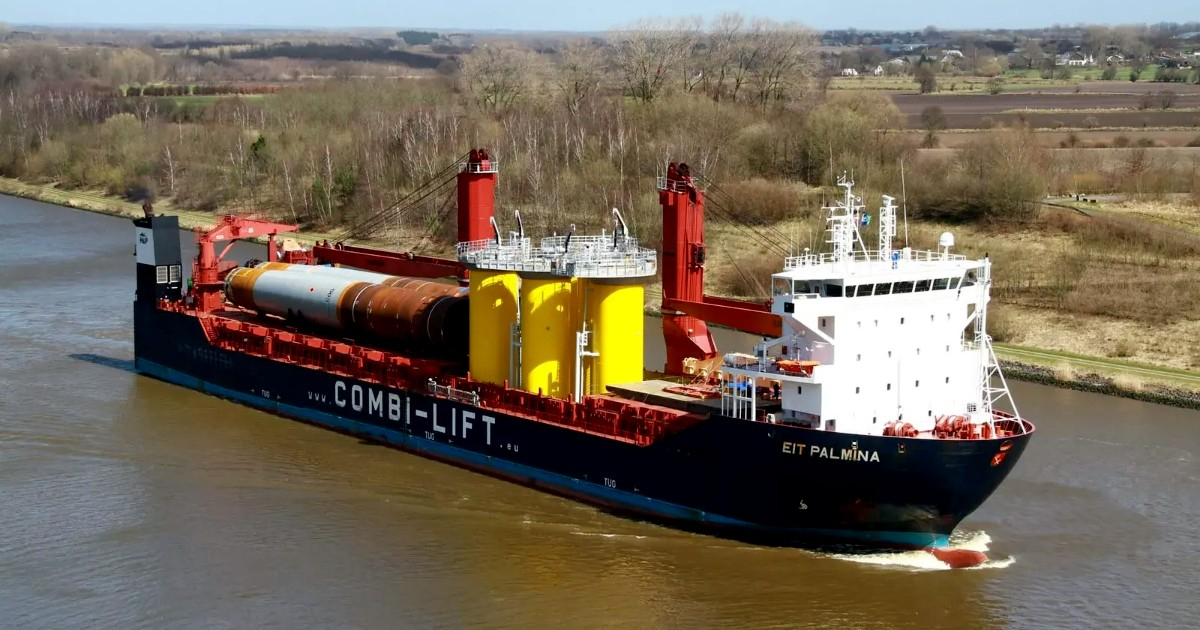
The ship, the MV Ursa Major —also known as Sparta 3—, was owned by Oboronlogistics, a Russian state-owned company linked to the Ministry of Defense that in October 2024 declared it was licensed to transport nuclear materials.
The official manifesto declared Vladivostok as the destination and the cargo as two large "registration covers," 129 empty containers, and two Liebherr cranes.
Under pressure from Spanish investigators, Russian Captain Igor Anisimov "finally confessed that they were the components of two nuclear reactors similar to those used in submarines," according to the Spanish government's statement to legislators in February 2026, though he added that he could not confirm whether they contained nuclear fuel.
The Spanish investigation concludes that the likely actual destination was the North Korean port of Rason, and points out the implausibility of a maritime journey around the world to deliver that cargo between two Russian ports when there is an extensive railway network connecting them.
The reactors would be of the VM-4SG model, commonly installed in the Russian Navy's Delta IV class ballistic missile submarines.
On December 22, the ship drastically reduced its speed in Spanish waters for no apparent reason, and about 24 hours later it suffered three explosions on the starboard side that killed two crew members —second engineer Nikitin and mechanic Yakovlev— whose bodies were not recovered.
The 14 survivors were rescued by the Spanish ship Salvamar Draco and taken to the port of Cartagena.
When the Ursa Major still appeared to be stable, the Russian escort ship Ivan Gren fired red flares over the scene, after which four new explosions were recorded by the Spanish National Seismic Network, and the ship sank at 23:10 UTC.
A week later, the Russian spy ship Yantar —accused of espionage in NATO waters— positioned itself over the wreckage for five days, during which four more explosions were detected, possibly to destroy evidence on the seabed.
The Spanish investigation proposes that the 50 by 50 centimeter hole found in the hull, with the metal bent inward, could have been caused by a supercavitating torpedo of the Barracuda type, a weapon possessed only by the United States, some NATO allies, Russia, and Iran.
The analyst Mike Plunkett from the defense intelligence company Janes offered another hypothesis: "It sounds like a shaped explosive charge placed against the hull by someone or something."
The sinking occurred just two months after Kim Jong Un sent at least 10,000 North Korean soldiers to fight alongside Russia in the Kursk region, as part of the Comprehensive Strategic Partnership Treaty signed by Putin and Kim on June 18, 2024, which includes a mutual defense clause comparable to NATO's Article 5.
Pyongyang has openly demanded that Moscow share its nuclear technical expertise, demands that are said to have intensified following the deployment of troops.
On December 25, 2025, Kim Jong Un inspected the construction of what North Korea presents as its first strategic nuclear submarine, weighing 8,700 tons. However, the images only show the sealed hull without evidence of a functional reactor, reinforcing the hypothesis that Pyongyang needed Russian reactors to complete the project.
Plunkett warned that any decision by Russia to transfer this technology "is not taken lightly and is something that is only done among very close allies," and described the potential development as "very concerning, especially if one is South Korea."
The remains of the Ursa Major lie about 2,500 meters deep, and the Spanish legislator Juan Antonio Rojas Manrique, a former captain of the merchant marine, expressed his doubts: "Nowadays, flight recorders usually float to the surface with a locator. I believe someone has the black box. But we don't know if it's Spain or if the Russians themselves have located it."
Filed under: