
Related videos:
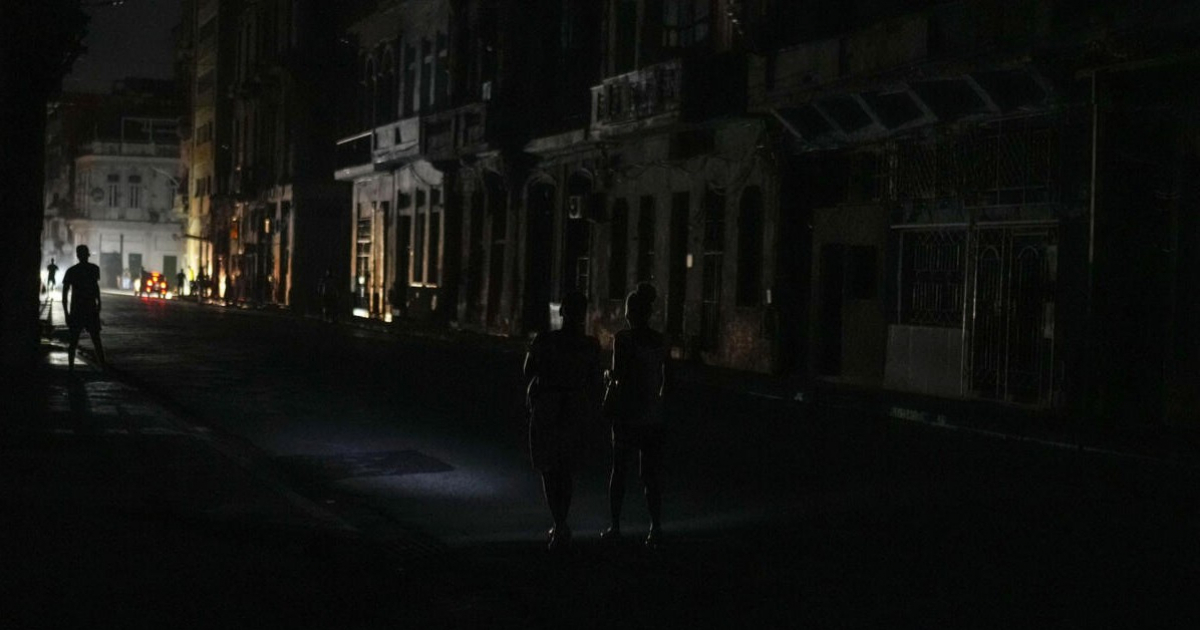
The energy crisis in Cuba continues to worsen. The Electric Union (UNE) expects a shortfall of 2050 MW during peak nighttime hours this Wednesday, following an actual shortfall of 2113 MW on Tuesday, which was the highest recorded this year.
The information comes from the report published today by the Electric Union, which also states that yesterday, Tuesday, the actual maximum impact was 2,113 MW at 8:40 PM, exceeding what had been planned due to the unplanned shutdown of the Energás Varadero plant.
The agency acknowledged that "yesterday, the service was affected due to capacity shortages for 24 hours, and the disruption continued throughout the early morning hours."
This morning, at 06:00 hours, the situation was already alarming: availability of only 1,200 MW against a demand of 2,860 MW, with 1,655 MW affected since early on.
During peak hours, the Electric Union estimates a availability of 1,230 MW against a maximum demand of 3,250 MW, resulting in a deficit of 2,020 MW.
“With this forecast, a availability of 1,230 MW is estimated against a maximum demand of 3,250 MW, resulting in a deficit of 2,020 MW. Therefore, if the expected conditions persist, an impact of 2,050 MW is projected during this time,” the official report states.
The only expected addition to alleviate the peak is the entry of unit 1 of the Energás Varadero plant with just 30 MW, a negligible figure compared to the projected deficit.
Several units remain out of service simultaneously. Units two and three of the CTE Ernesto Guevara de la Serna, unit two of the CTE Lidio Ramón Pérez, and unit five of the CTE Antonio Maceo are currently down.
Unit one of the Lidio Ramón Pérez CTE, unit five of the Mariel CTE, unit six of the Renté CTE, and unit five of the Nuevitas CTE are under maintenance, with an additional 374 MW out of service due to limitations in thermal generation.
The 54 photovoltaic solar parks generated 3,530 MWh yesterday, peaking at 525 MW at noon, but their contribution is insufficient to offset the thermal collapse during the peak demand hours at night.
The energy crisis has steadily worsened in May, after the deficit temporarily dropped to 1,012 MW on April 21.
The previous annual record was 2,075 MW, recorded on March 6, the day before the seventh total collapse of the National Electric System in 18 months, which occurred on March 16.
The structural backdrop is devastating: Cuba has gone months without Venezuelan crude—interrupted since November 2025—and without Russian oil donations, which were depleted by the end of April.
The cumulative humanitarian impact is severe. The UN classified the situation as a , with more than 96,000 surgeries postponed, a million people relying on water trucks for their supply, and nearly half a million children experiencing shortened school days.
If the forecast holds true tonight, Cuba will have surpassed the 2,000 MW threshold of impact on two consecutive occasions in less than 48 hours, solidifying May 2026 as the most critical month of the year for the Island's electrical system.
Filed under: