
Related videos:
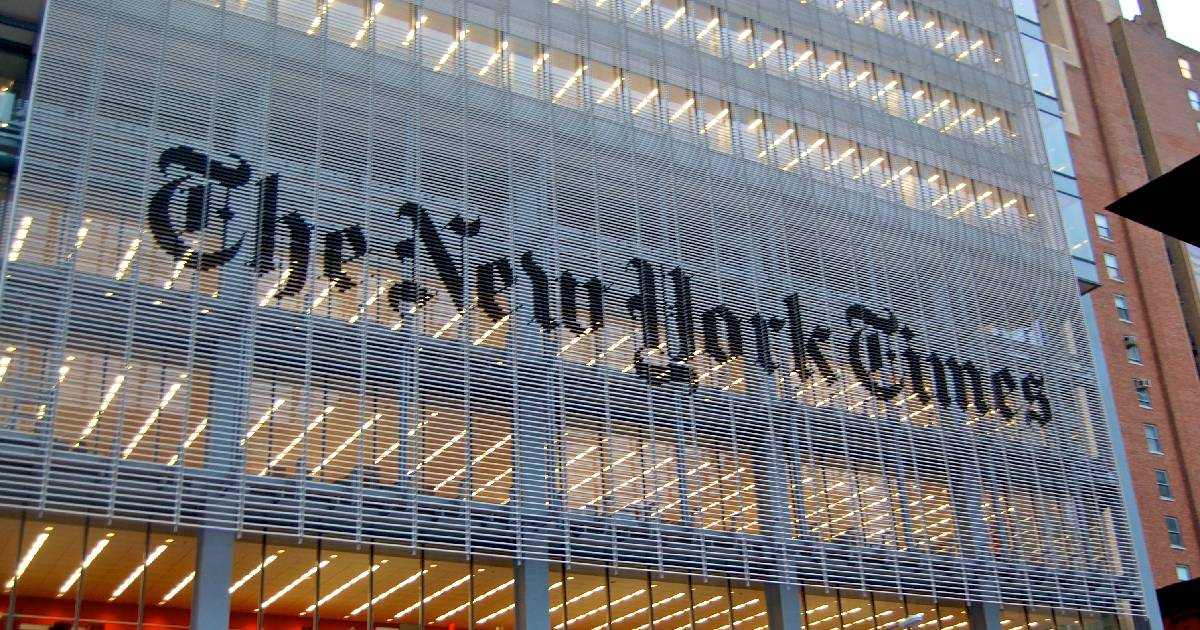
The Media Observatory of Cubadebate, the counter-propaganda section of Cuba's main state-run news portal, published an extensive analysis accusing The New York Times of crafting a narrative that depicts Cuba as a country "darkened, tense, and on the brink of an imminent political outcome."
The text, titled "Darkness to Naturalize the Threat: Cuba According to The New York Times," analyzes the coverage of the American newspaper from January to May 2026 and quantifies 420 visible results in which Cuba is mentioned during that period: 118 in January, 68 in February, 174 in March, 49 in April, and 11 in the first days of May.
Of those 420 results, 87 directly mention Cuba in the headline, while 333 reference it within the body of the text as contextual background in stories about Venezuela, migration, oil, Guantánamo, or foreign policy.
According to the Cuban regime's press, this narrative is consistent with the pressure agenda currently being pushed from Washington.
Cubadebate argues that the coverage did not begin with Trump's more aggressive statements in March, but rather in January, when Cuba started to be linked to the U.S. operation in Venezuela and the Island's energy vulnerability.
The analysis cites three headlines from the NYT published in January as evidence of this pattern: "After Venezuela, Trump says Cuba is ready to fall" (January 5), "Cuba's struggling economy is now in free fall" (January 6), and "Can Cuba survive without Venezuela's oil?" (January 17).
The official organ identifies as a "great emotional finding" of this coverage the headline "Cuba is fading," which in its view turned the electricity crisis into a national metaphor: "Darkness ceased to be an issue of the electrical system and came to describe the state of the country."
The recurring lexical field—blackout, fuel, oil, darkness, crisis—would have constructed, according to Cubadebate, "a total image of the country" that "omits or minimizes" the role of the U.S. embargo as a structural cause of these problems.
The attack on the NYT is not an isolated incident. On May 9, the official media had already launched an attack against Axios for revealing information about Washington's pressure on Havana, including Trump's suggestion that an aircraft carrier could "sit off the coast" for Cuba to "surrender."
The regime's media counteroffensive occurs as Cuba experiences the worst energy crisis in decades and tries to portray foreign press coverage of the disaster as misinformation: on the same day, May 12, a deficit of 2,113 MW was recorded, the highest of the year, with an electric system availability of only 1,200 MW against a demand of 2,860 MW.
The reality that the regime prefers not to discuss is that Cuba received only one fuel shipment between December 2025 and April 2026, when it needs eight per month, and that it produces around 40,000 barrels of oil daily against a requirement of between 90,000 and 110,000.
Cubadebate operates as an official counter-propaganda tool in a country where media are state-owned according to the 2019 Constitution, and where Reporters Without Borders ranked Cuba at 165 out of 180 countries in its 2025 World Press Freedom Index, with a score of 26.03 out of 100.
Filed under: