
Related videos:
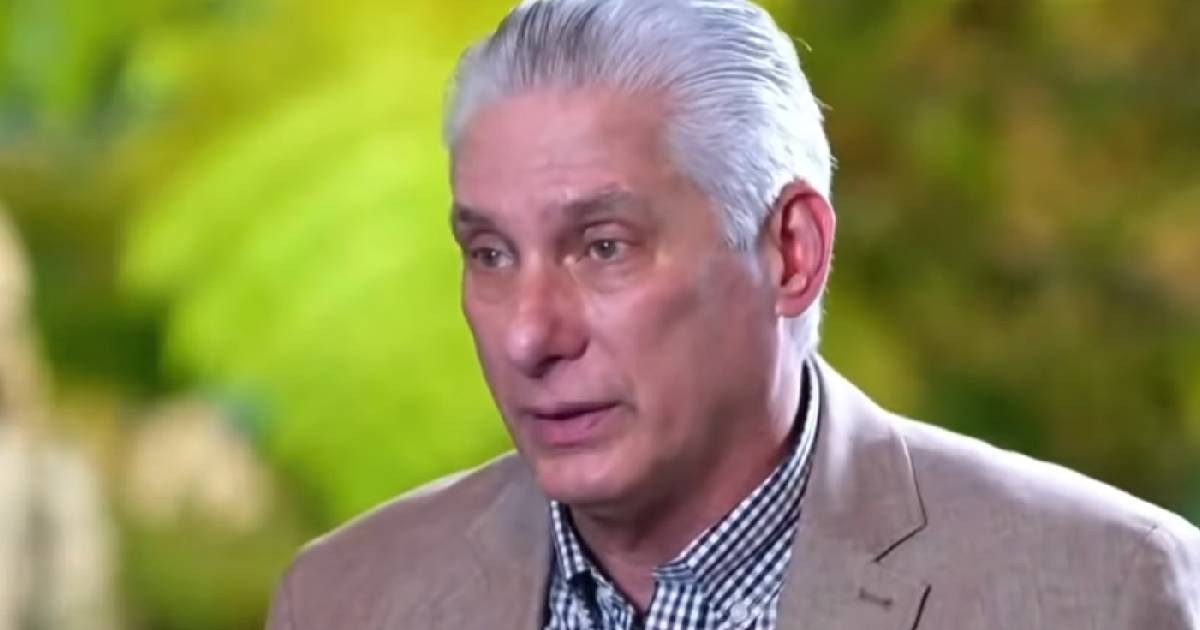
Miguel Díaz-Canel published a message on his X account this Thursday in which he stated that if Washington has a "genuine willingness" to provide humanitarian aid in the announced amounts and in accordance with universally recognized practices, Cuba "will not encounter obstacles or ingratitude" from its side.
The statement represents a significant shift from the regime's initial stance, which had labeled the offer of 100 million dollars as a "tale" and a "lie" between May 9 and 12. Foreign Minister Bruno Rodríguez Parrilla also softened his position today, declaring that Cuba is “willing to listen” to the details of the proposal.
The offer was publicly revealed by Secretary of State Marco Rubio on May 8, from Rome, following a 45-minute audience with Pope Leo XIV at the Vatican, where Cuba and the expansion of humanitarian aid were central themes.
The Department of State formalized the proposal through an official statement on Wednesday, specifying that the funds would be distributed through the Catholic Church and independent humanitarian organizations, without the involvement of the Cuban state.
In his message, Díaz-Canel noted that the priorities are "more than evident: fuels, food, and medicines," and described the offer as "inconsistent and paradoxical" given that the U.S. government itself "collectively punishes" the Cuban people "in a systematic and ruthless manner."
The official also insisted that "the damage could be alleviated more easily and swiftly with the lifting or easing of the blockade, as it is known that the humanitarian situation is coldly calculated and induced."
The shift coincides with the extreme worsening of the energy crisis. This Thursday, the electricity generation deficit in Cuba set a new record by exceeding 2,204 MW during peak nighttime hours, with blackouts affecting up to 70% of the country.
The Minister of Energy, Vicente de la O Levy, admitted that Cuba "absolutely has no fuel, no diesel, only associated gas," and that the island received no fuel ships between December 2025 and the end of March 2026.
Rubio, for his part, insisted from Air Force One on Wednesday that "the Cuban regime has driven the island to ruin" and that "people are literally eating trash from the streets." He also warned that the regime will have to "be held accountable to the Cuban people" if it rejects assistance.
This is not the first time the U.S. has channeled aid to Cuba through the Church. Following Hurricane Melissa in 2025, Washington provided between six and nine million dollars, distributed by Caritas, benefiting approximately 24,000 people in eastern provinces. Díaz-Canel concluded his message by acknowledging that "the experience of working with the Catholic Church is rich and productive."
Filed under: