
Related videos:
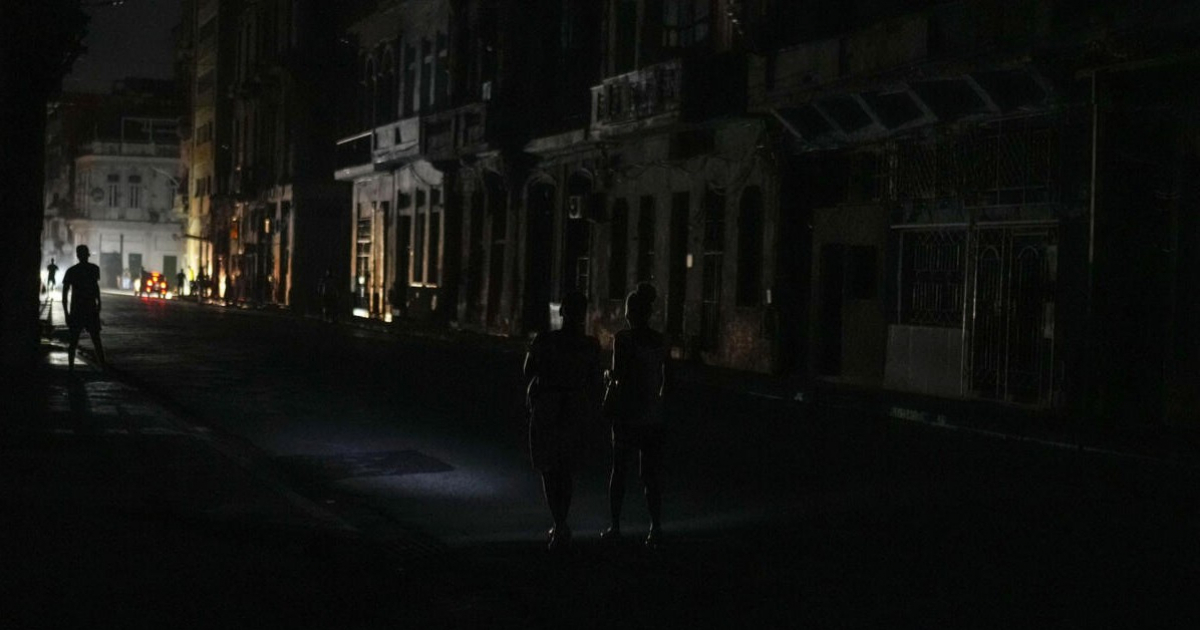
Cuba is experiencing its worst energy day in decades this Thursday due to a new partial failure of the National Electric System (SEN), which left a large part of the country without power, as confirmed by the Electricity Union in its informative note from May 14.
The collapse was triggered at 6:09 AM, hours after the Antonio Guiteras Thermal Power Plant —the largest individual generator in the country— went offline at 4:58 AM due to a boiler leak, marking its ninth failure in 2026 so far.
At 06:30, the availability of the SEN was only 636 MW compared to a demand of 2,420 MW, with 1,790 MW affected—74% of the demand remained unmet.
The forecast for the peak nighttime hours is devastating: 976 MW available compared to a demand of 3,150 MW, resulting in an estimated deficit of 2,204 MW, which translates to power outages between 20 and 22 hours daily and total cuts in the eastern part of the country, affecting nearly 70% of the Cuban population.
This projected deficit exceeds the 2,153 MW recorded on Wednesday night at 9:30 PM, which in turn had surpassed the previous record of 2,075 MW from March 6, 2026.
In Havana, the service was interrupted for 24 hours on Wednesday, with a maximum impact of 499 MW at 9:30 PM and the six blocks and emergency circuits —419 MW— without a scheduled time for restoration at the close of the Electric Company’s report.
The reconnection of the provinces progressed gradually: Ciego de Ávila connected to the national electric system at 08:16, Camagüey at 09:19, and Las Tunas at 09:50, while the rest operated with isolated microsystems.
The director of Guiteras, Román Pérez Castañeda, explained that the breakdown consists of "water loss in the boiler to an extent that prevented safe generation from continuing" and that the repair will take between three and four days.
The same failure had already halted the plant on May 5, just four days before it was resynchronized to the SEN on May 9 after 90 hours of downtime and nearly 300 corrective actions.
The crisis occurs at the worst moment of fuel shortage that Cuba has experienced in its recent history.
The Minister of Energy and Mines, Vicente de la O Levy, publicly admitted on Wednesday that the country "absolutely has no fuel, no diesel, only associated gas", describing the situation as "acute, critical, and extremely tense."
Venezuela suspended its oil shipments in November 2025, and Mexico drastically reduced theirs in January 2026, leaving Cuba without any fuel ships for nearly four months.
A Russian donation of 100,000 tons of crude oil arrived on March 31 and was depleted by early May.
Guiteras has gone more than 15 years without major maintenance —the last one was in 2010— and needs at least 180 days of downtime to carry it out. Pérez Castañeda acknowledged that “the situation in the country still does not allow it”, caught in a logic he himself summarized: “We avoid stopping unless absolutely necessary, to not impact generation.”
A second Russian ship carrying 270,000 barrels of diesel was located 1,600 km from Cuba, with an estimated arrival date of May 16, though no definitive confirmation has been provided. This represents the only short-term relief prospect for a population that has been enduring unprecedented blackouts for months.
Filed under: