
Related videos:
The Cuban regime confirmed this Thursday that it received an American delegation in Havana led by the director of the CIA, John Ratcliffe, in what was described as a meeting aimed at "contributing to the political dialogue between both nations," according to the official statement published on the website of the Communist Party of Cuba.
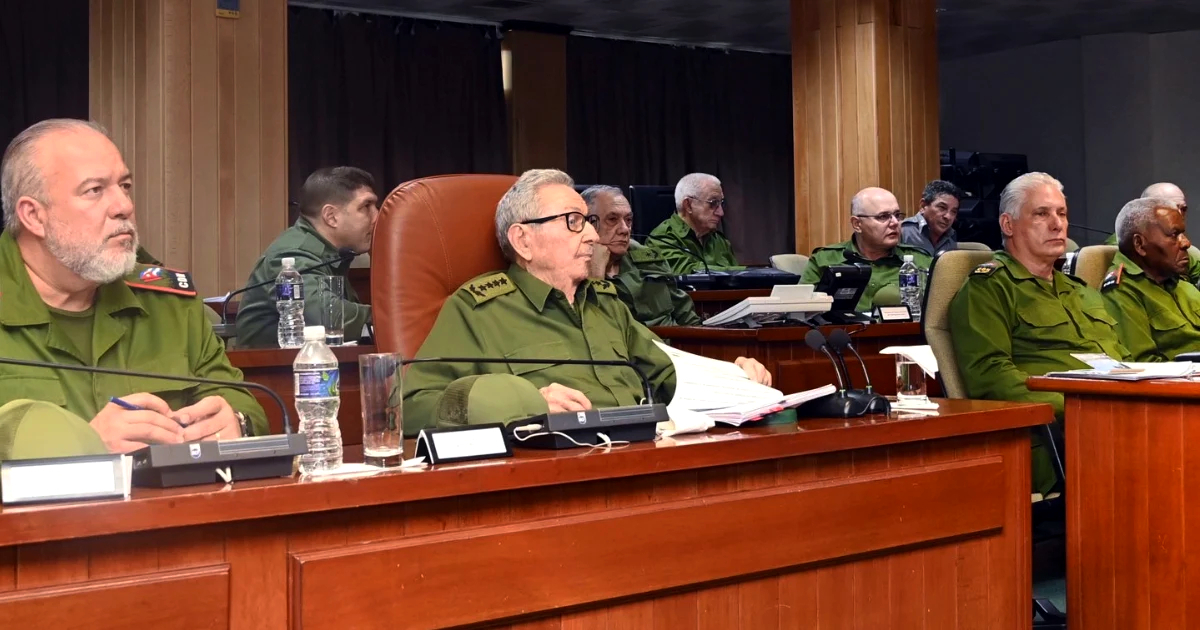
The text specifies that it was the government of the United States that requested the meeting, and that the so-called "Direction of the Revolution" approved to receive it.
The meeting took place between Ratcliffe and his counterpart from the Ministry of Interior (MININT), in a context that the regime itself described as "complex" in bilateral relations.
The central focus of the meeting was the List of State Sponsors of Terrorism, on which the Trump administration reincorporated Cuba in February 2025.
The statement asserts that the exchanges "clearly demonstrated that Cuba does not pose a threat to the national security of the U.S., nor are there any legitimate reasons to include it on the list of countries that allegedly sponsor terrorism."
The regime also reiterated that the island "does not host, support, finance, or allow terrorist or extremist organizations" and that there are no foreign military or intelligence bases on its territory.
Both parties expressed "interest in developing bilateral cooperation between law enforcement and compliance agencies, in light of the security of both nations, as well as regional and international security," according to the same official text.
The visit comes amid a week of intense diplomatic activity. On Tuesday, Donald Trump posted on Truth Social: "Cuba is asking for help, and we're going to talk!"
The next day, Miguel Díaz-Canel declared to be "always ready for dialogue," while Cuba was facing a record power generation deficit of 2,113 MW, with only 1,230 MW available against a demand of 3,250 MW.
This Thursday, the chancellor Bruno Rodríguez Parrilla notably softened the Cuban stance on the offer of 100 million dollars in humanitarian assistance proposed by Washington, indicating that Cuba is “willing to listen to the details of the offer”, a striking shift compared to previous days when he described the proposal as a “fable” and a “lie of 100 million dollars.”
Ratcliffe's visit has a direct precedent: on April 10, a delegation from the State Department landed in Havana on the first official U.S. flight since 2016, meeting with Cuban deputy ministers to discuss the release of political prisoners, the opening of internet access through Starlink, and the presence of foreign groups on the island.
The arrival of Ratcliffe represents a significant escalation in the caliber of interlocutors. The CIA director previously undertook a similar mission in January 2026, when he traveled to Caracas to meet with Venezuelan officials following the capture of Nicolás Maduro, making his presence in Havana a signal of the strategic importance that Washington assigns to this process.
The Secretary of State Marco Rubio was unequivocal on Wednesday when assessing the outlook: "The economic course of Cuba cannot change while those currently in power remain in control. That is what will need to change, because these individuals have proven to be incapable," he stated in an interview with Fox News, making it clear that Washington does not expect significant results from the current regime.
Filed under: