
Related videos:
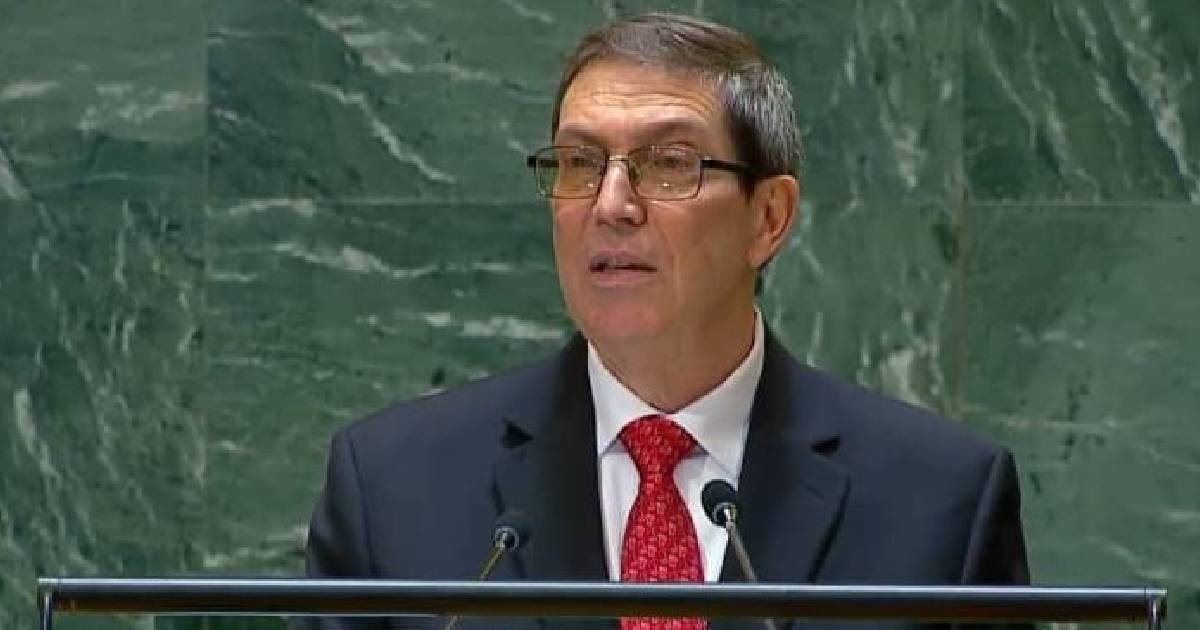
The Cuban Foreign Minister Bruno Rodríguez Parrilla spoke this Thursday during the open session of the BRICS Foreign Ministers' Meeting held in New Delhi, where he stated that Cuba is under threat of direct military aggression from the United States and called on the international community to take action to prevent it.
In his speech, Rodríguez stated: "My country is under the threat of direct military aggression and suffers the effects of a brutal blockade on fuel supplies, which constitutes a growing threat to international peace and security."
The chancellor rejected three specific measures from the Trump administration this year: the Executive Order of January 29 that imposed the oil embargo, the one from May 1 that establishes secondary sanctions against entities from third countries operating with Cuba, and the decisions of the Department of the Treasury from May 7.
Rodríguez explicitly urged the present countries to take action: "We call on the international community to mobilize to prevent a military adventure against Cuba that would lead to a humanitarian catastrophe, bloodshed, the death of Cubans and American youth, destabilize the region, and have incalculable consequences."
The official also rejected the accusation of Cuba as a threat to the national security of the United States. "Cuba is the nation that is threatened and attacked."
He described the embargo as "an act of genocide and collective punishment that causes extraordinary human suffering," and attributed to U.S. policies the blackouts, difficulties in water pumping, shortages of liquefied gas, and impacts on transportation and medical services.
The intervention occurs in the context of a unprecedented energy crisis in Cuba, with a record electricity deficit of over 2,100 MW and blackouts lasting up to 22 hours a day in Havana.
The rhetoric of military threat has intensified in recent weeks: Trump claimed on May 2 that he would take control of Cuba "almost immediately," on May 5 he threatened to deploy the USS Abraham Lincoln aircraft carrier off the island, and on May 12, Defense Secretary Pete Hegseth confirmed before Congress that Cuba is a "threat to national security."
In diplomatic terms, Rodríguez expressed gratitude for the support from China, Russia, Vietnam, and India, and proposed the establishment of a BRICS repository for science and research in service of the Global South.
In parallel to his intervention in New Delhi, the same chancellor announced on Thursday that Cuba is "willing to listen" to the offer of 100 million dollars in humanitarian aid from the U.S., which just two days prior he had termed a "fable."
Filed under: