
Related videos:
The chancellor Bruno Rodríguez Parrilla announced this Thursday that the Cuban government is “willing to listen” to the details of the 100 million dollar humanitarian aid offer made by the Trump administration, just two days after having called it a “fable” and a “lie.”
Hours later, Miguel Díaz-Canel posted on X that the U.S. "will find neither obstacles nor ingratitude from Cuba" if the assistance is offered with "true willingness" and in accordance with universally recognized humanitarian practices.
This Thursday, John Ratcliffe, director of the CIA, arrived with a U.S. delegation and met in Havana with his counterpart from the Cuban Ministry of the Interior, marking one of the highest-level contacts between Washington and the regime in recent years.
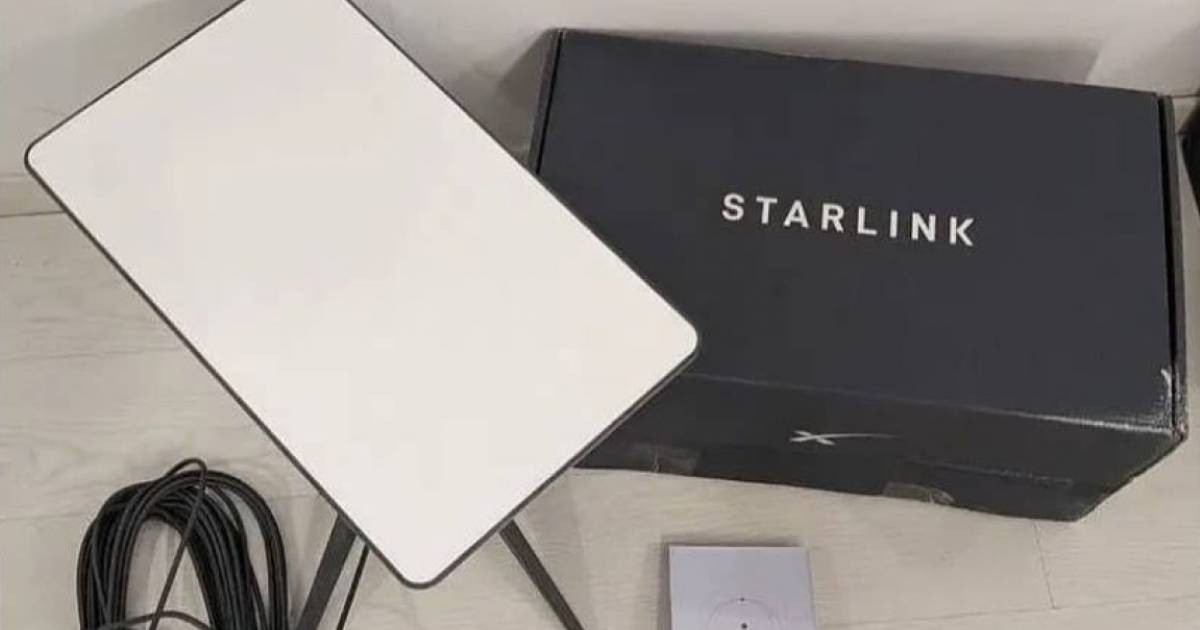
However, in none of the cases is there any mention of the acceptance, by the Cuban regime, of the offer of access to satellite internet through Starlink technology. Why?
The offer of 100 million dollars was formalized on Wednesday by the Department of State through an official statement, specifying that the funds would be distributed through the Catholic Church and independent humanitarian organizations, deliberately to avoid the mediation of the Cuban state.
The statement also revealed that Washington had made "numerous private offers" to the regime, including free satellite internet access via Starlink, all of which were rejected without a favorable response.
That detail is the most revealing aspect of the shift this Thursday: neither Rodríguez nor Díaz-Canel mentioned the offer from Starlink in any of their statements.
Both leaders implicitly agreed to discuss material aid—fuels, food, medicine—but remained completely silent about free internet, the only part of the offer that directly threatens the regime's political control.
The reason for this silence was revealed on May 4, when the official media outlet Razones de Cuba published an article titled “The Hybrid War of Starlink Against Cuba,” in which it admitted that the satellite network is “inherently resistant to physical attacks or government interdiction”, and even compared an antenna to “the installation of microphones, cameras, or missile launch bases on national territory.”
The Starlink proposal was presented on April 10 during the first visit of a U.S. government aircraft to Havana since 2016, with the promise of "free, fast, and reliable connectivity across the island," as confirmed by a high-ranking official from the State Department to EFE.
The regime rejected the offer nine days later and imposes penalties of three to eight years in prison for the possession of Starlink equipment.
Rodríguez condicionó la apertura a que la propuesta sea «libre de maniobras políticas e intentos de aprovechar las carencias y el dolor de un pueblo bajo asedio», e insistió en que «la mejor ayuda» sería «desescalar las medidas del bloqueo energético, económico, comercial y financiero».
Díaz-Canel, for his part, described the offer as "inconsistent and paradoxical," given that the U.S. government "collectively punishes" the Cuban people, although he acknowledged that "the experience of working with the Catholic Church is rich and productive."
The Cuban-American congressman Carlos Giménez warned that the Cuban government would seek to “steal the aid and profit by reselling it to the people”.
The State Department was emphatic in holding Havana accountable: "The decision lies with the Cuban regime to accept our offer of assistance or deny critical life-saving aid, and ultimately, to answer to the Cuban people for obstructing this assistance."
Filed under: