
Related videos:
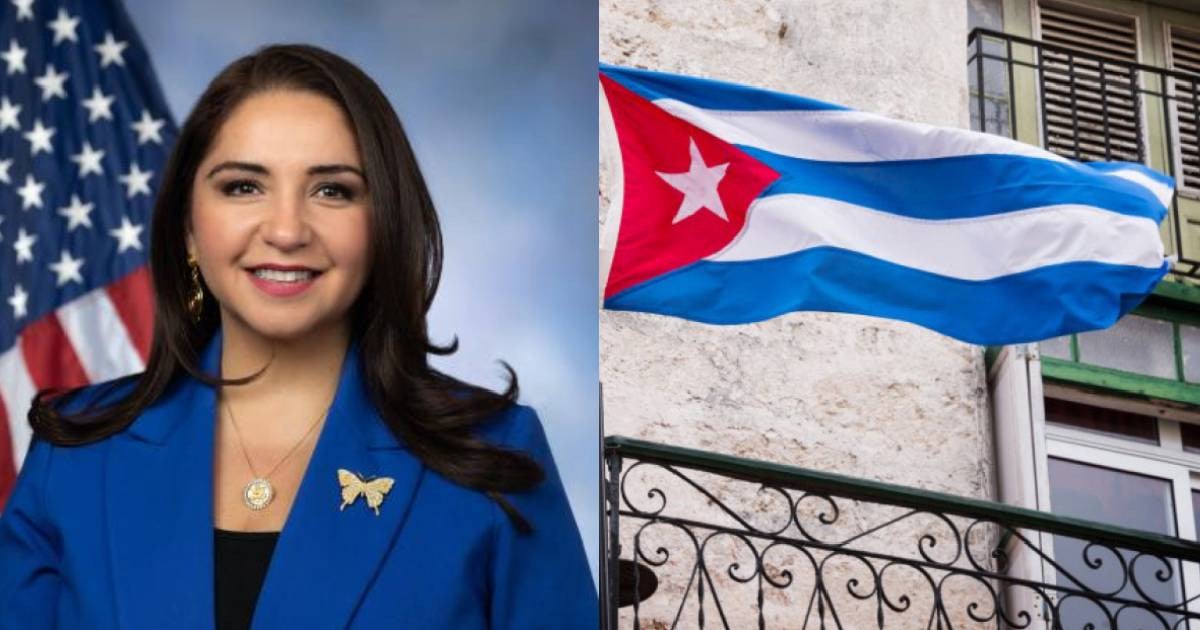
The Democratic congresswoman from the state of Illinois, Delia Ramírez, is leading a letter signed by 32 colleagues from the House of Representatives, in which they demand that the administration of President Donald Trump change its course on policy toward Cuba, while also warning about threats of military action and the energy collapse of the island.
The letter, published on May 14 and amplified by Ramírez this Saturday on his X account, is addressed to the secretaries Pete Hegseth (Defense), Marco Rubio (State), and Markwayne Mullin (Homeland Security).
In his publication, Ramírez stated that "as a result of the sanctions by Trump and Rubio, Cuba's electrical grid is collapsing, leaving families in the dark and without essential services," and warned that "the administration is threatening military action."
The letter describes a potential military intervention as "illegal, deeply destabilizing, and catastrophic for the Cuban population," and emphasizes that it "must be unequivocally rejected" for increasing displacement and exacerbating widespread suffering.
Lawmakers also reject the use of the Guantanamo naval base to detain Cuban migrants, arguing that "it is not a response to migration, but an attempt to contain the consequences of the very policies that are causing it."
The Democratic initiative comes weeks after the Senate blocked a war powers resolution led by senators Tim Kaine, Ruben Gallego, and Adam Schiff to prevent military action against Cuba without Congressional approval, with a vote of 51 to 47 against.
That legislative failure left an immediate brake off on a potential unilateral action by the president and prompted new pressure from the lower house.
The context surrounding the letter is one of sustained escalation. On May 2, Trump stated at a rally that he would take control of Cuba "almost immediately" once the war with Iran concludes.
On May 12, Hegseth stated before Congress that the Cuban regime poses an "unusual and extraordinary threat to the national security" of the United States.
The Pentagon has updated contingency plans for a possible intervention, although sources from the Department of Defense insist that there is no imminent action.
Since January 2026, the administration has imposed more than 240 sanctions against Cuba, including new measures against the military conglomerate Gaesa announced on May 7, which led major international shipping companies to suspend operations and reservations to the island.
At the same time, Cuba is experiencing its worst energy crisis in years. On May 14th, the national power grid collapsed, leaving all the eastern provinces without electricity.
The Minister of Energy, Vicente de la O Levy, publicly admitted that "we have absolutely no fuel, we have absolutely no diesel."
Despite the accumulated pressure, the Trump administration is experiencing frustration due to the lack of concrete progress. Frank Mora, former U.S. ambassador to the Organization of American States (OAS), mentioned to the The New York Times that Trump "is frustrated because he has not yet achieved the expected results in Cuba, and that is why they are tightening the screws."
Rubio, for his part, stated on the Fox News network that "we will give them a chance. But I don't think it's going to happen. I don't believe we can change the course of Cuba while these people are in charge of the regime."
Filed under: