
Related videos:
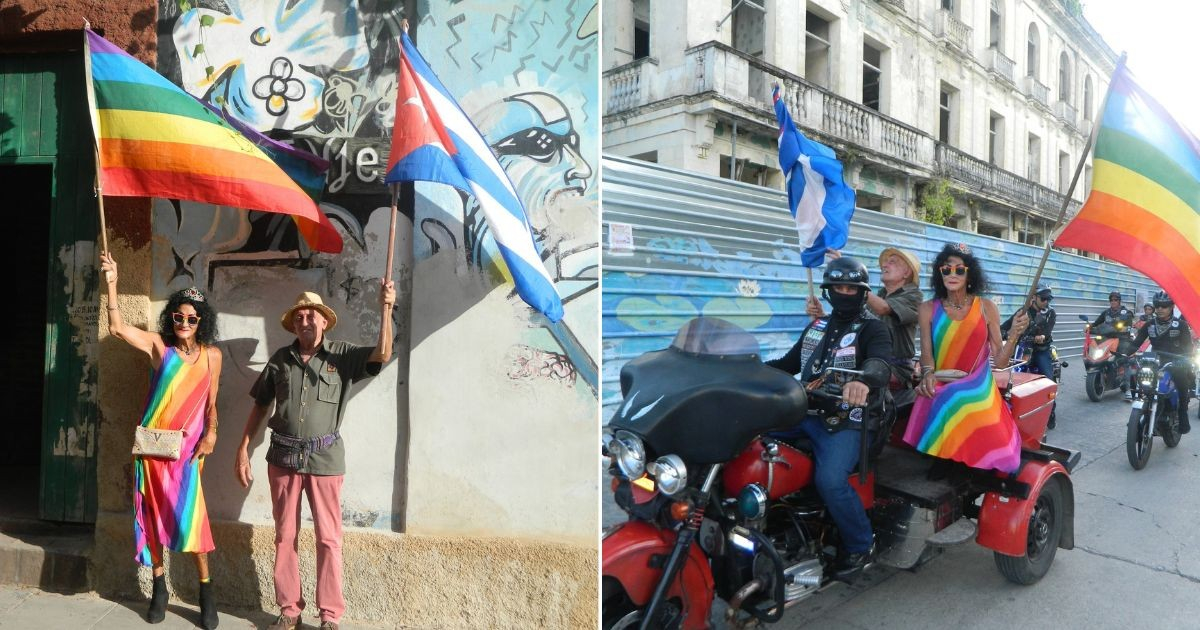
Santa Clara was adorned in colors this Sunday during a march for diversity, part of the XIX Cuban Day Against Homophobia and Transphobia, organized under the slogan "Love is Law" from May 4 to May 21, 2026.
The publication detailing the event was written by Henry Omar Pérez, a reporter for the Cuban News Agency (ACN) in Villa Clara, with a documented history of alignment with the government of Miguel Díaz-Canel.
"The streets were filled with colors during an event led by Ramón Silverio, director of El Mejunje, and Juana 'La Candela', accompanied by the roar of the Classic Motorcycle Club of Villa Clara," the official journalist wrote on his Facebook account.
The march departed from El Mejunje, the most iconic LGBTIQ+ cultural center in Cuba outside of Havana, with a history spanning 42 years.
Pérez describes it as "a true cathedral of inclusion" and highlights Silverio's role as the architect of a mentality that "today is reflected in the streets of Santa Clara."
Organizations such as Transcuba (Network of Trans Individuals, Partners, and Families) and Red HSH Cuba - Villa Clara also participated, as shown in the images of the post.
The journalist celebrates in his text the legal advancements of the regime —the 2019 Constitution and the Family Code approved in a referendum on September 25, 2022 with 67.87% of votes in favor— as “milestones that legally enshrine equality.”
However, activists and organizations report that the practical implementation of those rights remains inconsistent in schools, health centers, and workplaces.
The real context of the event is more complex than the narrative conveyed by Pérez. The Conga Cubana against Homophobia and Transphobia scheduled for May 17 in Havana was postponed to July by Mariela Castro Espín, director of CENESEX, due to the electricity crisis the country is experiencing.
That decision contrasts with the image of progress and unity that the publication projects from Santa Clara.
Pérez is not a neutral observer. In April 2026, he published a marked ballot with the text "I voted for Miguel Díaz-Canel Bermúdez and I would do it again", and in November 2025, he called the independent media outlet El Toque a "terrorist" and insulted its director, José Jasán Nieves.
His chronicle of the march follows the usual pattern of state-run media: it avoids discussing the crisis, celebrates the regime's legal frameworks, and presents the event as a symbol of national unity.
"Despite the complex situation in the country, the city proudly raised the Cuban flag alongside the flag of diversity," wrote Pérez, in a formulation that Mariela Castro has echoed in previous editions to connect the LGBTIQ+ cause with the defense of the regime.
The Cuban Day Against Homophobia and Transphobia has been celebrated since 2008, but its history is marked by cancellations and tensions: in 2019, CENESEX suspended the conga on La Rampa, which led independent activists to organize a alternative march that was repressed by State Security.
Filed under: