
Related videos:
The U.S. Department of the Treasury issued this Monday the General License 134C concerning Russian oil, which temporarily authorizes certain transactions involving crude oil from Russia, but explicitly keeps Cuba excluded from any benefits under this regulation.
The license, signed by Bradley T. Smith, director of the Office of Foreign Assets Control (OFAC), replaces GL 134B, which expired on May 16, 2026, and is valid until June 17, 2026.
The official text of GL 134C states in its paragraph (b)(1) that the license "does not authorize any transaction involving a person located in or under the laws of the Republic of Cuba," along with Iran, North Korea, and the occupied regions of Ukraine.
The exclusion is deliberate and strengthens the energy blockade on the island at a time when the regime of Miguel Díaz-Canel is facing its worst fuel crisis in decades.
The Cuban Minister of Energy and Mines, Vicente de la O Levy, admitted on May 14 that Cuba has run out of “diesel and fuel oil”, with the electric system in a “critical” state.
The irony is that De la O Levy is among the nine Cuban officials that OFAC added this Monday to the list of Specially Designated Nationals (SDN), under the CUBA-EO14404 program created by the Executive Order signed by Trump on May 1, 2026.
Among the new sanctioned individuals are Juan Esteban Lazo Hernández, president of the National Assembly of People's Power; Roberto Morales Ojeda, secretary of Organization of the Central Committee of the Communist Party of Cuba; and Mayra Arevich Marín, minister of Communications.
As an entity, OFAC added the Cuban Intelligence Directorate (DGI/G2) to the SDN list, established on June 6, 1961, classified as a government entity under the same sanction program.
The Cuban energy crisis worsened on January 3, 2026, when the capture of Venezuelan President Nicolás Maduro by U.S. special forces cut between 26,000 and 35,000 daily barrels of Venezuelan oil, which constituted between 80% and 90% of Cuba's imports.
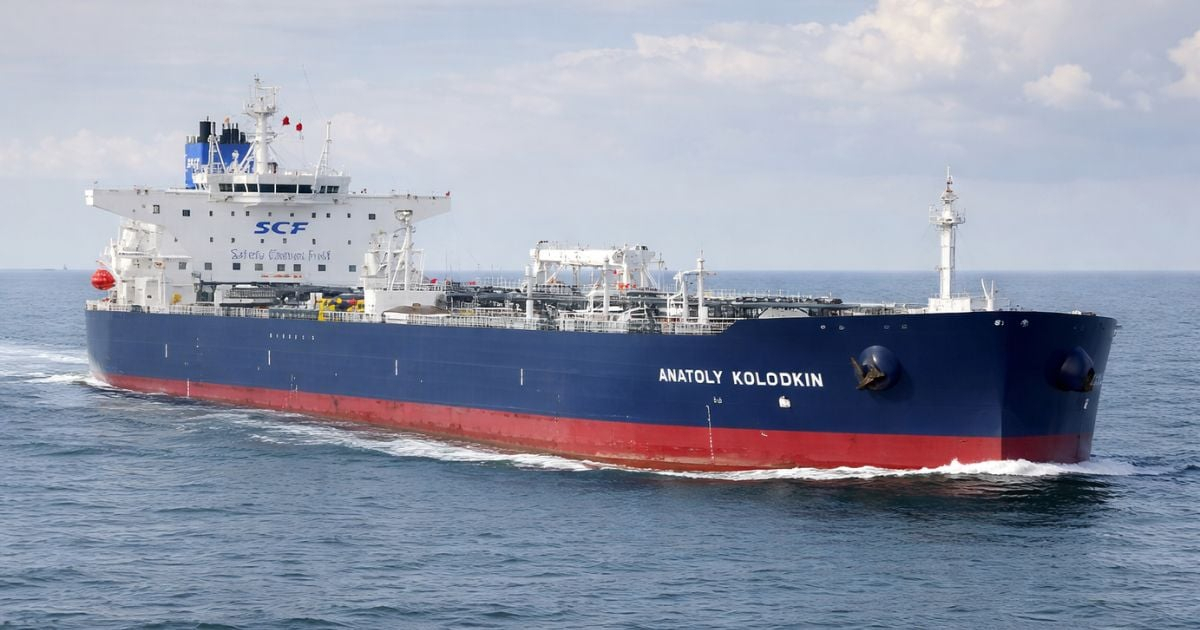
The only significant relief was the arrival of the Russian tanker Anatoly Kolodkin at the port of Matanzas on March 30, with approximately 730,000 barrels, a shipment that barely covered between seven and 10 days of consumption.
Since then, the Russian tanker Universal has been adrift in the Atlantic for weeks without being able to reach Cuba, and the GL 134C now legally closes the door for third parties to take advantage of that license to trade Russian oil destined for the island.
Cuba needs between 90,000 and 110,000 barrels daily for electricity, transport, and agriculture, but it only produces about 40,000 internally. This gap has not been bridged by the dictatorship for months, resulting in power outages of up to 30 hours for the population.
Filed under: