
Related videos:
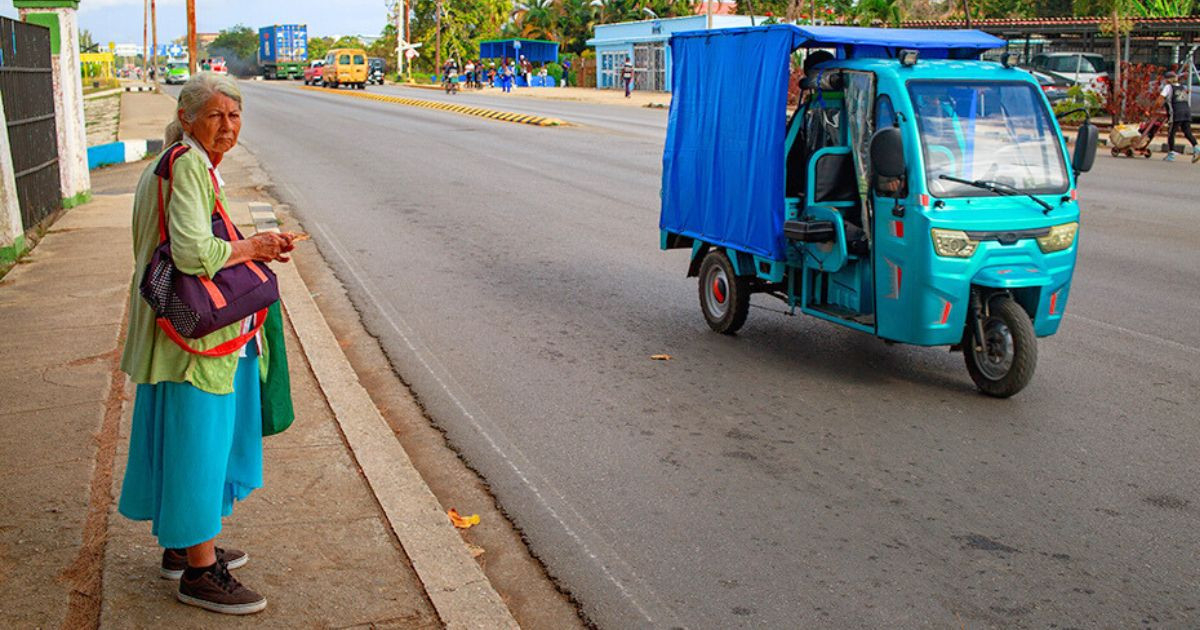
The Minister of Transport, Eduardo Rodríguez Dávila, announced this Friday the arrival in the country of 200 electric vehicles intended to support the transportation of individuals undergoing hemodialysis treatments across all provinces, along with 20 new buses for interprovincial transportation.
The announcement came during a press conference in which the head of the sector simultaneously informed about drastic cuts to public transportation services starting June 17, due to the fuel shortage affecting the island.
Rodríguez acknowledged through his Facebook profile that the inclusion of these vehicles "should have been the good news" of the day, but it was overshadowed by the cuts he announced at the same time.
"These vehicles will support the transportation of individuals who are in great need, including those whose lives depend on systematic treatments that require them to travel to healthcare facilities, often far from their homes," the official stated.
The minister also admitted that "it is frustrating for them to arrive at a time when public passenger transportation services are being reduced due to fuel shortages."
The 200 electric vehicles come with charging stations and included after-sales services, as Rodríguez specified in his post.
The measure responds to a humanitarian crisis documented since the beginning of 2026. More than 3,000 patients with chronic kidney failure rely on regular sessions of hemodialysis at 57 units distributed throughout the country, and the collapse of state medical transportation due to a lack of fuel has put their lives at direct risk.
Since February, family members and patients have reported in provinces such as Las Tunas, Granma, Pinar del Río, Ciego de Ávila, and Villa Clara that the taxis prioritized for this service have been out of service. This forces people to pay up to 500 pesos per trip for transportation or to be admitted to hospitals without adequate conditions.
In Pinar del Río, out of 181 patients undergoing hemodialysis, 108 were admitted to nearby centers to reduce travel and save fuel.
The writer Alexander Aguilar López, a hemodialysis patient in the province of Granma, reported in March that "the leaders' cars continue to circulate," while the State has ceased to provide transportation for patients.
The announcement comes at the worst moment of the Cuban energy crisis. The Minister of Energy and Mines, Vicente de La O Levy, admitted on Wednesday that Cuba has "no fuel, no diesel, just associated gas."
On Tuesday, the electric generation deficit reached an annual record of 2,113 MW, with only 1,230 MW available against a demand of 3,250 MW.
Venezuela interrupted its oil shipments following the capture of former president Nicolás Maduro, Mexico virtually suspended its supplies in January, and the only temporary relief was a Russian shipment of 730,000 barrels that arrived on March 31 and ran out in early May.
In this context, this Friday it was also announced that the frequencies of buses, trains, and the ferry will be reduced starting June 17, with interprovincial departures limited to three weekly frequencies between Havana and the provincial capitals, and only one weekly departure to Manzanillo and Baracoa.
Rodríguez Dávila himself warned that the deepening or reversal of the cuts "will depend on the availability of fuel that we may have in the coming weeks."
Filed under: