
Related videos:
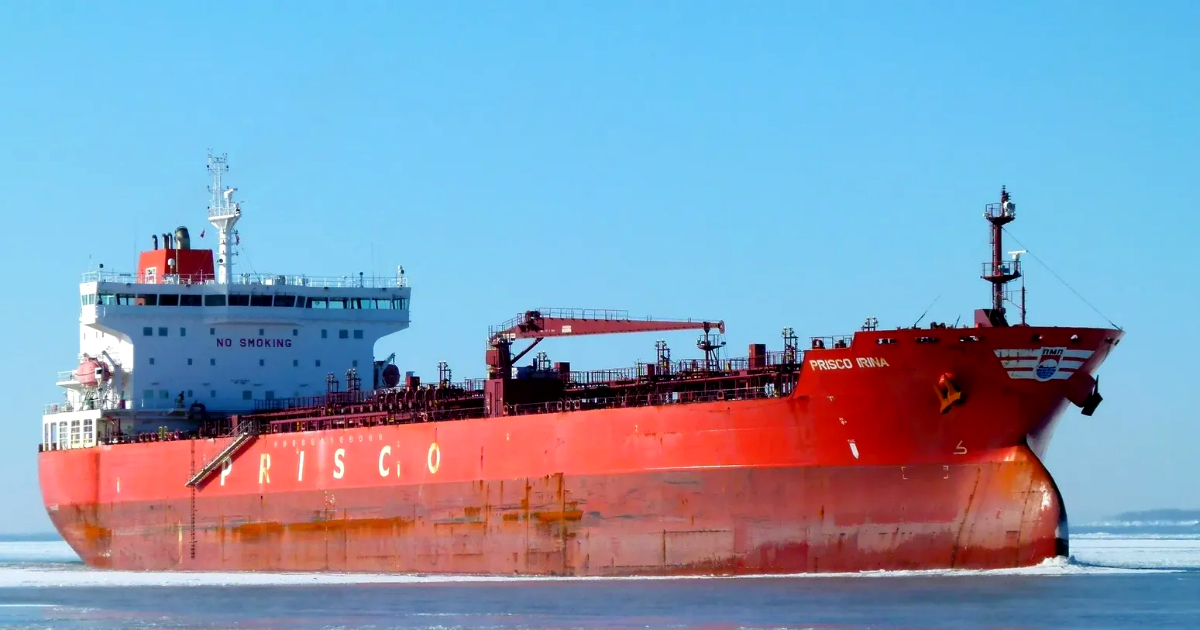
The Russian tanker Universal, sanctioned by the United States, the European Union, and the United Kingdom, continues to move slowly across the Atlantic amidst growing doubts about its final destination and the political and operational viability of a possible arrival in Cuba.
The latest maritime tracking data shows that the ship has continued moving west since the last known update, albeit at an extremely slow speed.
The Universal is currently sailing at just 1 knot —about 1.8 kilometers per hour— on a course of approximately 309 degrees, now heading northwest again after several course changes recorded in recent days.
In the previous update, the oil tanker was moving at 2.2 knots and seemed to partially correct its course towards the Caribbean. However, the new turn once again diverts it from a direct trajectory towards Cuba and reinforces the impression of cautious, erratic navigation or one conditioned by external factors.
Another significant detail is the substantial backlog. The estimated arrival reported by the AIS system changed from May 5 to May 15, a difference of ten days that is not typical for a commercial voyage of this kind of tanker.
The geopolitical context surrounding the ship has also intensified. While the Universal still has not declared a clear destination, the United States is conducting military exercises in the Caribbean, such as FLEX2026, which incorporate drones, artificial intelligence, maritime surveillance, and real-time interdiction capabilities near Cuba.
Analysts believe that the combination of sanctions, diplomatic pressure, and military deployment may be indirectly influencing the vessel's behavior, especially after Washington tightened restrictions on operations related to Russian oil destined for the island.
The situation occurs at the worst possible time for Cuba. This Tuesday, the government announced that starting May 15, there will no longer be a single price for fuel in dollars and that each importer will be able to sell gasoline and diesel according to their actual operating costs, including freight, insurance, and risks.
The measure represents an implicit recognition of the severity of the energy crisis. Cuba needs about 110,000 barrels daily and produces only 40,000. Amidst this deficit, the delay of the Universal becomes much more than just a maritime episode: it reflects the increasing fragility of the island's oil supply under international pressure.
Filed under: