
Related videos:
The Transportation Security Administration of the United States (TSA) completed this week its technical assessment at the international airports of Maracaibo and Barcelona in Venezuela, as part of the process to expand direct air connectivity between both countries, according to the U.S. Embassy in Caracas.
The diplomatic mission announced the news via a video posted on X, framing the assessment within the "three-phase plan of President Trump and Secretary Rubio for Venezuela."
"The United States reaffirms its commitment to expanding commercial flights, connecting our two countries, and ensuring that our economies thrive together," stated the Embassy.
If the airports of Maracaibo—capital of the Zulia state in the northwest—and Barcelona—capital of Anzoátegui in the northeast—receive TSA security certification, new direct routes to U.S. cities could be established without the need for a stopover in Caracas.
The evaluation of these two terminals is the next phase of a process that began in February 2026, when the TSA conducted a similar inspection at Simón Bolívar International Airport in Maiquetía, which serves the Venezuelan capital.
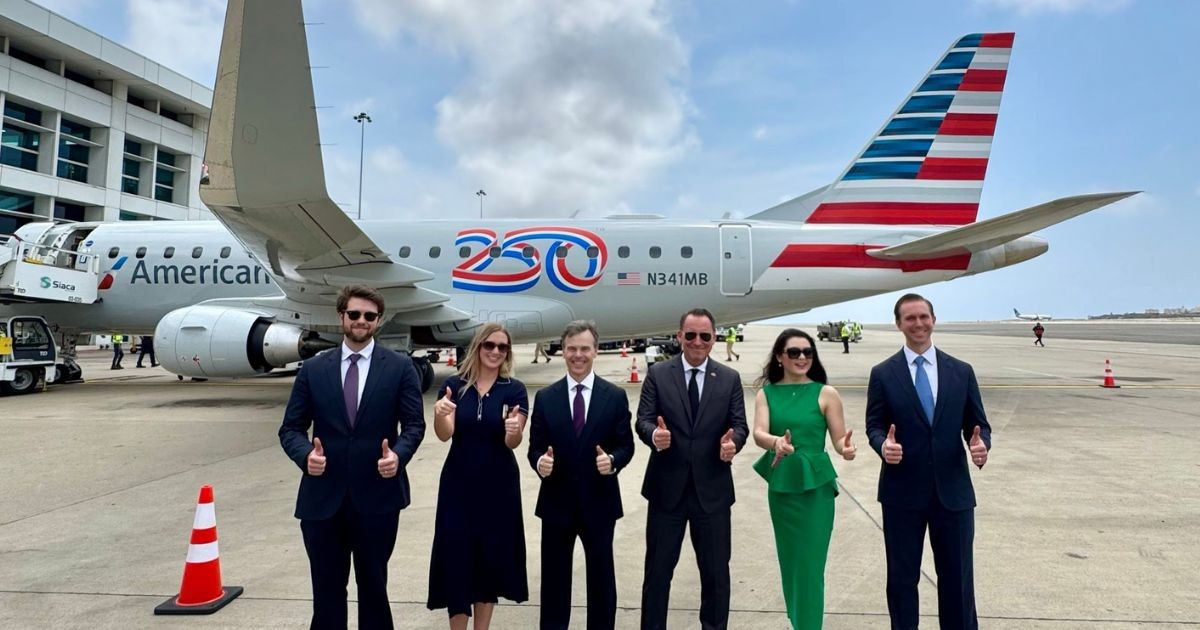
That direct precedent enabled the historic reopening of direct flights from Miami to Caracas on April 30, the first service of its kind in nearly seven years, operated by American Airlines.
Last Tuesday, United Airlines announced that it will restore its Houston-Caracas route starting August 11, which has been suspended since June 2017.
The U.S. Secretary of Transportation, Sean Duffy, celebrated this announcement by stating that "United's first flight to Venezuela in eight years marks another exciting milestone in the relationship" between the two countries.
Direct flights between the U.S. and Venezuela were suspended on May 15, 2019, during Trump’s first term, when the Department of Homeland Security ordered the cessation of all commercial and cargo flights, claiming that the conditions in Venezuela "threaten the safety of passengers, aircraft, and crew."
The decision came during a full-blown diplomatic crisis, when Washington recognized Juan Guaidó as president and imposed sanctions on Nicolás Maduro's government.
The turning point came on January 3, 2026, when U.S. forces captured Maduro in the so-called "Operation Absolute Resolution."
After that event, the U.S. and Venezuela agreed to restore their diplomatic relations on March 5, 2026, and on March 14, the U.S. embassy in Caracas raised its flag for the first time in seven years.
The evaluation of the airports in Maracaibo and Barcelona represents Washington's commitment to extending that connectivity beyond the Venezuelan capital, towards two of the country's main economic and population centers, which have strong historical ties with the Venezuelan community in the United States.
Filed under: