
Related videos:
The Cuban ruler Miguel Díaz-Canel reacted this Monday to the new wave of U.S. sanctions against high-ranking officials of the Cuban regime, asserting that Washington lacks evidence to justify the measures and that no leader on the island holds assets under U.S. jurisdiction.
In a message posted on his X profile, the Cuban leader stated: "In the direction of our Party, State, Government, and its military institutions, no one has assets or property to protect under U.S. jurisdiction."
Díaz-Canel went further, stating that the U.S. government is well aware of this reality: "The U.S. government knows it very well; so much so that there isn't even evidence to present. The anti-Cuban rhetoric of hate tries to make people believe that there are grounds for justifying the escalation of its total economic war."
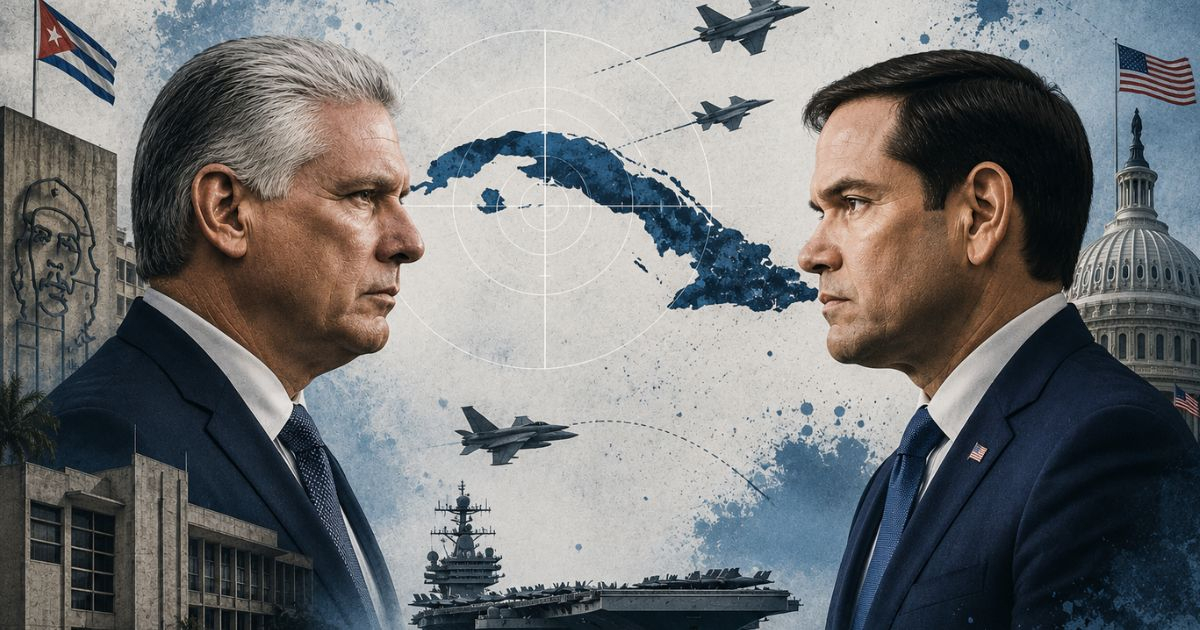
The statements come on the same day that Secretary of State Marco Rubio announced sanctions against 11 officials of the regime and three Cuban government organizations under Executive Order 14404, signed by President Donald Trump on May 1, 2026.
Among the high-ranking officials sanctioned on Monday are Roberto Morales Ojeda, Secretary of Organization of the Communist Party of Cuba; Juan Esteban Lazo Hernández, President of the National Assembly; and Joaquín Quintas Sola, Deputy Minister of the Revolutionary Armed Forces.
The sanctioned entities include the Intelligence Directorate (G2/DGI), the Ministry of the Interior (MININT), and the National Revolutionary Police (PNR).
Rubio warned that "more sanctions will come" in the coming days and weeks, marking the second wave of individual designations in less than two weeks: on May 7, Washington had already sanctioned GAESA and Moa Nickel S.A.
In his response, Díaz-Canel described the executive order that threatens third parties selling fuel to Cuba as "immoral, illegal, and criminal," and denounced that the embargo is "becoming extraterritorialized to unprecedented levels, penalizing companies that wish to invest in Cuba or simply supply us with basic goods such as food, medicine, toiletries, or others."
The energy impact on the island has been severe: according to reports from April and May 2026, Cuba needs about eight fuel ships per month, but has only received one in a recent period, while energy imports have reportedly decreased by 80% to 90% following Executive Order 14380 signed in January.
Shipping companies like Hapag-Lloyd and CMA CGM have suspended cargo reservations to and from Cuba, and Sherritt International has halted its direct operations on the island.
The pressure framework dates back to January 29, 2026, when Trump signed Executive Order 14380, declaring a national emergency with respect to Cuba and imposing secondary tariffs on countries or companies supplying oil to the island. Since then, the Trump administration has accumulated more than 240 new measures and sanctions against the regime.
Díaz-Canel concluded his message by describing the situation as a "genocidal act" and demanding that international organizations condemn the measures and prosecute those behind them. Meanwhile, Rubio has repeatedly argued that the sanctions target those responsible for human rights violations and corruption, not the Cuban people.
Filed under: