
Related videos:
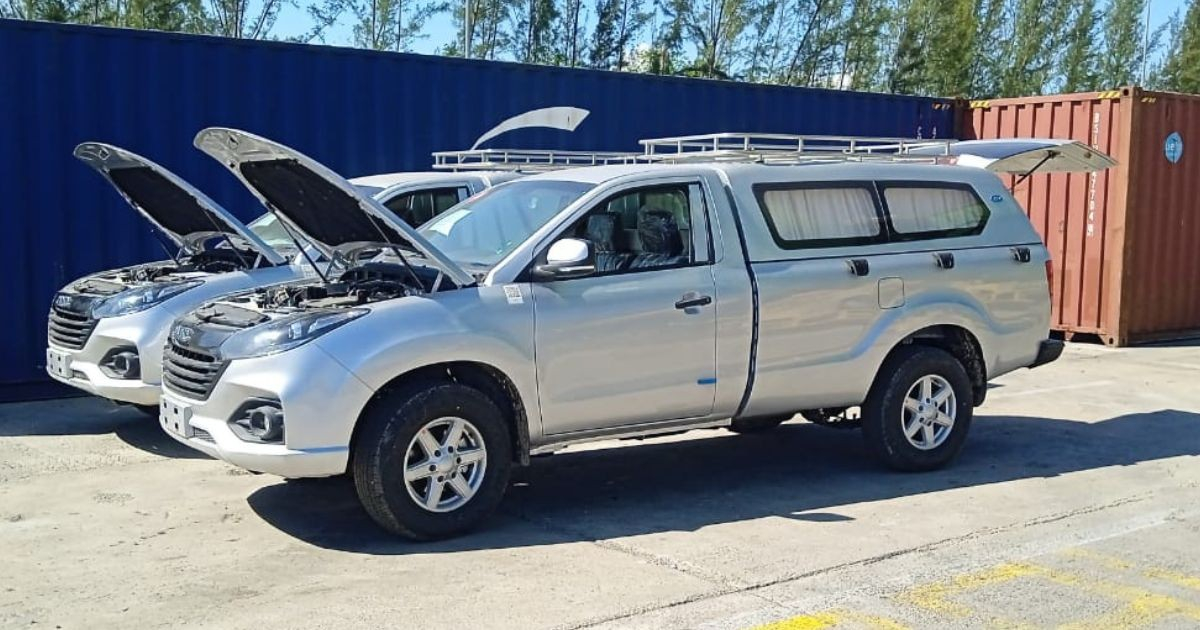
The state company Transimport Cuba announced this Tuesday the start of the extraction of hearse cars that arrived at the Port of Mariel, intended for necrological services throughout the country, as published by the entity on its official Facebook page.
The operation was coordinated by Transimport, the Ministry of Transport (MITRANS), and the Cuban port authorities.
The released images show a line of silver pickup trucks from the brand JMC (Jiangling Motors Corporation), manufactured in China, equipped with a canopy modified for funeral use, parked at the Mariel Container Terminal.
The announcement comes in the context of a structural collapse of the Cuban funeral system, which has been documented for years.
In December 2022, the Deputy Minister of Economy and Planning, Mildrey Granadillo de la Torre, revealed before the National Assembly that Cuba only had 233 operational hearses out of the 615 needed to meet national demand, a deficit of 382 units.
At that time, an import program was announced to be implemented over three years, featuring vehicles acquired from China.
In April 2023, the first batch of Chinese hearses arrived, distributed in provinces such as Las Tunas and Holguín, but the situation continued to deteriorate.
In Santiago de Cuba, in March 2023, the Communal Services Company had only 10 hearses to serve more than one million residents.
In Ciego de Ávila, in October 2025, only eight out of 19 funeral cars were operational, requiring coordination for transfers from other municipalities.
The municipalities of Jobabo and Manatí, in Las Tunas, ended up having no active funeral vehicle of their own.
In December 2025, the government added 15 electric vehicles to the necrological service of Havana, managed by the state micro and small enterprise Servi Axess, with the commitment that the service would be free for the population.
The announcement made this Tuesday represents the continuation of that plan, now with a declared scope covering the entire national territory.
The energy context in which these vehicles arrive is critical: the Minister of Energy and Mines, Vicente de la O Levy, admitted last Wednesday that Cuba has "no fuel, no diesel," making the arrival of new units even more significant for a service that the State monopolizes by law, as MiPymes are prohibited from conducting funeral and necrological services.
Simultaneously, the regime put into circulation this Tuesday 200 electric cars of the Dongfeng Box 01 model for the transportation of hemodialysis patients across all provinces, amid a health crisis that has left more than 3,000 renal patients without guaranteed transportation since the beginning of the year.
Filed under: