
Related videos:
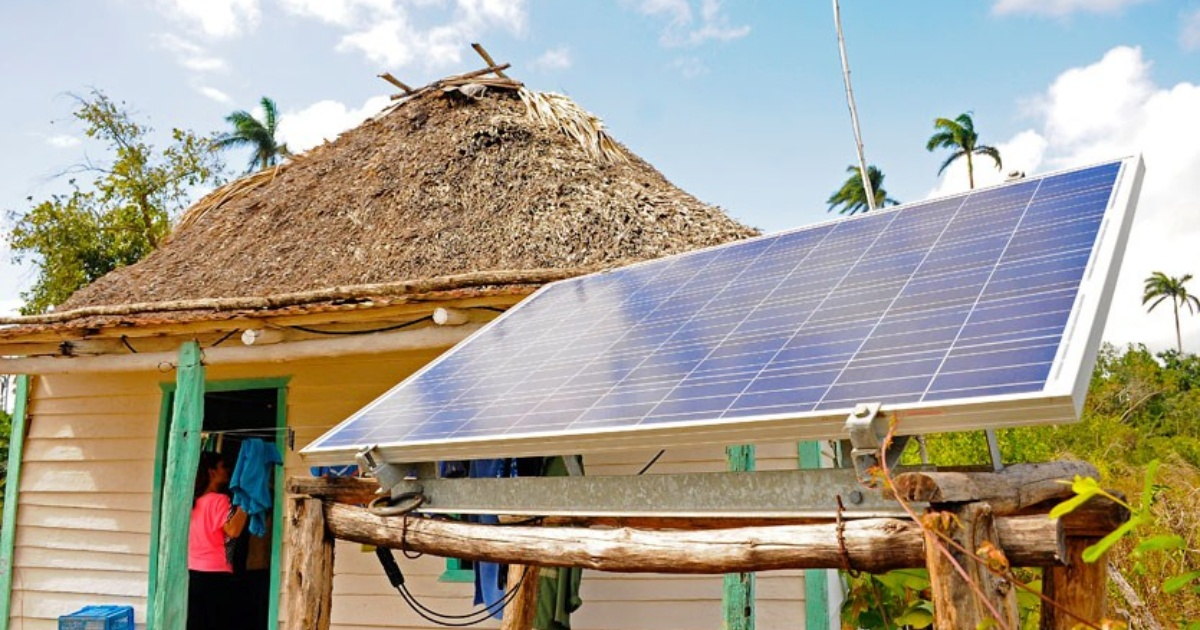
The Cuban government established a new rate of 90 Cuban pesos per kilowatt/hour for the purchase of surplus electricity generated by households and entities with photovoltaic solar panels or other renewable sources, according to the Resolution 114/2026 published in the Official Gazette Ordinary No. 45.
The measure will take effect on June 1 and represents a drastic increase compared to the rates set in 2023, which ranged from three to six Cuban pesos per kilowatt/hour, resulting in a multiplication of up to 30 times the previous price for the non-residential sector.
The Deputy Minister of Finance and Prices, Yenisley Ortiz Mantecón, presented the measure at a press conference and described the update as "a substantial incentive for popular participation."
"We understand that it is a motivational step for all stakeholders, including the population, to transform the country's energy situation," he stated.
The new rate is universal, applicable at any time of the day, and covers both the residential and non-residential sectors.
Moreover, the resolution exempts from the payment of the service tax all income derived from the sale of surpluses, although Ortiz Mantecón clarified that the benefit does not eliminate the general tax obligation: "The taxpayer must process the tax on what they are required to pay the following month for the income received from the sale of that energy."
Mario Castillo Salas, deputy director of Unión Eléctrica (UNE), announced that users with an existing signed contract will be updated automatically starting June 1, with no additional action required.
For new applicants, the UNE will begin accepting applications starting on May 28 through an online mechanism, although an in-person option will remain available for those without connectivity.
The entire process takes ten days and includes a technical visit to verify safety conditions, the replacement of the conventional meter with a bidirectional one, and the signing of the contract.
Castillo Salas specified that "the first billing recognizing the generated energy will take place between June 20 and 30, and payments will be made between July 1 and 10."
The measure is part of the National Strategy for the Transformation of the Energy Matrix and responds to the energy crisis facing Cuba, characterized by power outages exceeding 15 hours daily in some provinces and generation deficits that have surpassed 2,000 MW.
The situation worsened in January 2026 when Venezuela and Mexico suspended oil shipments to the island, deepening a crisis that the Minister of Energy and Mines acknowledged would persist throughout this year.
Cuba has installed more than 1,300 MW of photovoltaic solar capacity, but cannot fully utilize it due to a lack of energy storage batteries.
The regime aims to achieve 24% renewable generation by 2030 and 40% by 2035, and the new tariff seeks to promote private distributed generation as a complement to state-run parks.
Castillo Salas summarized the implications of the resolution: "It undoubtedly provides an additional incentive that will allow the number of clients currently using photovoltaic solar systems to grow and multiply."
Filed under: