
Related videos:
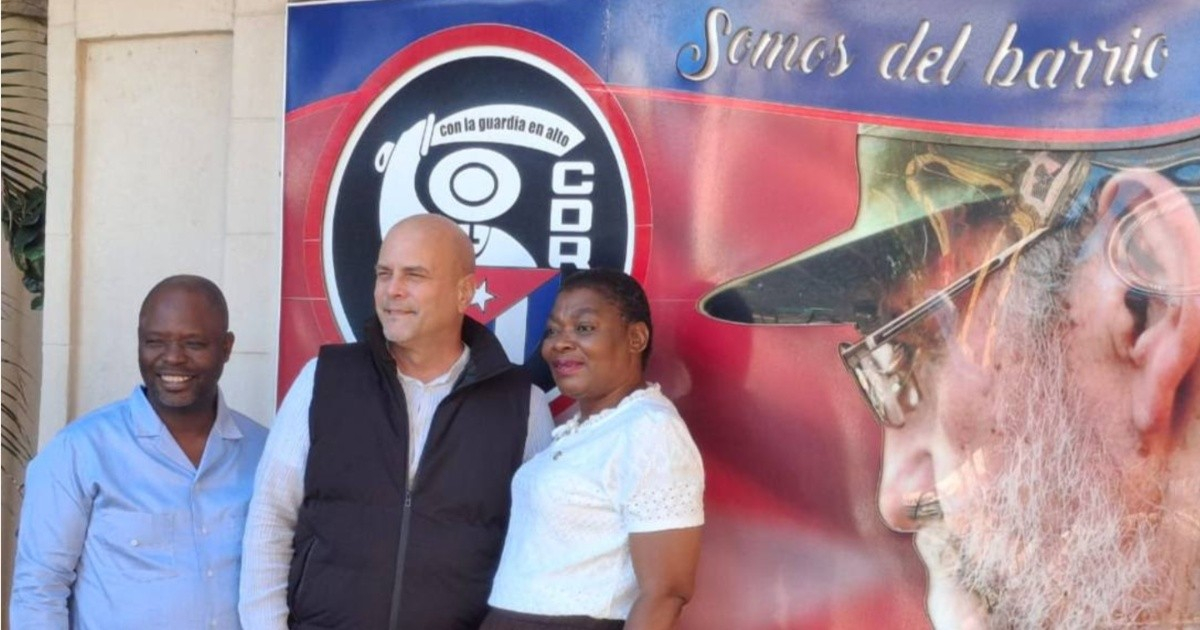
Gerardo Hernández Nordelo presented a plan on Wednesday to "revitalize" the Committees for the Defense of the Revolution (CDR), during a meeting with the National Directorate of the organization attended by Miguel Díaz-Canel, as reported by Channel Caribe.
The national coordinator of the CDR presented a set of concrete actions that include increasing surveillance against theft in communities, improving the work of the detachments that monitor the sea, boosting food production, addressing issues that limit blood donations, and multiplying the so-called "neighborhood debates" to raise awareness about drug consumption.
Díaz-Canel stated during the meeting that "the Committees for the Defense of the Revolution have a great history and today they can do much more, but to achieve this, they need to understand the current moment the country is experiencing and take advantage of the potential within the neighborhoods."
The president also stated, "This is our time; and the neighborhood is the place where we need to organize our responses."
The meeting is not an isolated event. Hernández has been making the same call since he took office in September 2020: at the X Congress of the CDR, held in September 2023, he was reaffirmed as coordinator with the explicit goal of "revitalizing" the organization, and on that same occasion he acknowledged that the CDR "do not function in many places on the Island".
In September 2025, on the occasion of the 65th anniversary of the CDR, he launched a campaign titled “100 Tasks for the Centenary of Fidel Castro” as a new revitalization strategy, and in April 2026, he promoted the program “My Neighborhood for the Homeland”, formally presented by the regime as a new structure for community action.
In April 2025, during the IV National Plenary, the organization itself acknowledged a "deficit of leadership" amidst a sustained decline marked by the aging of its membership and the disinterest of the youth.
During the meeting, Hernández highlighted the results of the "Community Youth Network," an initiative by the Young Communist Union aimed at engaging young people in solving social and economic problems in the neighborhoods. "Young people are not going to invade someone else's territory, but rather their own neighborhood," he affirmed.
The meeting is part of a series of gatherings that Díaz-Canel has held since late March with leaders of political and mass organizations, to whom he assigns "specific missions" to overcome the country's crisis, according to official media.
The context in which this new attempt at revitalization is taking place is one of deep economic and social crisis. Hernández's posts on social media in the weeks leading up to this generated massive reactions of rejection: his support for the #MiFirmaPorLaPatria campaign prompted Cubans to denounce hunger and misery and demand free elections, while his post on May 1 boasting about the dancing at the rally prior to Labor Day was met with widespread mockery.
Founded by Fidel Castro on September 28, 1960 as a network for vigilance and community mobilization, the CDR has more than six decades of history and, according to Hernández himself, are still not functioning well in much of the country.
Filed under: