
Related videos:
The Cuban regime formally introduced the popular-participatory movement My Neighborhood for the Homeland this Thursday during a working session held at the National Capitol in Havana, arguing that its essence is to "consolidate the achievements of the revolution and strengthen the Cuban socialist democracy."
Ana María Mari Machado, Vice President of the National Assembly of People's Power and the Council of State, led the event and presented the movement to parliamentarians and officials from the Central Committee of the Communist Party, presidents of parliamentary commissions, and municipal assembly directors. She showcased a report from the official Canal Caribe.
Mari Machado described the initiative as "the living expression of Popular Power" and assured that "it will support everything that happens in our neighborhoods, in our communities, in our districts, and in our popular councils to accompany this exercise of government, socialist democracy, and above all, governance in the streets during a new phase."
The program is structured around three pillars: Productive Neighborhood, Safe Neighborhood, and Participative Neighborhood, and it is projected to cover more than 12,000 districts nationwide.
The Council of State had approved the general guidelines of the movement on March 19, in a session chaired by the president of that body, Esteban Lazo Hernández, with the presence of the ruler Miguel Díaz-Canel and the prime minister Manuel Marrero Cruz.
On that occasion, Lazo emphasized the importance of the program to "maintain and strengthen the achievements of the revolution" at the local level.
A delegate from the Cerro municipality referred during the event to Díaz-Canel's remarks in the parliamentary hearing on February 24, where the president expressed "the need to revitalize popular participation and defend our sovereignty," as a catalyst for promoting the movement.
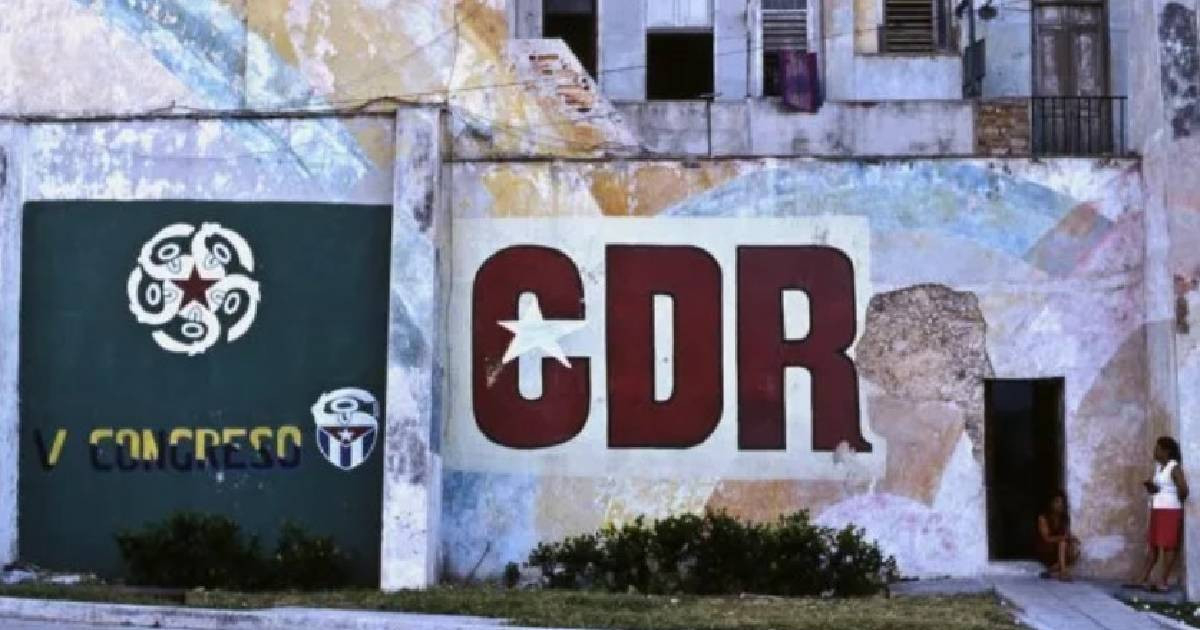
Critics and analysts point out that the program is, in practice, a reinforced version of the Committees for the Defense of the Revolution, designed to justify obsolete political structures and strengthen social control in communities burdened by power outages and shortages.
The Barrio Seguro initiative promotes participation in the National Defense Days and the organization of surveillance systems in coordination with the CDR and the Federation of Cuban Women, within the framework of what the regime wants to turn into neighborhood defense against a potential military aggression.
The movement is launched in the context of the Year of Preparation for Defense, declared by the regime in response to the repeated statements from President Donald Trump regarding potential action against Cuba.
Through this same structure, the regime has distributed in the eastern province of Granma a family guide for protection against military aggression, developed by the Civil Defense.
The national coordinator of the CDR, Gerardo Hernández Nordelo, who has called to turn each neighborhood structure into a "battalion of defense and combativeness," dismissed the idea that fear is the driving force behind mobilization and affirmed that there are Cubans willing to defend the revolution.
The contrast between the official narrative of "revolutionary achievements" and everyday reality, which includes a 23% decline in GDP since 2019, more than 20 hours of daily blackouts in some areas, and shortages of food and medicine, has sparked widespread sarcasm on social media.
A Cuban internet user summarized the popular reaction a few days ago with a direct question during an official event in Matanzas: "What achievements? The one about coal?"
Filed under: