
Related videos:
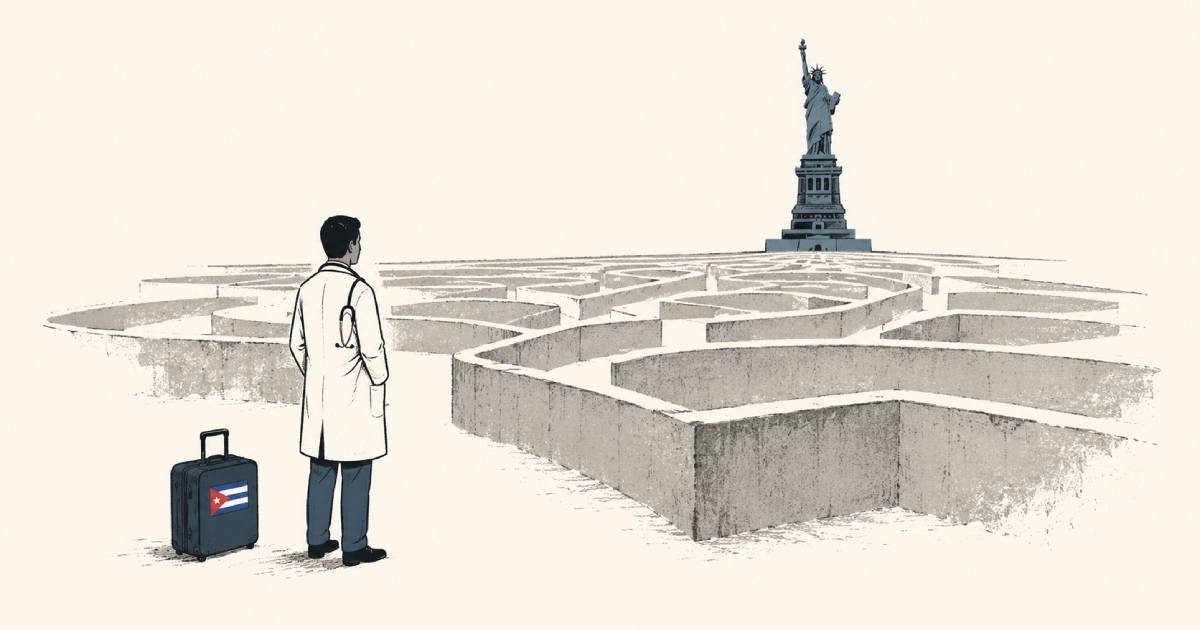
More than 300 Cuban doctors are living trapped in a migratory limbo in the United States that prevents them from working and practicing their profession, a situation that is already causing a severe economic and emotional crisis for dozens of families, according to a report by Telemundo 51.
The specialists are part of a network of approximately 1,500 foreign doctors who emigrated to the U.S. in the last five years and have organized themselves to navigate the complex medical revalidation process required by the American system.
Many entered the country under migration statuses such as I-220A, humanitarian parole, or through the CBP One application. However, their work permits remain frozen, despite a recent directive from the U.S. Citizenship and Immigration Services (USCIS) ordering the reactivation of certain procedures for healthcare professionals.
Of the more than 300 affected doctors, at least 27 have already passed all the revalidation exams and are ready to join U.S. hospitals, but they are still unable to work due to the lack of permanent immigration status.
Dr. Idalberto Fernández, spokesperson for the group, described a desperate situation. "These are families who tell you that the little money they had saved is being spent on these tests. There are people who have been ready to take the exam for months but cannot do so because they don't have the money to pay for it, as they can't work or support themselves," he explained.
Medical licensing in the United States is regarded as one of the most demanding in the world. The process requires several exams in English, certification from the Educational Commission for Foreign Medical Graduates (ECFMG), can take up to five years, and incurs costs close to $30,000.
Dr. Andrés Alberto López Sánchez, who has already validated his degree and hopes to enter a residency program, summarized the exhaustion experienced by those on this path: "It is a very lengthy, prolonged, and draining process, both physically and mentally, as well as financially."
In addition to the economic difficulties, there is also the tragedy of family separation. Many of these doctors have abandoned international missions under the Cuban regime, denouncing conditions of labor exploitation, and as a consequence, they have been punished by Havana's laws, which prevent them from returning to Cuba for up to eight years.
Dr. Dayan Ríos Alonso described the extreme vulnerability faced by many Cuban professionals in exile. "It is almost impossible to return to the island, even in complicated humanitarian situations like the death of a very close relative, a mother or a father; many times, they have even been denied entry into the country," he reported.
The crisis worsened since December 2025, when USCIS temporarily halted immigration applications from citizens of 39 countries deemed high-risk, including Cuba. The measure impacted residency, asylum, and work permit processes.
Although on May 5th, USCIS announced a partial easing for doctors from those countries —including extensions of H-1B visas and J-1 waivers—, Cubans with I-220A or humanitarian parole claim that the measures do not address their specific situation.
The situation is made even more contradictory by the growing shortage of doctors in the United States. Orthopedic surgeon Alejandro Badia, who has a clinic in Doral, warned that the country will face a critical shortage of healthcare professionals in the coming years. "There are data indicating that the United States will be short 140,000 doctors in the next decade," he stated.
According to an internal survey of the group, nearly 40% of the affected doctors reside in South Florida, particularly within the congressional district 27 represented by María Elvira Salazar.
The leaders of the initiative assert that they have presented their demands to local lawmakers, but so far the responses have been limited to managing individual cases before USCIS, a strategy they consider inadequate given the magnitude of the issue.
For many of them, the crisis goes far beyond immigration papers or work permits. "Behind every doctor, there is a dream, there is a family, there are years of sleepless nights and sacrifices," summarized Dr. Ríos Alonso.
Filed under: