
Related videos:
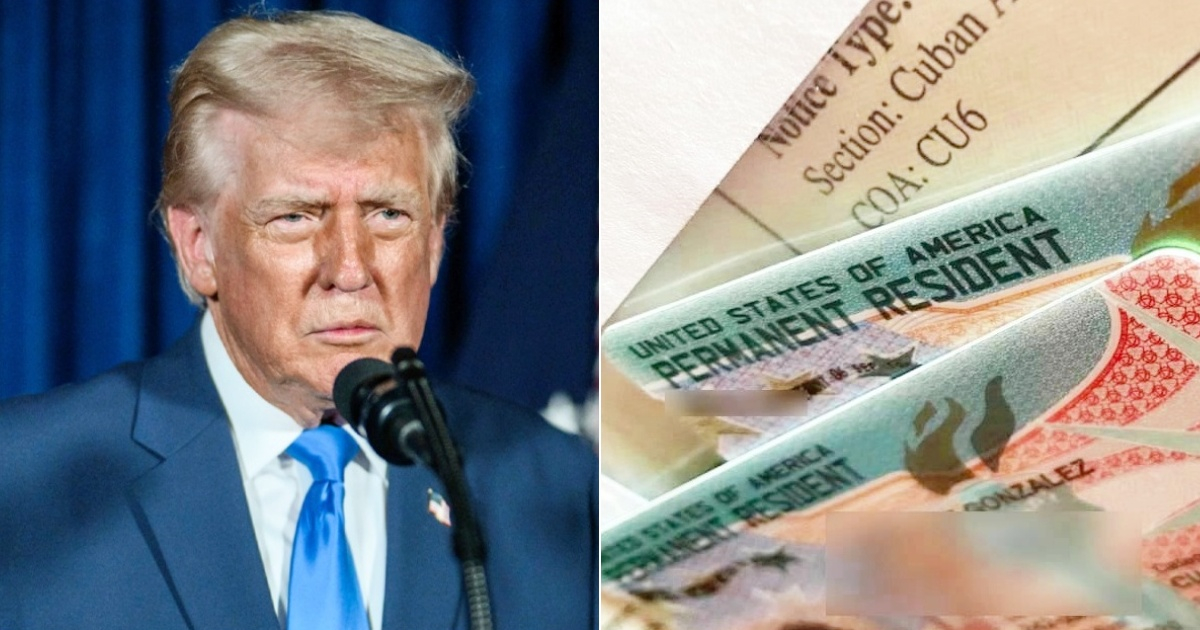
The administration of Donald Trump has ordered a temporary halt on the approval of immigration applications while it implements stricter security checks, a measure that is already causing delays and concern among applicants and attorneys in the United States.
According to internal government documents obtained by CBS News, the U.S. Citizenship and Immigration Services (USCIS) was directed to re-examine thousands of pending applications.
It includes applications for asylum, permanent residency (green card), and citizenship to undergo more thorough background checks through the FBI.
The order is clear: officials must refrain from approving any case that has not passed through this new filter.
In practice, this has led to a partial stagnation of the system.
A "temporary measure" with immediate impact
According to CNN, the pause is part of an effort by the government to ensure that all immigration decisions comply with the new security guidelines.
A source cited by that outlet explained that this is a “temporary measure to ensure that approvals comply with the new security checks.”
USCIS itself confirmed the changes.
His spokesperson, Zach Kahler, noted that the agency "has implemented new security checks to strengthen the evaluation and screening of applicants through expanded access to federal criminal background databases."
Although the government insists that delays will be limited, Kahler admitted that “any delay in the issuance of decisions should be brief and resolved quickly”, reiterating that “USCIS will always prioritize the safety of the American people.”
More access for the FBI and expanded controls
The tightening of controls is linked to an executive order signed by Trump in February, which instructed the Department of Justice to allow USCIS access to federal criminal databases "to the fullest extent permitted by law."
According to that order, the objective is to identify possible threats: “Among these offenders may be foreign nationals with criminal records who have entered or remained in the U.S. in violation of American immigration laws or who, in some other way, attempt to violate the criminal laws of the United States.”
Starting from April 27, USCIS began receiving expanded criminal background information through the FBI system, which required the reopening or review of cases that were already in progress.
In many cases, officials have been instructed to resubmit fingerprints if the previous verifications are dated prior to that date.
Who does the measure affect?
The new controls primarily impact requests that require biometric data, such as:
-Permanent residence (green card).
- Naturalization processes.
-Family and fiancé requests.
-Work permits.
-Renewals of programs such as DACA and TPS.
Furthermore, immigration lawyers reported to CNN that the pause has taken the legal sector by surprise, forcing them to swiftly respond to the interruption of approvals.
Part of a broader policy of tightening
The measure is part of a broader strategy by the Trump administration to strengthen control over the immigration system.
Since his return to the White House in 2025, the Trump administration has promoted policies aimed at restricting access to immigration benefits and increasing scrutiny of applicants.
Among these actions are included the review of social media for posts deemed "anti-American," the temporary suspension of asylum cases, and travel restrictions for citizens of 39 countries under a new version of the so-called "travel ban."
Reuters highlights that this tough policy has been defended by the administration as necessary to protect national security and reduce irregular immigration.
However, human rights organizations have criticized the measures, pointing out possible violations of due process and a disproportionate impact on vulnerable communities.
Uncertainty for thousands of applicants
Although the government insists that the pause will be temporary, the reality is that thousands of immigrants are now facing uncertainty regarding the status of their applications.
The USCIS assures that processing continues, but it is contingent upon the full implementation of the new controls. Meanwhile, the massive review of files and the requirement for new verifications could extend waiting times in a system that is already experiencing significant delays.
In the case of Cubans, the impact adds to a recent deterioration of their migratory landscape.
Data cited by the Cato Institute shows that if by October 2024 more than 10,000 Cubans per month obtained permanent residency, by January 2026 the approvals had dropped to minimal numbers: in a month with over 7,000 applications, only 15 people received the green card, representing a decline of nearly 99%.
At the same time, the arrests of Cubans by ICE rose from fewer than 200 a month to over 1,000 by the end of 2025, an increase of about 463%.
This dual phenomenon—fewer legal pathways and increased control measures—has left thousands of Cubans in a migration limbo, with stalled applications and a greater risk of detention while they await a decision.
In this scenario, the big unknown remains how long the pause will last and whether these measures will end up being established as a new standard in the U.S. immigration system.
Filed under: