
Related videos:
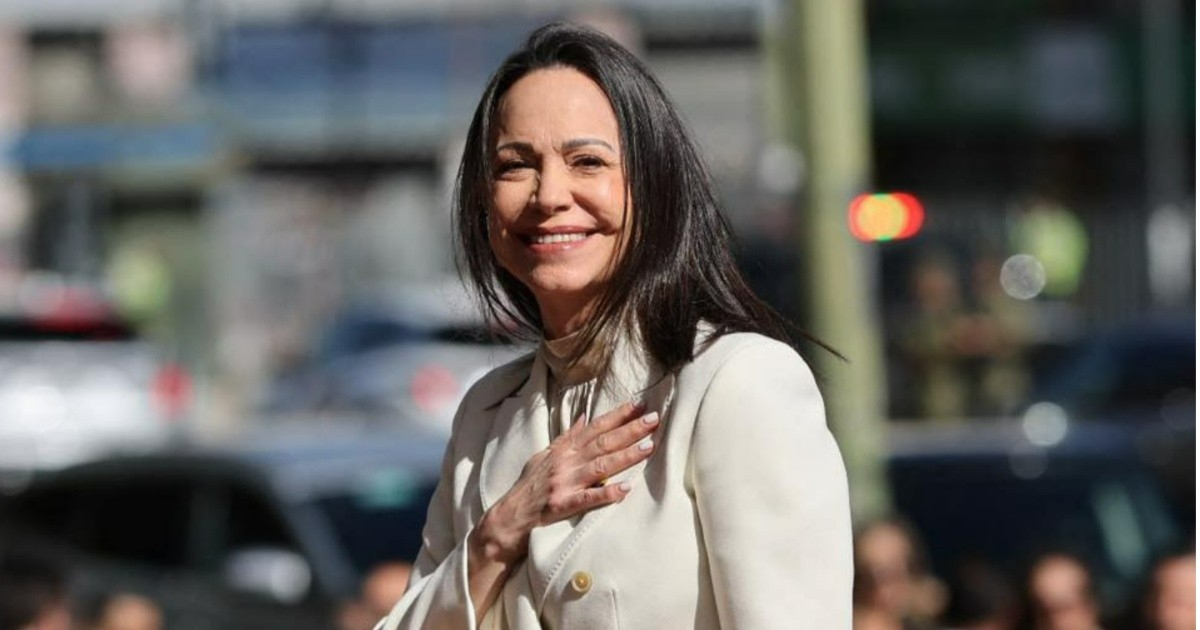
The Venezuelan opposition leader María Corina Machado published a message of solidarity with the Cuban people this Wednesday, on the anniversary of the proclamation of the Republic of Cuba, in which she stated that "after 67 years of brutal Castro-communist tyranny, winds of freedom are blowing across the continent."
The message, in which he shared a video of U.S. Secretary of State Marco Rubio addressed to the Cuban people, linked the struggle for democracy in Venezuela with that of Cuba and expressed gratitude for Washington's support for both causes.
"Today, May 20, a date of profound significance for Cuba, I extend all my strength to our Cuban brothers and to all peoples fighting against oppression," wrote Machado, Nobel Peace Prize winner 2025.
The opposition leader emphasized the connection between both processes: "The same unstoppable force that emerges in Venezuela is also making its way in Cuba."
Machado explicitly celebrated Rubio's support: "The backing of Secretary of State Marco Rubio for the popular sovereignty of Cuba resonates in Venezuela," and he thanked the United States government "for its commitment to the fight against dictatorships in the region."
He also directed a message straight to the Cubans: "Venezuela understands your pain and shares your hope; your struggle is ours."
The message concluded with a powerful statement: "Soon Venezuela and Cuba will be FREE!!!"
Machado's message was a response to a four-minute and 29-second video that Rubio released that same day on the YouTube channel of the Department of State, in which he outlined a vision of a "new Cuba" with private newspapers and television, free enterprise, and elections.
Rubio stated in that video that the future relationship between the United States and Cuba should be "directly with the Cuban people, not with GAESA," the military conglomerate that controls the island's economy, and offered 100 million dollars in food and medicine, conditioned on being distributed through the Catholic Church or charitable organizations, not by the regime.
On May 20, 1902, the Republic of Cuba was proclaimed, with Tomás Estrada Palma as its first president. This date was removed from the official calendar by Fidel Castro's regime after 1959 and is recalled by the exile community and the opposition as a symbol of a free Cuba.
Machado's stance on Cuba is not new. In a interview given in April, the opposition leader explained the structural dependency between both regimes: "Once the regime is dismantled in Venezuela, Cuba will not endure. Because it is a regime that has been sustained by the regime that was in power in my country."
In that same context, Machado had pointed out that the Cuban people "deserve to live in total freedom and dignity" and that "we fight for Venezuela, but also for Cuba, because in reality, the same forces are at play."
The Cuban regime rejected Rubio's message from May 20, calling it "cynical" and "neocolonial," while Díaz-Canel had stated on April 22 that Cuba must prepare for a possible war with the United States.
Since January 2026, the Trump administration has imposed more than 240 new sanctions against the Cuban regime, including new measures against GAESA announced on May 12.
Filed under: