
Related videos:
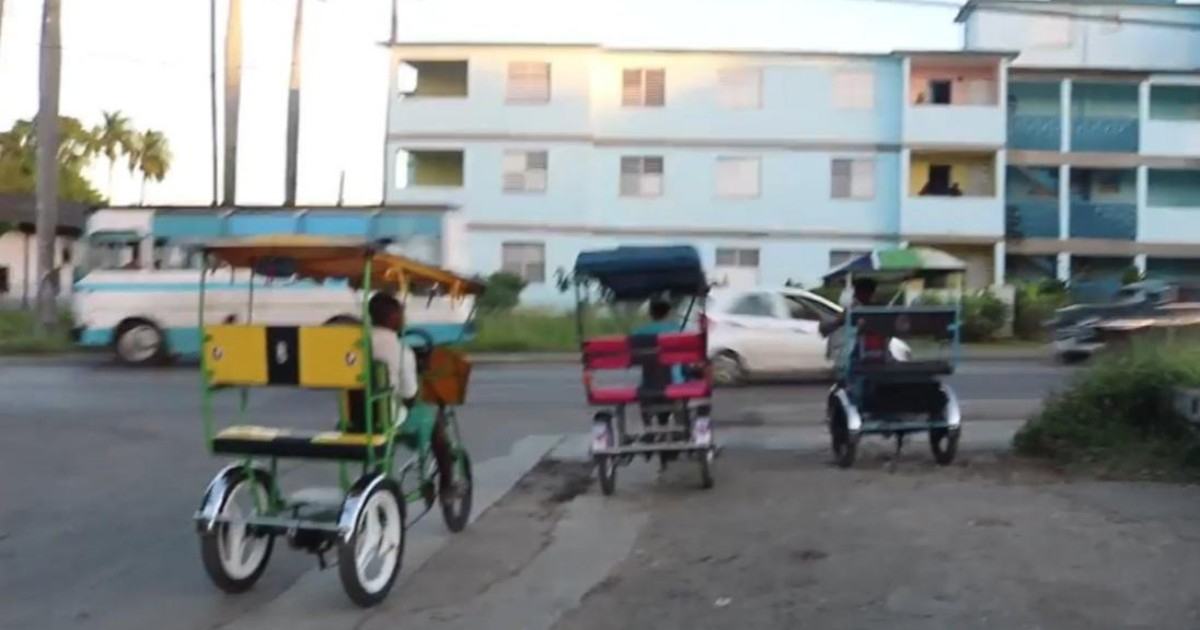
A 14-year-old teenager in the eighth grade in Havana goes out every day at noon, when classes end, to drive a bicycle taxi through the streets of Havana to bring food to his mother and younger sister, according to a video published by CubaNet.
The minor, identified by the fictitious name Leandro to protect his identity, describes his routine with a mix of innocence and maturity that is impossible to overlook: "With what I do, I buy rice, chicken, bread for the night, and to have a snack at school the next day. I help out around the house with things. This is wrong; I work to support my mom."
Leandro lives in a neighborhood with "a lot of atmosphere"—his way of describing an environment of violence, drugs, and bad influences—but he insists that he is not involved in any of that: "I am focused on studying, my job, and sports. My mom keeps me on the right path."
Among his most immediate concerns are buying some flip-flops, clothes, and shoes, and being able to give his mother a gift, as her birthday is next month.
Despite everything, Leandro holds onto an unblemished dream: boxing.
"I am a boxer; I train at the Sports City. The fare costs me a thousand pesos a day," he explains, referring to the 500 pesos for the outbound trip and 500 for the return, which sometimes consumes almost all of his earnings for the day.
Still, he does not want to give up on sports: "Anyone who trains has a path ahead," he says, convinced that hard work can provide a way out of poverty.
"This is bad," he repeats several times.
Despite his humble situation, he insists that he is happy because his mother is very affectionate with him. "She gives me love (...) I would like to help her more, to get ahead, to pursue a career..." he says, with the conviction of someone who still believes that effort can overcome the dictatorship that condemned him to grow up too quickly.
Leandro's case is not isolated.
A few days ago, Cubans assisted Mario, a 13-year-old boy who has been trimming yards since 5 in the morning to make a living.
In April, another child was selling sweets in a park in Santiago de Cuba to help his mother and little sister. A 16-year-old looks for firewood before going to school as part of the same crisis.
The Cuban Observatory of Conflicts recorded 71 reports of child labor and begging in Cuba during 2025, and child labor is expanding amid the crisis in a progressively more visible manner.
The paradox is striking: the employment of individuals under 17 years old is prohibited by the Cuban Constitution, the Labor Code, and Law 178/2025, which was passed in February of this year. Article 329 of the Penal Code penalizes the illegal employment of minors with imprisonment or fines. However, no law can compete with hunger.
Miguel Díaz-Canel admitted in April 2025 the existence of child labor during a visit to Granma, though without taking state responsibility: "We have always taken pride, because the revolution eliminated them, and we cannot allow that to proliferate during this period of economic crisis."
The crisis that drives Leandro to pedal every afternoon has concrete figures: Cuba's GDP fell by 11% over five years and by 5% just in 2025. UNICEF noted that 9% of Cuban children suffer from severe food insecurity. The Cuban Observatory for Human Rights estimated that 89% of Cuban families live in extreme poverty.
Filed under: