
Related videos:
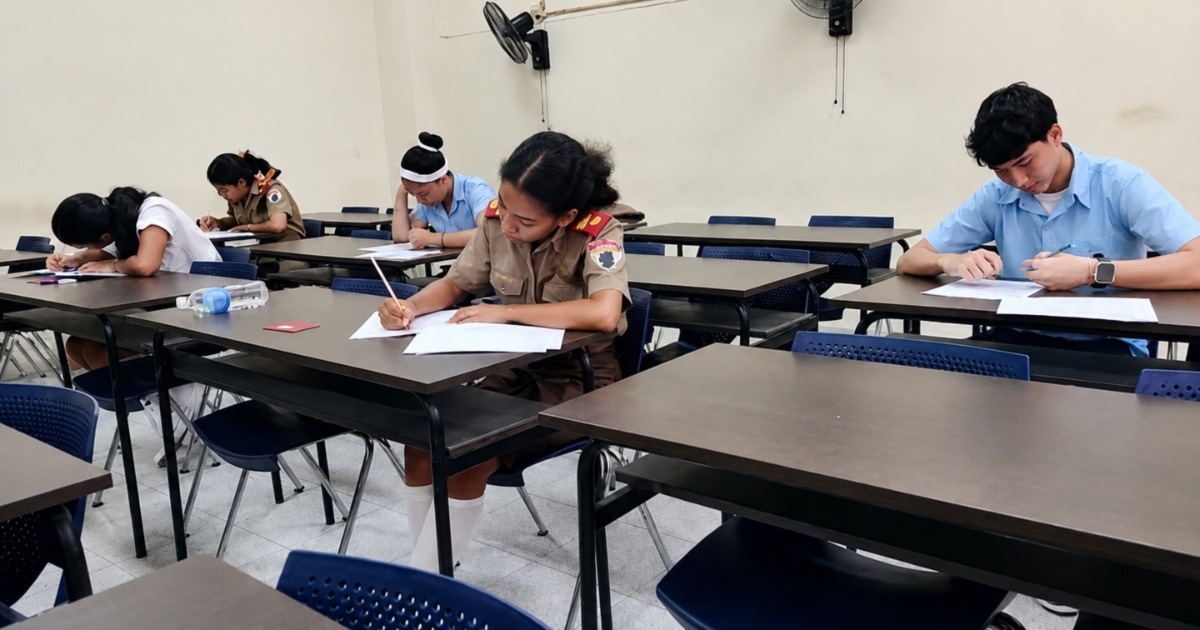
The Faculty of Communication of the University of Havana has scheduled the second call for the aptitude test for the Journalism program for next Thursday, May 28, on the condition that applicants have previously fulfilled the General Military Service.
Both 11th-grade students interested in entering the University College and 12th-grade students aspiring to enter directly into the first year of the program can participate. In both cases, the military requirement is prior and unavoidable.
The test assesses writing skills, text comprehension, current events knowledge, and critical thinking abilities, and is an essential requirement for admission to the specialty, "whose historical demand exceeds the available slots in each academic term," according to the official announcement.
This second call comes just days after the first recruitment test was held, scheduled for May 21, with registrations closing on May 4 at the pre-university institutions across the country.
The military service requirement for accessing Journalism is not new. Starting from the 2024-2025 academic year, women who choose this career must complete one year of Mandatory Military Service, a requirement that is not generally applied to other Cuban university programs and which analysts have interpreted as a factor that further discourages enrollment.
The field is experiencing a severe vocational crisis. In 2025, only two 11th-grade students took the aptitude exam at the Manuel Ascunce Domenech campus of the University of Ciego de Ávila, and barely 49% of those enrolled manage to graduate, with most dropping out for economic reasons.
The salary landscape partly explains this abandonment. In April 2026, Cubadebate published a job offer for web journalist-editors with a base salary of 5,060 Cuban pesos per month, equivalent to less than 10 dollars on the informal exchange, which led to mockery and massive criticism on social media.
The context in which these future journalists are trained is not encouraging either. Cuba ranks 160th out of 180 countries in the 2026 World Press Freedom Index by Reporters Without Borders, being the worst in Latin America, with independent journalists facing arbitrary detentions, confiscation of equipment, and sentences of up to 10 years in prison.
The independent journalist Mónica Baró, a graduate of the University of Havana, sums up the situation with a phrase that the regime would rather not hear: "There is no training in Cuba for journalism based on truth."
Filed under: