
Related videos:
The President of the United States, Donald Trump, announced this Saturday from the Oval Office of the White House that an agreement with Iran has been "largely negotiated," pending finalization, following a joint call with the leaders of Saudi Arabia, the United Arab Emirates, Qatar, Pakistan, Turkey, Egypt, Jordan, and Bahrain.
Trump posted the announcement on his Truth Social account with a message, echoed by the White House's account on X, in which he stated: "An agreement has been largely negotiated, subject to finalization between the United States of America, the Islamic Republic of Iran, and the various other countries listed. The final aspects and details of the agreement are currently under discussion and will be announced shortly."
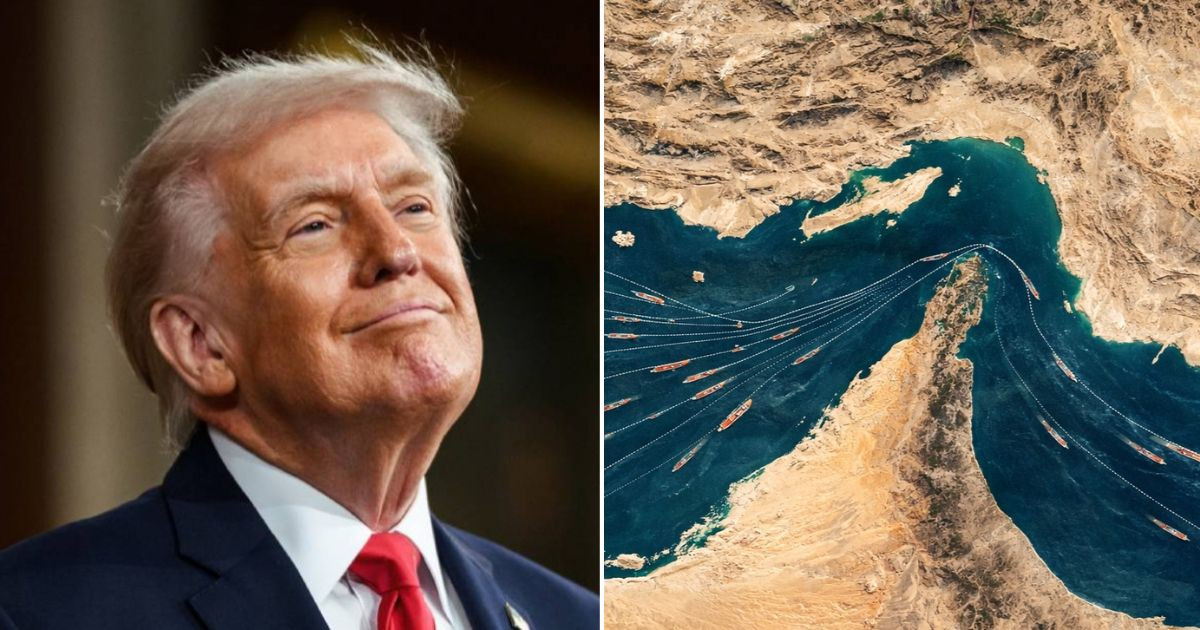
The leader emphasized that one of the key elements of the agreement is the reopening of the Strait of Hormuz, the strategic maritime route that Iran blocked in retaliation for the coordinated bombings by the United States and Israel on Iranian military and nuclear facilities on February 28, in the so-called Operation "Epic Fury."
That blockade reduced maritime traffic from 153 daily transits to between four and 13, drove crude oil prices above 120 dollars per barrel, and resulted in daily losses for Iran ranging from 435 to 500 million dollars.
Trump also reported having held a bilateral call with Israeli Prime Minister Benjamin Netanyahu, which he described as "very good" as well.
The announcement comes just hours after Trump stated in a speech in Suffern, New York that he was still undecided between finalizing an agreement or resuming military action against Iran, and that they "will never have a nuclear weapon."
The path to this announcement was marked by a rise in diplomatic and military pressure. The spokesperson for the Iranian Foreign Ministry, Esmail Bagaei, acknowledged this Saturday that "over the past week, the trend has been towards a greater alignment of positions," although he cautioned that it would take "three or four days" to determine whether a definitive agreement would be reached.
The negotiations have been mainly mediated by Pakistan, whose Chief of Army Staff, Marshal Asim Munir, acted as a direct link between Washington and Tehran.
Qatar and Pakistan also drafted a revised memorandum to bridge the gaps between both parties, with the support of Saudi Arabia, Turkey, and Egypt.
The main point of disagreement had been the duration of the nuclear moratorium: the United States demanded a 20-year pause on uranium enrichment, while Iran offered between five and 15 years.
Tehran was also demanding $270 billion in war reparations, while Washington insisted on the handover of the 440 kilograms of highly enriched uranium held by Iran.
Trump had escalated the pressure with a series of ultimatums: on May 11, he described the Iranian response as "totally unacceptable"; on May 17, he threatened that "nothing" would be left of Iran if they did not reach an agreement; and on May 19, he gave Tehran an ultimatum of "two or three days."
The Secretary of Defense, Pete Hegseth, confirmed on Friday that the ceasefire "holds for now," but warned that U.S. forces are ready to resume operations at any time.
Filed under: