
Related videos:
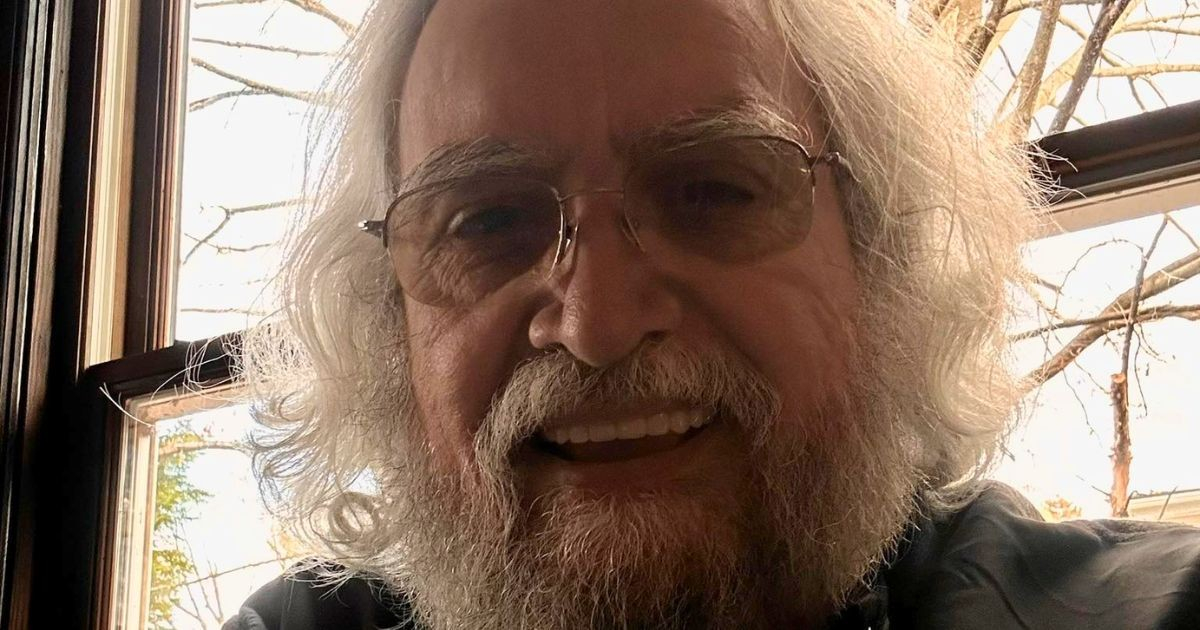
The popular Cuban troubadour and poet Pedro Luis Ferrer Montes published a poem titled "Majority" this Friday on his Facebook profile, from Florida, with a lyrical reflection on the people —presumably Cuba— as a collective force that, despite the crisis, "believes in itself."
The text begins with an anonymous quote that sets the tone for the entire poem: "When the few, / in their stubbornness / of minority, / go mad / and proclaim themselves the majority: / they have succumbed to fantasy."
From that premise, Ferrer constructs an argument in verse that acknowledges the suffering of the people while maintaining their centrality as a historical subject: "The vast majority, / whatever the reason, / upholds the slogan. / Beyond the displeasure / of ruthless deprivation, / the multitude is muscle."
The poem does not shy away from reality: the "impious misery" mentioned by Ferrer could describe Cuba in 2026, where the CEPAL projects a contraction of the GDP of 6.5% and the Economist Intelligence Unit estimates a decline of 7.2%, in a country that has already experienced a deterioration of around 23% of its economy since 2019.
Economist Pedro Monreal has warned that, in an extreme scenario, the decline could reach 15%, comparable to the worst year of the Special Period, while blackouts, fuel shortages, and a lack of food define the daily lives of millions of Cubans.
In that context, Ferrer states that "whatever the filter, / the largest populace / sets the boundary," and he reserves his sharpest contrast for those who, from the outside or from dissent, question the legitimacy of that populace: "In contrast, the few / detest the slogan / and demand another people."
The poem concludes with an image that encapsulates its political and poetic strength: "But the people are an enigma / guided by their instinct / —the people, the majority. / And they bet on themselves."
The voice of Ferrer is imbued with a history that makes him a privileged witness to the tension between the majority and the "minority," who demand a different society. Born in Yaguajay, Sancti Spíritus, in 1952, he is one of the most unique figures in Cuban trova: recognized by the public and repeatedly censored by the state's cultural apparatus.
Songs like "La Habana está poblada de consignas" from the album "100% Cubano" (1994) circulated clandestinely on the island during the 1990s, when their presence in official media was virtually eliminated. After a trip to Peru, he recounted that the Ministry of Culture prohibited him from performing on public stages for two years; radio and television distanced themselves from his music, and a party "decree" was read in workplaces that disqualified him, even though he was never a member of the Communist Party.
Ferrer has openly declared his distance from the system. “No one is a secret: I do not agree with the design”, he stated in March 2020. In February of the same year, he had equated Fidelism with machismo in public statements.
In August 2023, Ferrer returned to perform in Havana, at the Museum of Fine Arts, with concerts that sparked controversy and high demand. "Singing in Cuba helps me become a better artist," he declared at the time. In September of that year, he performed for free alongside his daughter Lena Ferrer in two concerts on the island, and expressed his outrage over food prices: "Those who do not receive remittances cannot buy."
"Majority" thus fits into a long tradition of dissenting work that is neither an official pamphlet nor an opposition manifesto, but rather a sharp and painful reflection on the complexity of the Cuban popular subject: a people that Ferrer describes as an enigma, as muscle, and that, despite everything, continues to bet on itself.
Filed under: