
Related videos:
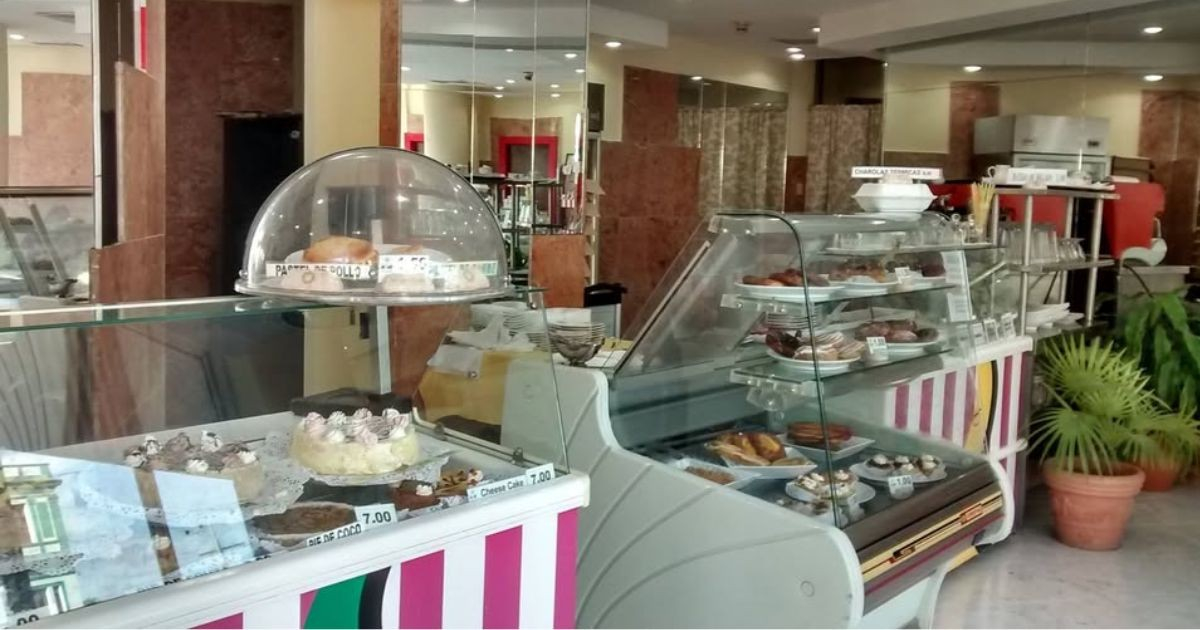
The iconic sweet shop and ice cream parlor Dulce Habana, located in the basement of the Hotel Habana Libre in El Vedado, recently stopped accepting Cuban pesos and began charging for its products exclusively in U.S. dollars, which led to an immediate exodus of its regular customers.
The change is abrupt, and its consequences are evident. Until a few days ago, a sweet treat at that establishment cost about 500 Cuban pesos. Now the business applies an exchange rate of 750 pesos per dollar, well above the current informal rate —555 pesos per dollar last Friday— and the floating official rate, which is at 540. Most Cubans do not have dollars, or cannot afford to spend them on pastries.
The menu at Dulce Habana features prices that are out of reach for the average Cuban. A continental breakfast costs two dollars (1,500 pesos at the local exchange rate), a four seasons pizza three dollars (2,250 pesos), a Cuban sandwich four dollars (3,000 pesos), and a beef hamburger five dollars (3,750 pesos). Although the menu displays prices in national currency as well, the establishment's employees confirmed to customers that payment is only accepted in dollars, reported 14ymedio.
"The same sales assistant looked utterly ashamed," a regular customer recounted to the digital newspaper, outraged by what she described as an abusive dollarization. The same woman recalled how the store used to be: "Before, when I went, there were people sitting and eating sweets, and customers would come and go constantly. Now, they come in or peek inside and then leave just as quickly."
That client acknowledged that she receives remittances from a daughter living in Spain, but she stated that "under no circumstances" would she spend that money on sweets, only on "ultra necessary things." She raised a question that circulates among the people of Havana: "Who are those sweets for?"
The implicit answer is provided by the context. The average wage in Cuba was 6,930 pesos in 2025, equivalent to about 12 to 15 dollars at the informal exchange rate. Independent economists estimate that surviving in Cuba costs at least 35,000 pesos per month per person, more than five times that average wage. In that scenario, spending three or four dollars on a sandwich or a pizza is a luxury reserved for those who receive remittances from abroad or have access to foreign currencies through other means.
A retired resident of Marianao who used to frequent Dulce Habana described his feelings about the change as reminiscent of experiencing the Special Period: “It’s like when the CUC started circulating in the '90s. The hotel shops with CUC and the Cuban unable to acquire that currency.” The man opted for a private alternative: “To satisfy my craving for a sweet, I went to that pastry shop on 23, across from Coppelia, and bought an éclair for 120 pesos.”
His analysis goes beyond mere frustration. "When you take it to other levels, the State actually doesn’t guarantee anything anymore. The little it has is in dollars, at prohibitive prices, and if we survive it's thanks to the private sector, which is still largely in control," the retiree told 14ymedio.
The dollarization of Dulce Habana is not an isolated case. It is part of a trend that has accelerated in 2026: nearly thirty state-run gas stations have been selling fuel exclusively in dollars since 2024, and since May, state platforms have been selling 10-kilogram liquefied gas cylinders for 29 dollars, equivalent to more than 15,000 pesos at the informal exchange rate. The Cuban regime, unable to sustain its services in national currency, shifts the burden onto citizens by demanding foreign currency that the state itself does not generate.
The price of the dollar reached a record in the informal market of the Island this Friday, hitting 555 pesos, a figure that illustrates the depth of the monetary crisis. In that context, the question left hanging by a customer at Dulce Habana —“Who are those sweets for?”— has an increasingly evident answer: not for the Cubans who live on a salary in pesos.
Filed under: