
Related videos:
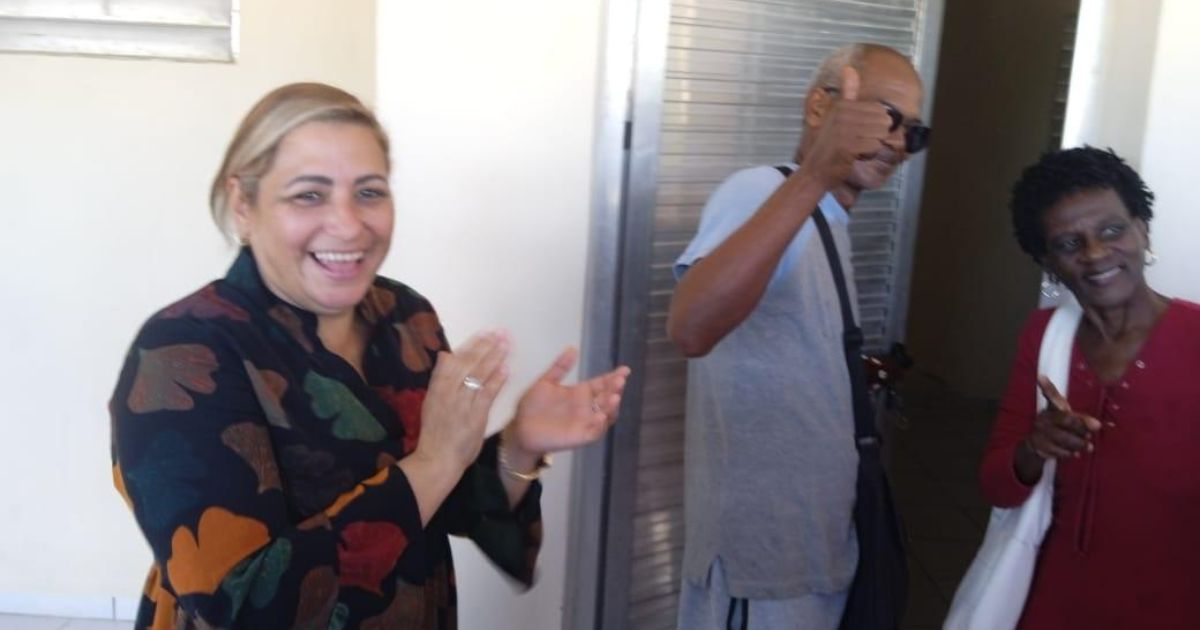
The Cuban regime celebrated this Saturday in Santa Clara, the capital of Villa Clara, the handover of six homes to families affected by Hurricane Irma, nearly nine years after the cyclone destroyed their houses on September 9, 2017.
The beneficiary families spent that time in temporary housing, waiting for the State to fulfill its promise of reconstruction. The official event was presided over by Susely Morfa González, the first secretary of the Communist Party of Cuba (PCC) in Villa Clara, and the governor Milaxy Yanet Sánchez Armas.
The six homes correspond to the first module of the so-called Síndico and Central Project in Santa Clara. Carlos Pérez, a specialist from the engineering services company Nexo, acknowledged to the press that "the entire process has been marked by limitations in supplies and financing, common issues in the current context" and that interruptions sometimes lasted "from one to two weeks," as reported by the Cuban News Agency (ACN).
Pérez added that the project, which began in 2017 under the direction of the Construction and Assembly Company, had to undertake unplanned structures such as retaining walls, which required additional efforts in supplies and financing, the source indicated.
In addition, the specialist warned that a second module of six additional homes is still pending, and its completion "will depend on an improvement in the fuel situation," although the materials for that phase should already be available.
In the event, Rosa María Rodríguez Castillo, one of the beneficiaries who spoke on behalf of the affected families, stated that “today we will finally make our dream of living in comfortable homes a reality” and recalled that it was in that same place where on September 9, 2017, she witnessed her house being destroyed and lost her belongings.
Rodríguez Castillo expressed gratitude to the government, the PCC, Fidel Castro, Raúl Castro, and Miguel Díaz-Canel, attributing the delays to "an intensified blockade and the encirclement by the U.S. government." However, the housing crisis in Cuba is structural and predates the U.S. embargo: before Hurricane Irma, more than 39% of the Cuban housing stock was already in regular or poor condition.
The cyclone Irma left 158,554 affected homes across the country, with 14,657 total collapses. Villa Clara was one of the hardest-hit provinces, with around 52,000 damaged homes in the province, of which only 18.4% had been "resolved" two months after the disaster.
The slow pace of reconstruction is not an isolated case. In 2018, a donation from UNICEF for the victims in Villa Clara sat in storage for eight months without being distributed. In 2025, Cuba only completed 5,493 homes across the country, which is 26% less than in 2024 and barely half of the state plan of 10,795 units.
The housing deficit in Cuba amounts to 805,583 homes, as acknowledged by the Ministry of Construction itself before the National Assembly in July 2025: 407,219 yet to be built and 398,364 needing rehabilitation.
The ACN report concluded that the delivery "once again demonstrates the willingness of the Cuban government not to leave affected families without support," while thousands of families across the country are facing severe housing problems.
Filed under: