
Related videos:
The Venezuelan human rights organization Provea accused the interim president Delcy Rodríguez this Sunday of committing a "blatant cession of sovereignty" by allowing the overflight and military exercises of U.S. aircraft over Caracas without the backing of the National Assembly, according to a report from El Nacional.
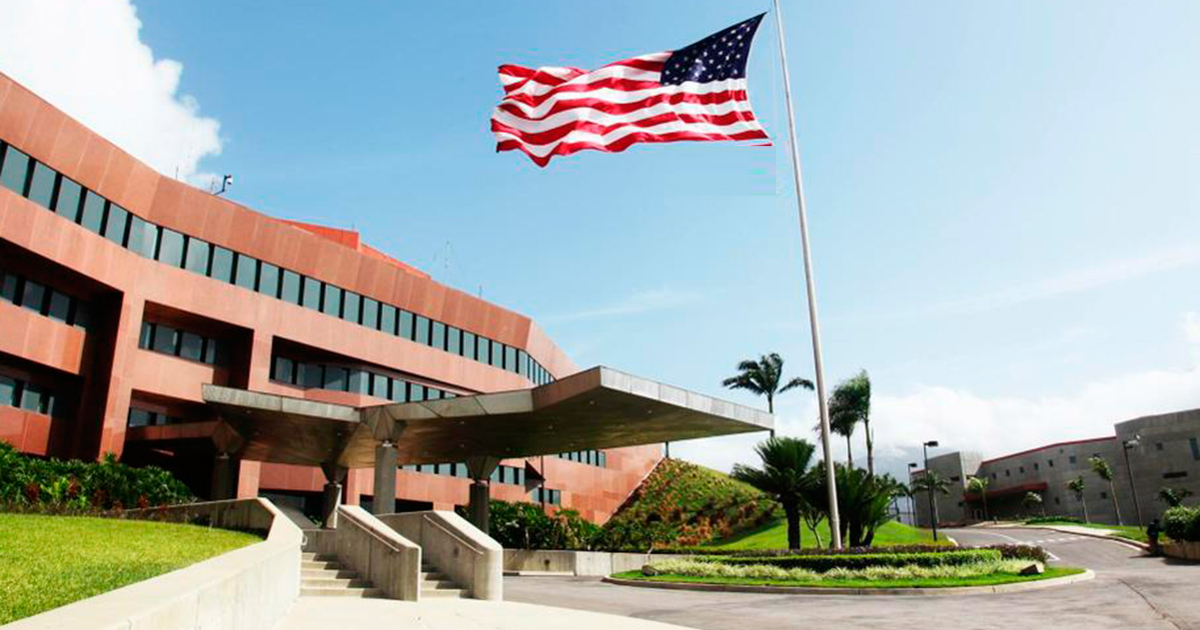
The operation took place on Saturday, when the head of the U.S. Southern Command, General Francis Donovan, led an evacuation drill at the U.S. embassy in Caracas aboard two Boeing MV-22B Osprey tiltrotor aircraft from the Marines, which landed in the parking lot of the diplomatic headquarters.
Approximately twenty U.S. soldiers disembarked from the aircraft during the exercise, which had been previously authorized by the Venezuelan government and announced by the Foreign Ministry.
Through a message on the social network X, Provea reported that the operation violated Article 187, numeral 11, of the Venezuelan Constitution, which states that it is the responsibility of the National Assembly to authorize the presence of foreign military missions in the country.
The NGO also criticized the speed with which the Executive has responded to "transnational tutelage" through expedited reforms in mining and hydrocarbons laws to welcome American investment.
According to Provea, these actions marginalize the social demands of the population and pave the way for a scenario of "authoritarian stability."
From within chavismo itself, deputy Iris Varela also rejected the military drill, although from a standpoint different from that of the human rights organization.
The deployment was General Donovan's second official visit to Venezuela and formalizes the dramatic geopolitical shift the country has experienced since the capture of Nicolás Maduro in January 2026.
Following that event, the Supreme Court of Justice sworn in Rodríguez as the acting president on January 5 under the figure of "forced absence."
Under his management, Venezuela and the United States restored their diplomatic and consular relations on March 5, 2026, which had been severed since 2019.
On March 14, the U.S. embassy raised its flag in Caracas for the first time in seven years, and on April 1, Washington removed Rodríguez from its sanctions list.
At the same time, the government promoted reforms to the Organic Hydrocarbons Law in January 2026 and to the Organic Mining Law in March, both aimed at attracting foreign investment, particularly from the United States.
The National Assembly approved in the first reading the mining reform, which extends concessions from 20 to 30 years and allows foreign companies to exploit deposits in the country.
The U.S. Chargé d'Affaires in Caracas, John Barrett, welcomed General Donovan during his visit, within the context of a bilateral relationship that, according to Provea, lacks constitutional and democratic support.
Filed under: