
Related videos:
Tribunals sentenced individuals to prison terms ranging from seven to 12 years for the crime of sabotage against those accused of stealing dielectric oil and public lighting cables, in two recent trials held in Ciego de Ávila, according to official information.
A note published this Monday by the newspaper Invasor reported that in April, two cases regarding sabotage were brought to oral trial in the province. Sabotage is defined under Article 125 of the Penal Code and includes acts committed against the National Electroenergy System. For such offenses, the judicial system imposes penalties ranging from seven to 15 years in prison, with potential life sentences or the death penalty in very serious cases.
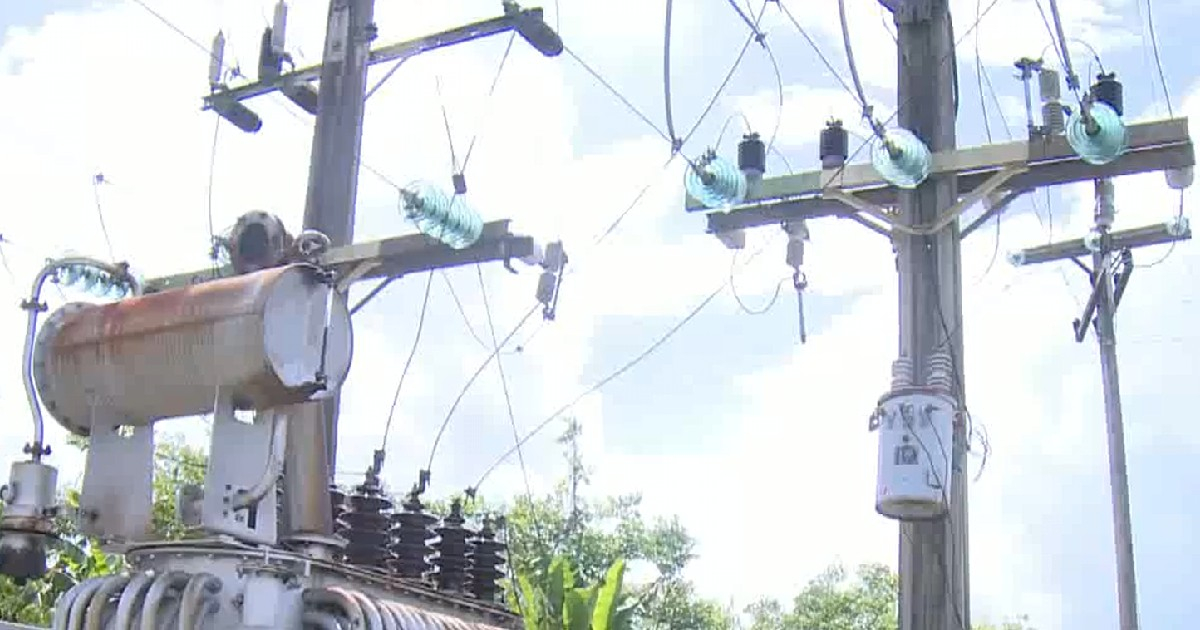
In one of the proceedings, the theft of more than 2,000 liters of dielectric oil —used in transformers for the insulation and cooling of components— was judged, an event that affected the communities of Plan Piña and Vivero Café.
The defendants —whose number and identity were not disclosed— remained in provisional detention throughout the investigation of the case, and the Prosecutor's Office requested 12 years in prison, along with additional penalties of deprivation of rights and prohibition of leaving the national territory. The trial has concluded and is awaiting sentencing, the note stated.
The second trial prosecuted three defendants, including a woman, who were caught red-handed while stealing rolls of electrical wiring from public lighting on the street. The arrest led to the recovery of the stolen goods. The court accepted and imposed the penalties requested by the Prosecutor's Office: seven and eight years of imprisonment.
The province of Ciego de Ávila has a serious history of this type of crime, according to official data: 32 incidents in 2024, with over 13,700 liters of transformer oil stolen, and 41 incidents in 2025, involving 84 affected equipment and more than 14,440 liters taken.
The newspaper Invasor also reported that the Ciego de Ávila Prosecutor's Office has opened multiple preliminary investigations to examine crimes against electrical infrastructure in the province, such as the theft of dielectric oil from transformers, the theft of equipment and parts from solar photovoltaic parks, and the theft of electrical wiring, among others.
The announcement of these actions by the Cuban judicial system takes place within the framework of the fifth national exercise against crime, launched by the regime a week ago, which primarily focuses on attacks on the electrical system and drug trafficking.
In March, two men were sentenced to prison for stealing around 50,000 screws intended for the assembly of solar panels in the province of Ciego de Ávila, causing an economic loss of 617,907 Cuban pesos.
The thefts targeting electrical infrastructure have spread throughout the country. Last week, exemplary trials were held in Isla de la Juventud—eight years for stealing 60 liters of dielectric oil—and in Artemisa, where 12 years were proposed for stealing 70 liters. In Matanzas, 40 people were being prosecuted in over 10 criminal networks.
Electric oil is being resold on the black market as a substitute fuel for tractors and trucks at prices ranging from 600 to over 1,000 pesos per liter. Its theft renders transformers useless, prolongs power outages, and can cause explosions: a man died and another was seriously injured in Santiago de Cuba in April when a transformer exploded during a theft attempt.
The legal framework that underpins convictions for such crimes is Opinion 475/2025 of the People's Supreme Tribunal, which categorizes acts that damage or steal components of the electrical system as sabotage — not common theft — with penalties ranging from seven to 15 years in standard cases and up to life imprisonment in aggravated cases. Between January 2025 and the first quarter of 2026, the regime imposed more than 10 years on 100% of those accused of electrical sabotage.
All of this is happening while the electric deficit in Cuba exceeds 2,100 MW, on days like this Monday, when a supply of only 1,133 MW is forecasted against a demand of 3,250 MW, resulting in blackouts of up to 20 hours in some provinces.
Filed under: