
Related videos:
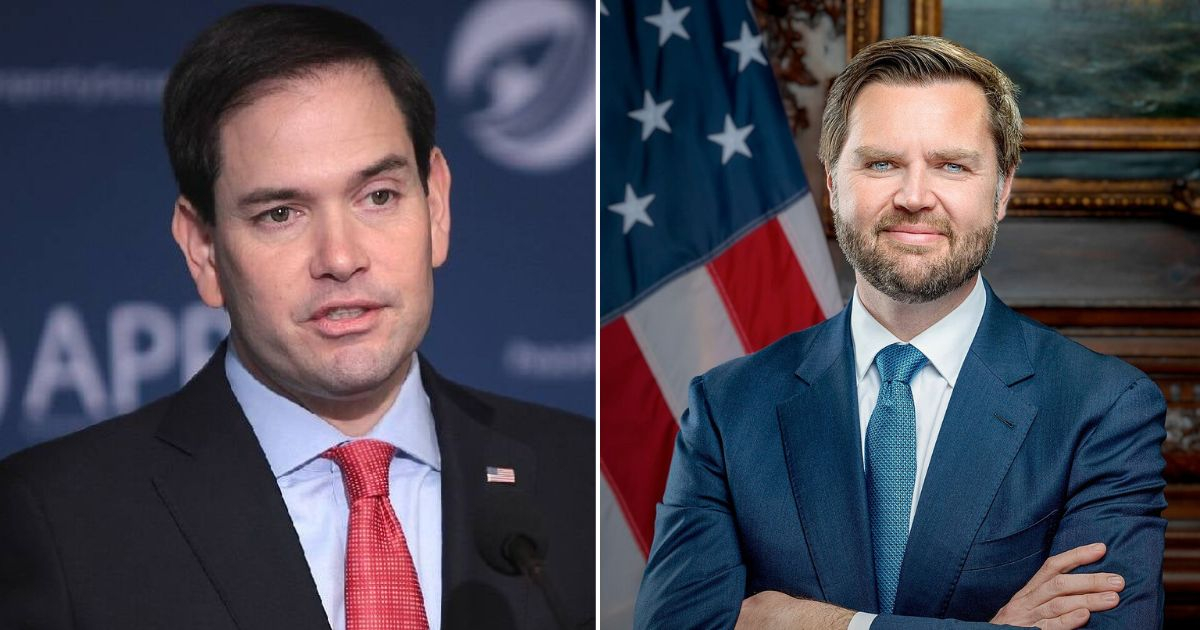
Vice President JD Vance is considering withdrawing from a potential presidential candidacy for 2028, according to multiple sources cited in a report by the Daily Mail which describes the second-in-command of the Trump administration as the most isolated official in the West Wing.
The resignation of Tulsi Gabbard as Director of National Intelligence —whose letter cited her husband's rare bone cancer diagnosis as the official reason— left Vance without his most visible ally in the cabinet regarding moderate foreign policy.
But the sources consulted by the British newspaper agree that the real background is Iran: Vance privately urged Trump in February not to authorize large-scale attacks against that country, instead recommending limited punitive action and warning that a broader war could trigger regional chaos and massive casualties, according to the New York Times.
Trump himself publicly acknowledged the rift, admitting that his vice president was "perhaps less enthusiastic" at the beginning of the war and "philosophically a bit different" regarding the decision to attack.
While Vance loses influence, Marco Rubio is experiencing his best moment within the presidential circle.
The Secretary of State, who also serves as national security advisor, is actively involved in planning potential military actions against Cuba and leads the administration's hardline stance in foreign policy.
"Rubio has more weight than Vance. The President listens to him. Vance is out of sync and has been for a long time," a source from the West Wing told the Daily Mail.
Another source close to the president was even more direct: "Vance is a non-event in the West Wing."
The same sources describe the contrast of styles as a backdrop clash with Trump.
"The President has made it very clear in recent months that he does not tolerate that Gary Cooper-style foreign policy approach, strong and silent," said a White House informant.
"It’s loud, it’s active. These guys prefer to speak softly and carry a big stick, but Trump speaks loudly and carries a huge cannon," he emphasized.
Gabbard's departure adds to that of Joe Kent, director of the National Counterterrorism Center, who resigned in March in protest of the war with Iran and later accused Israel of having deceived Trump into entering the conflict.
Vance is thus left without his two most visible allies in the national security environment.
As for 2028, there are rumors circulating in the West Wing that Vance is considering withdrawing from the race as a tactical move, to avoid "taking on everything that has happened in the last few years," according to an internal source.
The vice president is 41 years old, and his allies have explored alternatives that would allow him to skip the upcoming election cycle and reemerge later.
However, a source close to Vance warns that such a strategy would be a mistake.
"Anyone who wants to be a viable candidate for the presidency has a very small window. And if you don't take your chance when that window is open, it's highly unlikely that it will open again," said the source.
A bid in 2032 would pit Vance against an incumbent, and only Jimmy Carter, George H.W. Bush, and Donald Trump have lost reelection in half a century.
Waiting until 2036 would require remaining politically relevant for a decade out of office, a task that the same source described as "extremely difficult when you're out of the spotlight."
The spokesperson for Vance dismissed the Daily Mail report, describing it as "a flimsy compilation of completely illegitimate sources that have no idea what they are talking about."
Nonetheless, sources from the White House had already indicated Rubio as a possible candidate weeks prior, in a context where the Secretary of State is rapidly accumulating political capital, albeit with the risk of losing it if the war with Iran becomes unpopular.
Filed under: