
Related videos:
A Cuban mother from the municipality of Segundo Frente, in Santiago de Cuba, appeared last Sunday with her three small children at the local government headquarters to demand a response from the authorities regarding the food shortage, and she waited seated for three hours until she was attended to.
The story was shared on Facebook by Kmila Jerez Ochoa along with Roxana Destrade, who recounted the episode in the first person so that other Cuban mothers would be aware of what happened.
"Today, Sunday, I woke up feeling outraged because I had nothing to feed my children, while outside there was an unbearable noise from someone cleaning the sidewalk just because there was 'company' coming," the woman recounted, describing the gap between the image projected by the authorities and the reality lived by the population.
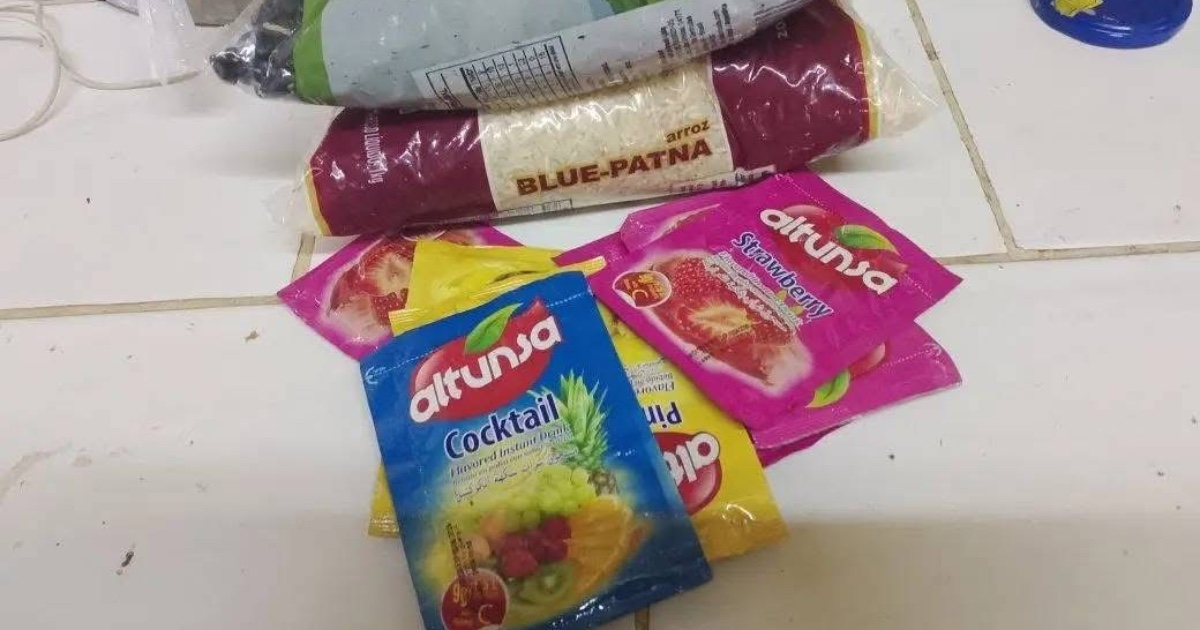
The officials' response was to send her, accompanied by two inspectors, to a market so she could buy something.
"Their solution? To send me with two inspectors to the market so that I could buy something," she reported, questioning whether the authorities think that is enough to feed three children for an entire day.
The products he managed to acquire —rice and instant drink powder sachets— cost approximately 2,500 Cuban pesos, an amount that exceeds the official minimum wage of 2,100 pesos per month, which has not been updated since 2025.
The mother described what happened as a "bribe" to silence her: "What they did to me in the government was a bribe to make me shut up, to keep me from seeing the leaders and send me home, but I’m not going to stay silent anymore."
He also denounced the collapse of the digital payment system, which leaves citizens without real access to their money: "You go out with money on your card and you can't buy anything; it's as if that piece of plastic were invisible."
This situation reflects a structural crisis of banking in Cuba, where banks do not have cash available and businesses do not always accept digital payments, leaving families without real access to their funds.
Kmila Jerez Ochoa emphasized that the three children "cry from hunger and do not understand blockades, cards, or that 'there is no food'," and rejected the criticism from those who attacked the mother for her way of writing instead of showing solidarity with her situation.
The case of Segundo Frente is not an isolated one. A survey from May 2026 revealed that one in three Cuban households reported hunger, and 94.9% stated that they had lost some degree of access to purchasing food.
The mother added in her testimony a direct plea: “I am not counter-revolutionary, but someone has to speak up and take action. If I have to go to the government every day, I will, but I am not going home without food for my children.”
Filed under: