
Related videos:
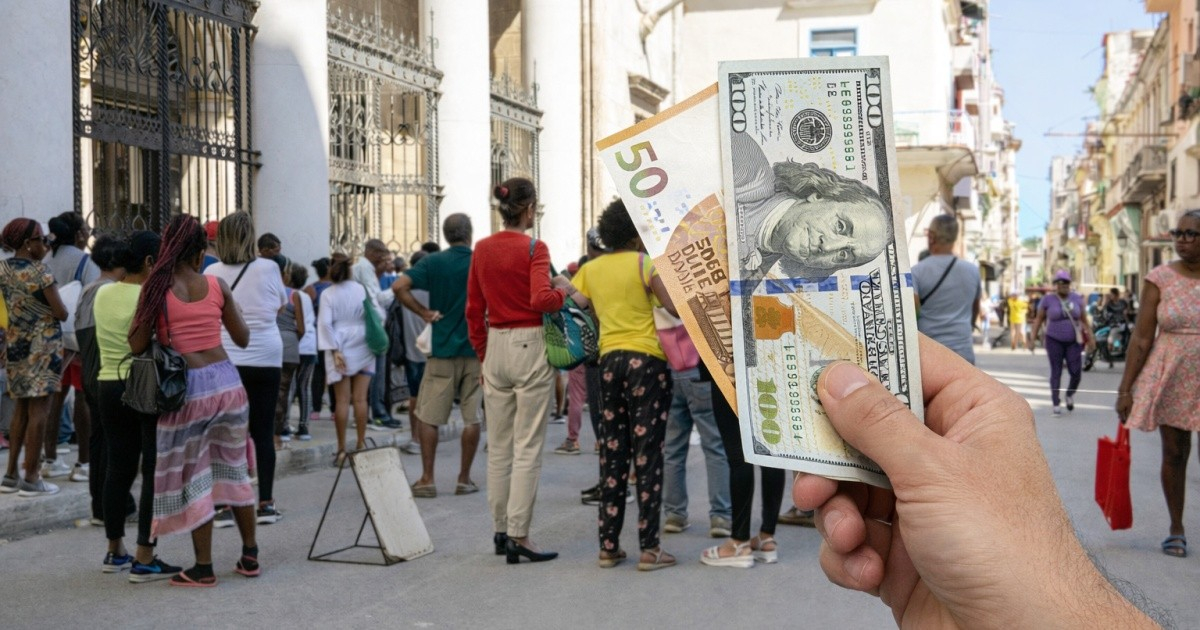
The informal foreign exchange market in Cuba opened this Wednesday with new increases: the dollar is quoted at 565 Cuban pesos (CUP), the euro at 640 CUP, and the freely convertible currency (MLC) at 430 CUP, according to the updated data from the informal market collected by elTOQUE.
These figures represent new all-time highs for both major currencies, surpassing the records from last Monday when the dollar closed at 560 CUP and the euro at 635 CUP, both already at record levels.
The rise has been sustained and uninterrupted throughout May. The dollar opened the month at 535 CUP, broke the historical barrier of 550 CUP on May 19, reached 555 CUP on May 22, and hit 560 CUP last Sunday, a record for the third consecutive day, before climbing to 565 CUP today.
The euro followed a similar path: it started at 605 CUP on May first, reached 635 CUP last Tuesday as a new all-time historical record and today climbs to 640 CUP.
The gap between the informal market and the official rate set by the Central Bank of Cuba —currently at 507 CUP per dollar and 590.14 CUP per euro— exceeds 58 pesos in the case of the dollar, highlighting the profound distortion of the island's exchange system.
Historically, the fall of the Cuban peso is devastating: in 2020, the dollar was exchanged at about 42 CUP in the informal market; today it exceeds 565 CUP, a depreciation of nearly 95% in just six years. The dollar first surpassed 500 CUP on February 10, 2026, and in less than four months has climbed another 65 pesos.
The demand for foreign currency is driven by the need to protect savings, finance emigration, and access essential goods that are only sold in foreign currency at state-run stores. "People seek to protect their savings and purchasing power, as well as to purchase essential and imported products that are not available in the national currency," noted an analysis from last Monday.
The impact on the population is direct and brutal. The average salary in Cuba has lost more than 20% of its value in a year despite official increases: with an average salary of 6,930 CUP per month in 2025, a Cuban worker currently earns the equivalent of just 12 dollars a month at the informal exchange rate.
The macroeconomic context further exacerbates the situation. Between January and April 2026, the average year-on-year depreciation of the peso was 45%, more than double that of 2025. Economist Pedro Monreal warned this month that Cuba's GDP could decline by at least 15% in 2026 in a stagnation scenario, while ECLAC estimated a contraction of 6.5% and The Economist Intelligence Unit projected a decline of 7.2%.
Everything indicates that the pressure on the Cuban peso shows no signs of easing in the short term: the energy crisis, structural shortages, and the lack of foreign currency in the state coffers are a direct result of 67 years of communist dictatorship, and none of these issues show signs of improvement.
Filed under: