
Related videos:
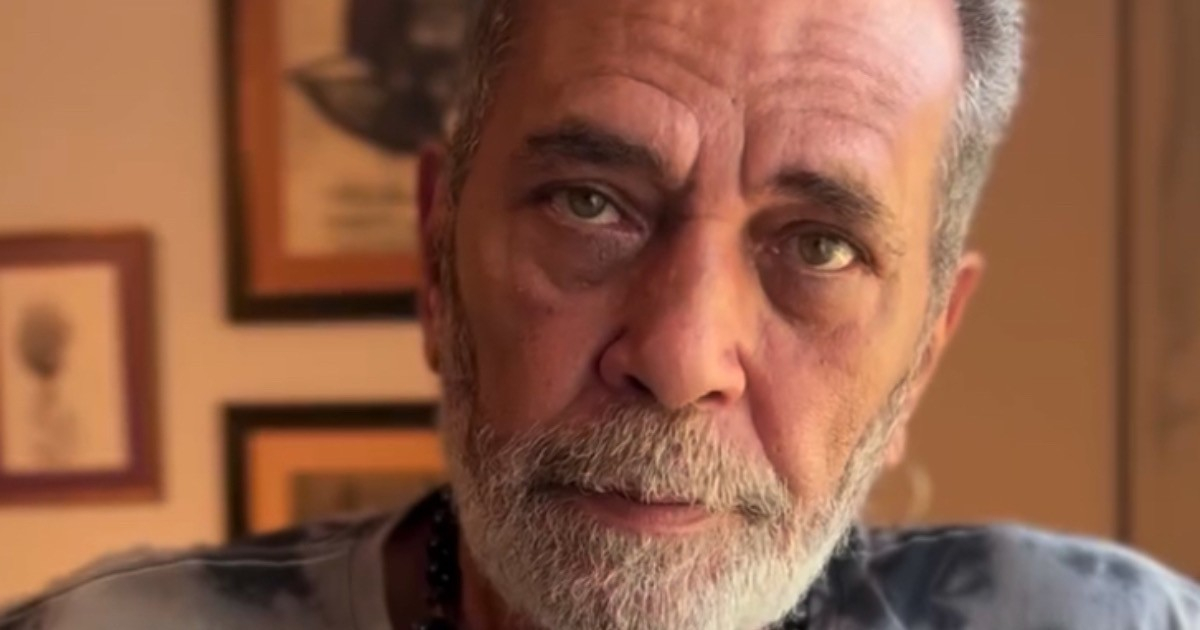
The Cuban actor Luis Alberto García published a "Gloomy Reflection" on Facebook this Wednesday, in which he denounces the contradiction of a State that mobilizes transportation and consumes fuel for political events while the country suffers power outages of up to 22 hours a day.
In the text, García openly questions the use of state resources for what he calls the "liturgies" of the regime: political and ideological events organized in neighborhoods, municipalities, and provincial capitals across the island, with numerous vehicles filling the streets and avenues from early hours.
"Is there fuel or not? Are gasoline and oil ideological? Partisan?" the actor asks with his usual irony.
García demands transparency from a press that, according to him, is not free: “If the Cuban press is TRULY FREE, could it enlighten us on this matter? Could it provide this proletariat, which pays first-world taxes to receive ninth or tenth-rate services, with reliable figures obtained from thorough research on the topic?”
The actor ironically names Cuba "Oskuristán of the Caribbean" or "Republic of Apagonia: First Territory Free of Electric Light in Latin America," and poses the question that serves as the title of his publication: "Wouldn't the real ideological victory be having more illumination in our homes and fewer speeches, slogans, and chants? Fewer waving flags?"
The text concludes with a phrase that summarizes the hypocrisy it denounces: "It's strange that a dictatorship of the proletariat does not provide clear accountability to the obscured... proletariat."
The publication arrives during the worst energy situation Cuba has experienced in decades. On Tuesday, the Electric Union reported a supply of only 1,195 MW compared to a demand of 2,740 MW, with a projected deficit during peak hours of between 1,960 and 1,990 MW.
The year's record deficit was recorded on May 13, with a gap of 2,153 MW, and on May 16, 51% of the country was left without electricity simultaneously, with a maximum impact of 2,041 MW.
In Havana, power outages have reached between 20 and 22 hours daily during May, with cycles of only an hour and a half to four hours of supply.
Miguel Díaz-Canel, the president himself, admitted on March 11 that Cuba had not received oil shipments in over three months, and the Minister of Energy and Mines, Vicente de la O Levy, described the situation on May 14 as "acute, critical, and extremely tense."
This is not the first time García has raised his voice. Last Monday, he reported 20 consecutive hours without electricity and warned about the suffering of children: "Children are the ones who know how to suffer."
In January, he rejected the official slogan "doubting is betrayal", calling it "one of the most fascist statements," and in March, he suspended his cultural gathering of over 15 years stating that the country is "hitting rock bottom" and that "we do not currently see the end of this extremely dark tunnel."
In October 2025, he had already criticized the use of resources for marches and rallies while the country was suffering from blackouts, which earned him a public attack from an official of the Revolutionary Armed Forces.
The contradiction pointed out by García became evident on May 1, when the regime organized its annual Labor Day march—moved from the Plaza de la Revolución to the José Martí Anti-imperialist Tribune under the official argument of "austerity" and "energy blockade"—with a massive mobilization of state transportation, in a country where 75% of the thermal units were out of service weeks prior.
Filed under: