
Related videos:
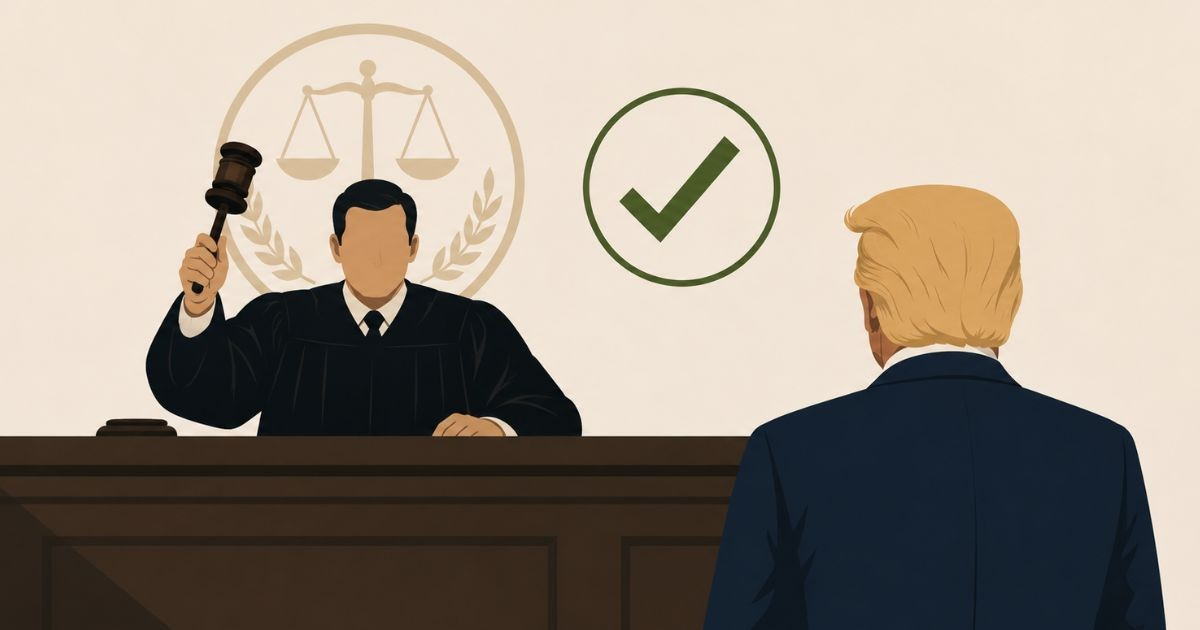
A federal judge rejected this Thursday to suspend the executive order of President Donald Trump that limits mail-in voting in federal elections, keeping the measure in place ahead of the midterm elections in November 2026.
The judge Carl Nichols, appointed by Trump himself, dismissed the request for a preliminary injunction filed by Democrats and civil rights groups seeking to have the decree declared unconstitutional.
The plaintiffs argued that it is the states and Congress —not the president— who have the authority to set electoral standards, and that the order also violated the Privacy Act by creating a list of citizens over 18 years old to establish a voter census.
Nichols dismissed those arguments, stating that the plaintiffs did not demonstrate that the sharing of information regarding name, age, and address between government agencies causes "sufficient harm."
The judge also deemed the lawsuit "premature," as the government had not yet implemented the measures outlined in the order, although he left the possibility open for the plaintiffs to request a precautionary measure again if the administration takes actions that directly affect specific voters.
Trump signed the executive order titled "Ensuring Citizenship Verification and Integrity in Federal Elections" in March 2026, after the bill he supported to reform the voting system became stalled in Congress.
The measure instructs the United States Postal Service to deliver ballots by mail only to those listed in a federal registry of eligible voters, compiled using data from the Department of Homeland Security and the Social Security Administration.
Additionally, it requires states to notify the Postal Service at least 90 days in advance if they will allow mail-in voting, and to send their lists of eligible voters 60 days ahead of time.
The decision is part of Trump's broader campaign that questions the legitimacy of mail-in voting and aims to tighten voter ID requirements, despite the lack of evidence for widespread electoral fraud.
This is not the first time that Trump has pushed for restrictions on this voting method: in March 2025, he had already signed an executive order aimed at requiring documentary proof of citizenship to register and to clean up voter rolls.
The Brennan Center has deemed the current order illegal, arguing that the Postal Service lacks the authority to determine who can vote by mail or to deny the delivery of ballots based on incomplete federal lists, and warned that the measure threatens criminal penalties for election officials and postal workers who deliver ballots to individuals deemed ineligible by the administration.
The legal battle, however, is not over: a separate lawsuit in Boston remains active and seeks to halt the executive order before it takes effect in the November elections.
Filed under: