
Related videos:
Mario, a Cuban man around 60 years old who lived in Detroit, Michigan, was married to a U.S. citizen and had five children and 11 grandchildren—all U.S. citizens—when he was deported to Mexico, a country that is not his own and where he has no family or prospects.
Her story is the central case of the 66-page report published this Wednesday by Human Rights Watch, titled “They Leave Us Here to Die”, which documents the abuses by the U.S. government against Cubans and other third-country nationals deported to Mexico between January 2025 and March 2026.
"If you are 60 or 70 years old, why are they sending you here? They send us here to die," Mario declared to the human rights organization.
Your case is not unique. Between January 20, 2025, and March 9, 2026, the United States deported nearly 13,000 nationals from third countries to Mexico, with Cubans making up the largest group: approximately 4,353 people during that time.
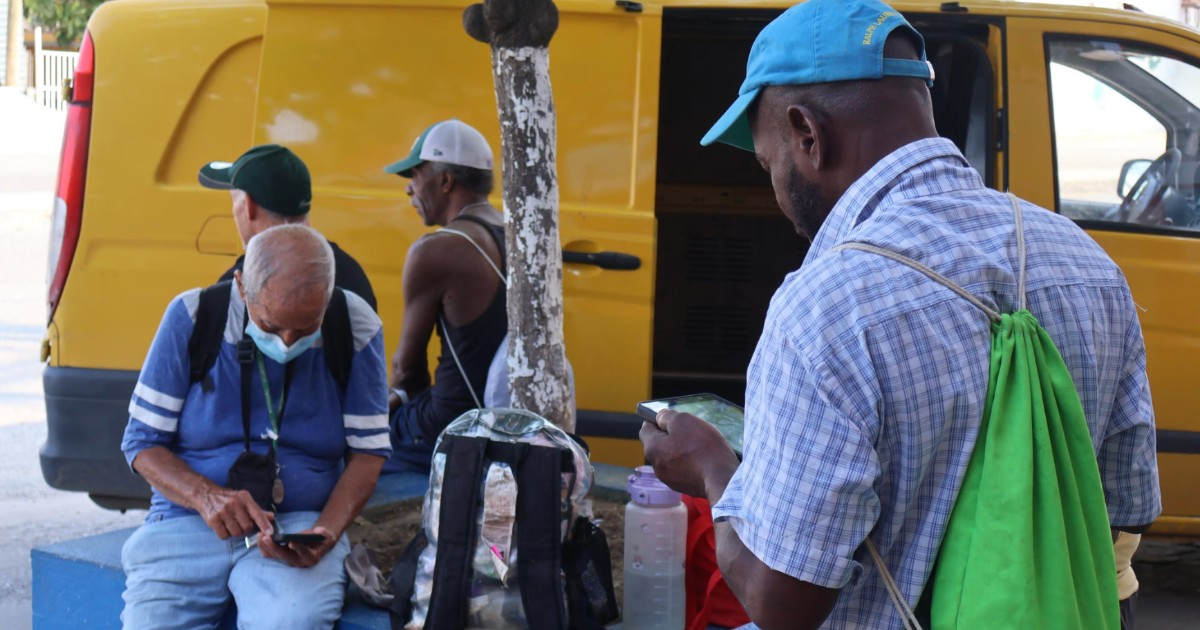
Activists estimate that there are around 800 Cubans stranded in Tapachula, Chiapas, and about 3,000 in Villahermosa, Tabasco, without documents, work permits, or a clear path to regularize their situation.
The report is based on interviews with 41 Cuban men and 12 individuals from Venezuela, Haiti, Honduras, El Salvador, Nicaragua, and Jamaica, conducted specifically in those two cities in southern Mexico.
Many of the deportees are 60 years old or older and had lived in the United States for decades, primarily in Florida. Half of them arrived during the Mariel exodus in 1980 or through the "bombo," the immigration lottery of the 1990s.
35 of the 41 Cubans interviewed lost their legal permanent residency after a criminal conviction, but in most cases, these were non-violent offenses: driving under the influence of alcohol, document forgery, or minor drug-related charges. Only 16% were related to violent crimes.
Many had completed their sentences and were living under supervision orders from the Immigration and Customs Enforcement (ICE) with work permits, believing that deportation was no longer possible since Cuba had historically refused to accept these deportees. That balance changed radically under the second Trump administration.
HRW documents that those deported arrived in Mexico without documents, money, or personal belongings, and without having the opportunity to challenge their transfer or express fears of harm, which the organization qualifies as a violation of due process and the principle of non-refoulement.
Another Cuban interviewed, Harold A., 58 years old, deported in February 2026, summarized his situation as follows: “They are leaving us here to die. There is no help; we can't work because we don’t have papers. They give us nothing, nothing… How are we supposed to eat, to pay rent?”
The legal limbo they face is particularly cruel: Cuba does not accept them back, Mexico does not offer clear routes for regularization beyond asylum—which has numerous practical barriers—and the United States expelled them without an individualized process. Some elderly individuals are unable to access essential medications.
Neither Washington nor Mexico City has made public the agreement under which these deportations are conducted. A U.S. federal judge questioned in March 2026 the possible existence of a secret pact between both governments.
Among the documented cases is that of Rafael Enrique Migolla, a 73-year-old Cuban who had been living in Miami since 1991, deported in October 2025 and stranded in Villahermosa in a borrowed home, unable to return to Cuba.
HRW demands that Mexico ensure medical care and a real pathway to regularization for those who cannot return to their countries of origin, and calls on both governments to make any agreements regarding deportations to third countries public. Thousands of Cubans deported from the U.S. remain stranded in southern Mexico with none of the three involved governments offering a solution.
Filed under: