
Related videos:
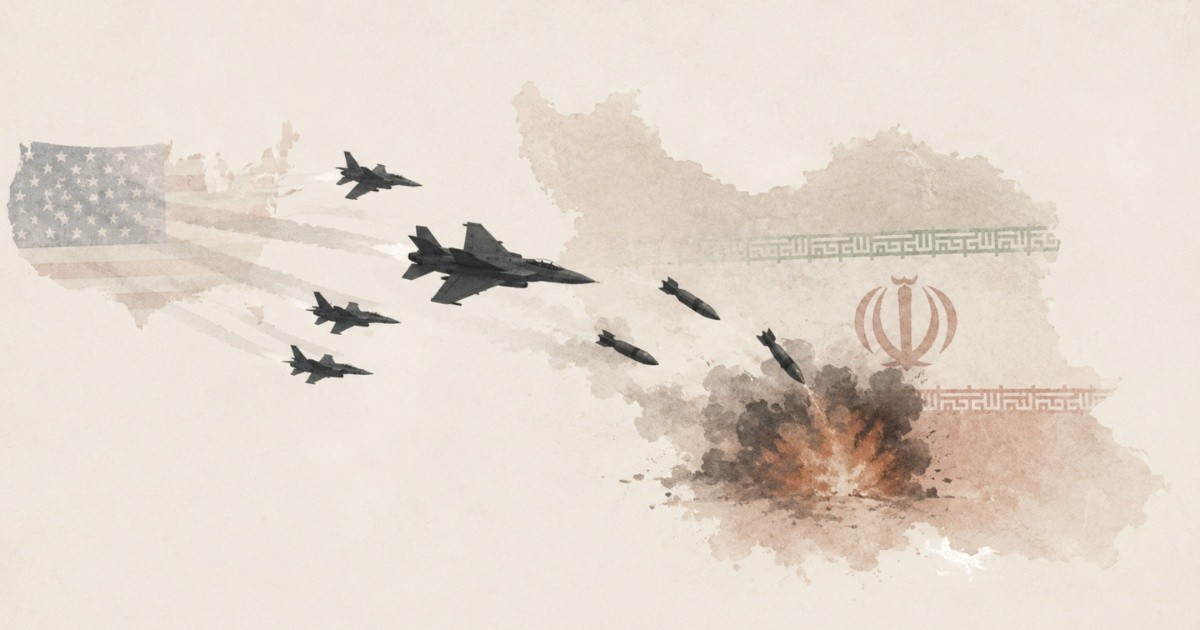
The armed forces of the United States attacked a military facility in southern Iran this Thursday and shot down four one-way attack drones launched by Tehran, an action that Washington described as "self-defense," according to officials cited by U.S. media.
Iranian state media were the first to report three explosions east of Bandar Abbas, the main port city near the Strait of Hormuz, early Thursday morning.
According to Pentagon officials cited anonymously by The New York Times, the drones posed a direct threat to U.S. naval forces in the region and to the limited commercial shipping traffic that still passes through the Strait, which Iran has blocked.
The attacks occur within the context of a conflict that has been ongoing since February 28, 2026, when the United States and Israel launched the Epic Fury Operation, a bombing campaign targeting Iranian military and nuclear facilities.
On April 13, Washington escalated pressure with a naval blockade on ships originating from or destined for Iranian ports, to which Tehran responded by closing the passage through the Strait of Hormuz, through which approximately 20% of the world's oil and 25% of liquefied natural gas transit.
The resulting energy crisis was described as the largest supply disruption since the 1970s, with the price of Brent crude rising from $67 to over $126 per barrel.
In the days leading up to the attack, tensions had already escalated: on Tuesday, Iran announced that it had shot down a U.S. MQ-9 drone and fired upon an F-35 and an RQ-4, accusing them of violating its airspace in the Persian Gulf, a claim that Washington did not confirm.
At the same time, the diplomatic negotiations were at a critical juncture: Iranian state television broadcast a supposed preliminary agreement in which Tehran would commit to restoring traffic in the strait, but the White House immediately denied it, calling it a fabrication.
The president Donald Trump had ruled out on Wednesday, during a cabinet meeting, any agreement that would grant Iran control over Hormuz.
"They are international waters; no one is going to control them. We will monitor them. We will keep an eye on them, but no one is going to control them," declared the leader.
The negotiations between both countries centered around a 14-point memorandum sent by Iran that included a moratorium on uranium enrichment, easing of sanctions, and the release of frozen Iranian funds.
The central point of contention was the duration of the moratorium: Washington demanded 20 years, while Tehran offered only five.
On May 19, Trump had given Iran an ultimatum of "two or three days" to accept a nuclear deal, and on May 24, Washington declared that an agreement to reopen the strait was "within reach," according to reports from El País.
Filed under: