
Related videos:
The researcher Guillaume Long, former Foreign Minister of Ecuador and analyst at the Center for Economic and Policy Research (CEPR), warned on Wednesday that the unrecognized failure of the Trump administration in Iran could push the U.S. president to seek a compensatory victory in Cuba, in an interview published by the French newspaper L'Humanité.
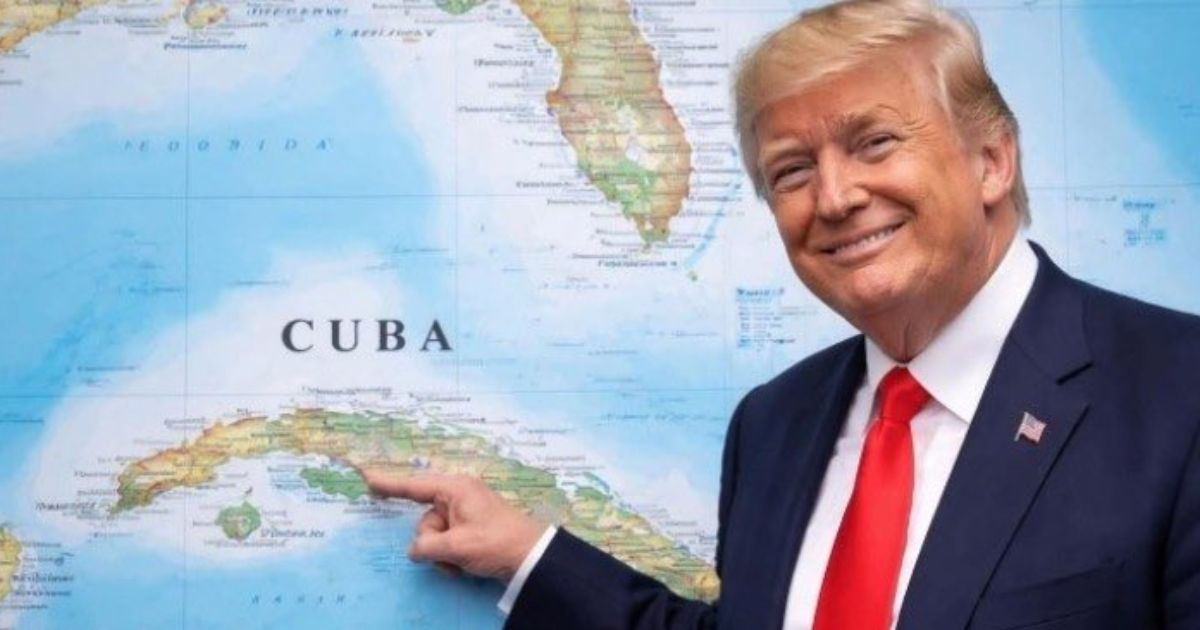
Long notes that tensions between Washington and Havana have reached an unprecedented level since the missile crisis of 1962, with suffocating sanctions, media operations to justify a possible aggression, direct threats against the former president Raúl Castro, and the deployment of an aircraft carrier in the Caribbean.
"The Trump administration wishes for Cuba an outcome similar to that of Venezuela. Committing troops on the ground to achieve a true regime change is not the kind of scenario President Donald Trump desires; there would be too many American casualties," Long stated.
According to the analyst, if the United States acts in Cuba, it will do so with the same type of precautions as in Venezuela, where on January 3, 2026, the so-called Operation Absolute Resolution resulted in the capture of Nicolás Maduro and his wife Cilia Flores, an operation that Trump considers a significant victory in foreign policy.
"The Republican president should instead aim for a victory akin to a 'decapitation of the regime,' preferably seeking effects similar to those observed in Venezuela," Long specified, although he cautioned that Cuba has a greater capacity for resistance, with decades of building a security apparatus loyal to the revolution.
The Iranian context is key to understanding the analyst's hypothesis. Following the Midnight Hammer Operation on February 28, 2026—joint attacks by the United States and Israel on Iranian nuclear facilities—negotiations between Washington and Tehran have stalled. Last Thursday, Trump set his conditions for an agreement with Iran: a permanent renunciation of nuclear weapons, the opening of the Strait of Hormuz, and the destruction of enriched material under U.S. supervision.
"Donald Trump might also be tempted to try to offset the Iranian setback with another diplomatic victory," Long noted.
The escalation of pressure on Cuba has been systematic since January 2026. On January 29, Trump signed Executive Order 14380 declaring Cuba a threat to national security, and since then, more than 240 new sanctions have been imposed on the island.
On May 5, Trump threatened to deploy the USS Abraham Lincoln aircraft carrier off the coast of Cuba and stated that the United States could "take Cuba almost immediately."
Last Wednesday, the Cuban National Assembly issued a declaration warning about a threat of direct military aggression from Washington.
Long also points to the influence of the anti-Castro lobby in Miami as a driving force behind Trump's foreign policy towards the Western Hemisphere. "He governs for the 'tribes' that are loyal to him. Among them, the anti-Castro lobby in Miami is undoubtedly one of the most important in shaping U.S. foreign policy,” he stated.
A survey by CEPR and YouGov from May 6 revealed that 64% of Americans oppose a war against Cuba, compared to 15% who support it, a fact that Long sees as a significant but not definitive obstacle for action from Washington.
"Is Donald Trump trying to create a 'failed state', like Haiti, less than 150 kilometers from his shores?" the analyst wondered, warning that Washington might not be taking into account the strength of the Cuban security apparatus nor the limited possibility of internal dissent it could rely on, unlike what happened in Venezuela.
Filed under: