
Related videos:
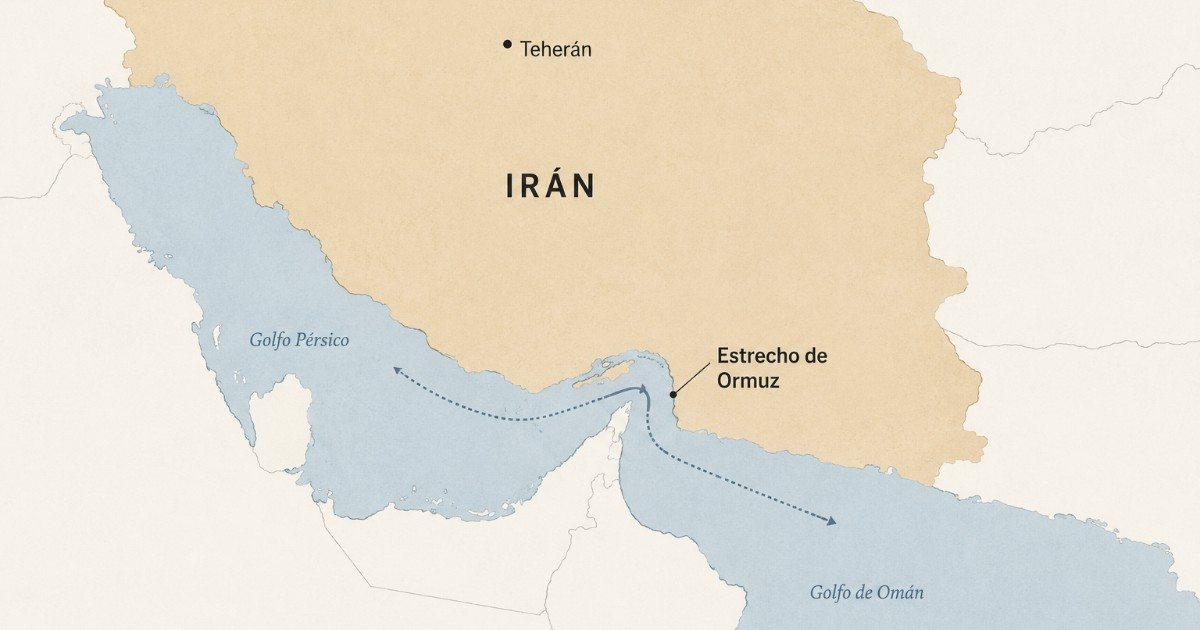
The Iranian Armed Forces declared this Saturday that the strategic Strait of Hormuz is under "total control" of the Islamic Republic and warned that any attempt at military interference in this maritime route will be met with force, according to a statement reported by the Tasnim agency.
The Central Headquarters Jatam al-Anbiya issued the statement a day after Iranian forces fired warning shots at "infringing vessels" in the strait, in an incident that the maritime monitoring body UKMTO did not record.
"The management of the Strait of Hormuz by the Armed Forces of the Islamic Republic of Iran is exercised with full authority," asserted the Headquarters in its statement.
Iran also demanded that "all ships, commercial vessels, and oil tankers are required to transit only through designated routes and to obtain authorization from the Revolutionary Guard Navy."
The statement warned that failing to comply with these regulations could put navigation safety in "serious jeopardy" and directly pointed to the U.S. forces present in the region: any military vessel attempting to intervene in the management of the strait or "disturb maritime traffic will be considered a target by the Iranian Armed Forces."
Last week, the Gulf and Strait of Hormuz Authority (PGSA), an organization created by Iran to manage the transit through Hormuz, published a map of what it considers its "jurisdiction," which extends from Mount Mubarak to Fujairah in the United Arab Emirates.
Last Wednesday, the United States sanctioned the PGSA due to its connections with the Islamic Revolutionary Guard, in an escalation that adds to the naval blockade that Washington has maintained against Iranian ships and ports since mid-April.
Iran blocked the strait at the start of the war with the United States and Israel, which erupted on February 28, 2026, with coordinated airstrikes on Iranian cities, including nuclear facilities.
The closure had devastating consequences: traffic plummeted from 153 daily transits to between four and 13, the price of Brent soared from 67 to over 126 dollars per barrel, and around 2,000 ships and about 20,000 sailors were left stranded.
Initially, Tehran announced the collection of a toll for transit, but then redefined it as payment for "navigation services" and environmental protection measures.
Meanwhile, Iran and the United States are negotiating to extend the ceasefire and open the Strait of Hormuz with Pakistan's mediation, in talks focused on the duration of a moratorium on Iranian uranium enrichment: Washington demands 20 years, Tehran has offered five, with a possible agreement range between 12 and 15 years.
On May 4th, President Ebrahim Azizi, head of the National Security Commission of the Iranian Parliament, had already warned that any U.S. intervention in the maritime regime of Hormuz would be considered a "violation of the ceasefire."
Filed under: