
Related videos:
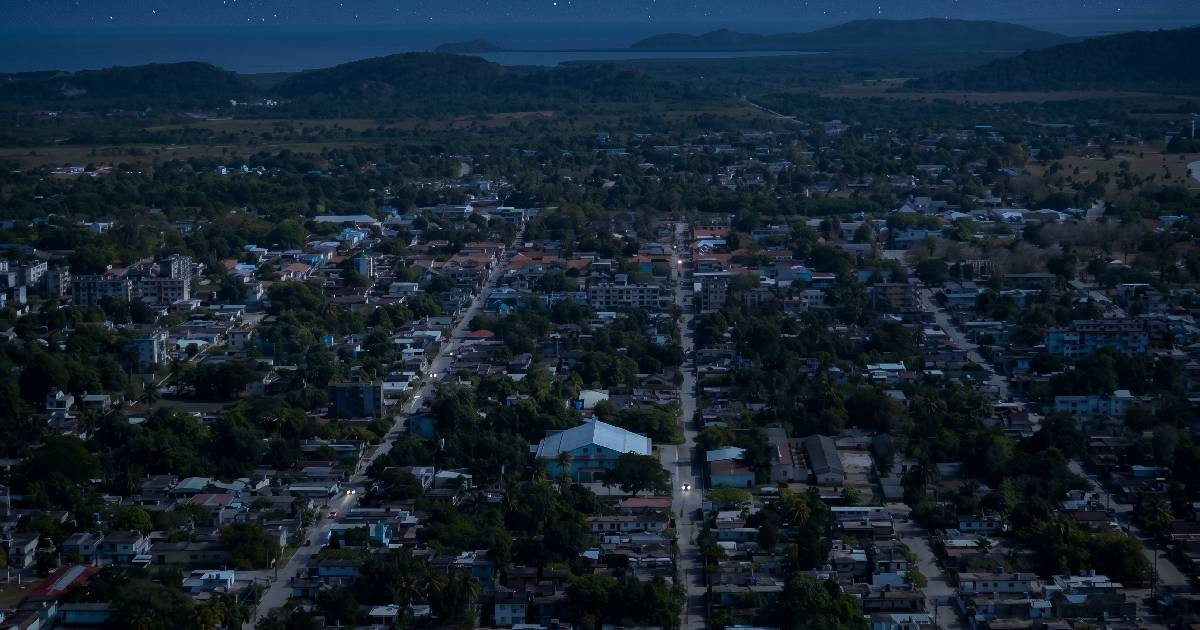
The Island of Youth, considered until recently the territory with the best electricity performance in Cuba, now operates with just six hours of electricity a day, acknowledged the General Director of the Electric Union (UNE), Rubén Campos Olmo, on Wednesday during the official television program Mesa Redonda.
The deterioration has been gradual and documented. In June 2025, the local electric company began implementing scheduled blackouts of five hours, breaking the historical reputation of the area as a benchmark of stability in the country.
In February, the situation worsened. The local Electric Company announced the extension of power outages to cyclic four-hour periods due to a lack of fuel, warning that "all circuits will be extended by an additional hour."
On March 11, the broadcaster Ramón Leyva Morales, known as Carapachibey Piñero, reported in a video the true extent of the blackouts.
"Here on the Isle of Youth, there are 18 hours of blackouts daily, and it has been this way for four weeks now."
That same month, the electric company of the territory enabled four outlets in solar parks so that residents could charge their electronic devices, a measure that highlights the precariousness of the current situation.
Campos Olmo acknowledged in the Mesa Redonda that the Isle of Youth was "perhaps the best territory in the country for electric generation" before the executive orders signed by President Donald Trump on January 29 and May 1, respectively, which prohibit the entry of fuel and lubricants into Cuba.
"When this situation arises, the Island switched to a generation regime of approximately six hours a day out of 24," confirmed the engineer, who described the impact of these measures on the electricity sector of this Caribbean country as "devastating."
At the national level, the executive orders left a fuel-backed capacity of 1,300-1,400 MW stranded, more than 50% of what Cuba can generate at night, according to the official.
A Russian donation of 100,000 tons of crude oil that arrived in early April allowed for a temporary improvement. Starting on April 17, distributed generation began to be used and "the levels of impact decreased significantly," explained Campos Olmo. However, that improvement lasted just over two weeks.
"Already for several days we have been back to where we were before the arrival of that additional fuel," admitted the director of the UNE.
The crisis has also sparked a wave of thefts of dielectric oil. Recently, one of the exemplary trials promoted by the regime took place, in which an electrical worker in the Isle of Youth was sentenced to eight years in prison for stealing 60 liters of the lubricant used by transformers, classified as sabotage under Opinion 475/2025 of the People's Supreme Court.
Campos concluded his remarks with a phrase that encapsulates the official position: "The main cause of these issues is the inability to secure fuel for the capacities we have available," thus sidestepping 67 years of inefficient management of the Cuban energy system as a structural factor of the crisis.
Filed under: