
Related videos:
The Provincial Committee of the Communist Party of Cuba (PCC) in Havana held its Ordinary Plenary session this Saturday, chaired by Liván Izquierdo Alonso, the provincial first secretary, who called for the correction of the "negative trends in economic management" that, as he acknowledged, affect entire municipalities of the capital.
According to the report from the official newspaper Tribuna de La Habana, the session analyzed the impact of the economic strengthening measures on the indicators of Havana and the execution of the 2026 Plan and Budget, at a time when the social and economic crisis of the capital is reaching critical levels.
Izquierdo was direct in pointing out the shortcomings: "It is unacceptable that some municipalities do not meet their revenue plans yet exceed their expenditures. Territorial entities that fail to contribute to social development."
The first secretary of the PCC also warned that no deficit entity can evade the oversight of the only political organization allowed on the island.
"It cannot be that an entity experiencing losses in the fulfillment of its social purpose bypasses the immediate analysis of the core of the Party with the presence of the economic commissions from the municipalities and the province in the search for solutions," he pointed out.
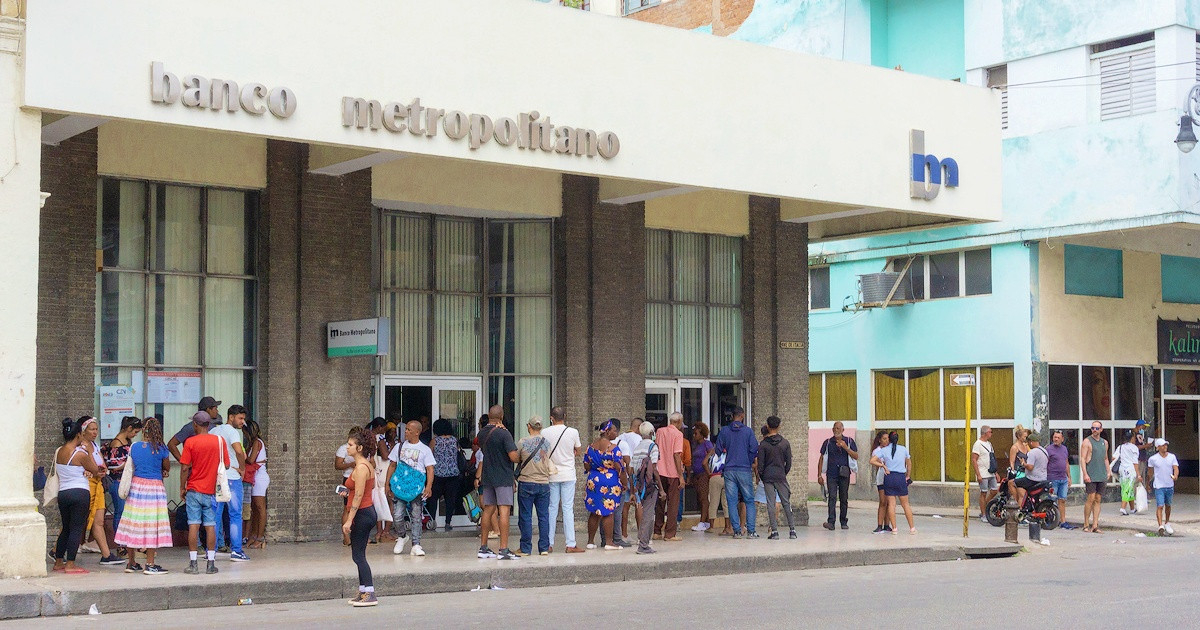
The plenary also addressed the chaotic process of banking, including the resistance of the non-state sector to accepting electronic payments and the long lines of retirees and pensioners waiting to cash their checks, a problem that affects over 1.7 million Cubans reliant on a collapsed banking system.
The governor of Havana, Yanet Hernández Pérez, referred to the "use of mothers with children in vulnerable conditions" to make demands related to the energy crisis, in a veiled reference to the protests that shook the capital two weeks ago.
Between May 13 and 15, protests in at least 12 municipalities in Havana, featuring slogans like "Electricity and food" and "Down with the dictatorship," were triggered by power outages lasting up to 20-22 hours daily and a significant electricity deficit. The regime responded with repression, resulting in at least 14 arrests.
The acknowledgment of shortcomings is not new. In the full session of January 2026, the same organization admitted that public transport only met 42% of the planned coverage, housing construction had fallen to 41%, and overall physical production had been cut in half.
The national fiscal framework worsens the outlook. The state budget for 2026 was approved with a deficit of 74.5 billion pesos, and gross revenues reached only 89% of what was planned in the first months of the year.
The Economic Commission for Latin America and the Caribbean (ECLAC) projects a decline in Cuba's GDP of -6.5% for 2026, while The Economist Intelligence Unit estimates it at -7.2%.
Jorge Luis Villa Miranda, coordinator of Economic Programs for the Government of Havana, summarized the regime's strategy to get out of the deadlock.
"We must strengthen the linkages between the entities representing the socialist state enterprise and the new economic actors in the non-state management sector. In this way, we can contribute to the necessary solvency for the care of vulnerable individuals," he said.
Filed under: