
Related videos:
The president of the National Association of Small Farmers (ANAP) in Havana, Jorge Wilsy Carballo, stated that the more than 4,000 farms in the capital are "potential resources that can solve the shortage of food products in the family basket," during the session this Saturday of the Ordinary Plenary of the Provincial Committee of the Party in Havana.
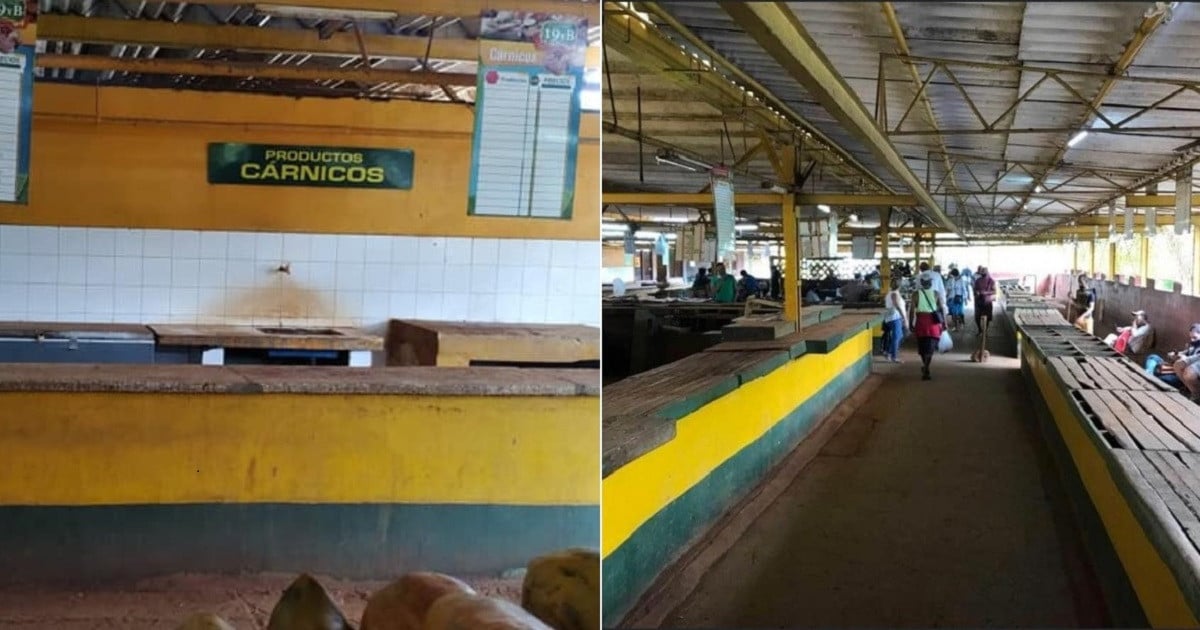
The statement came as the agricultural markets in the capital remain empty or with prices that are unaffordable for most residents of Havana, a contradiction that encapsulates the gulf between official rhetoric and everyday reality.
The assembly, chaired by Liván Izquierdo Alonso, a member of the Central Committee and the first provincial secretary of the Communist Party, analyzed the impact of the economic strengthening measures and the 2026 Plan and Budget for the capital, highlighted the official newspaper Tribuna de La Habana.
Jorge Luis Villa Miranda, coordinator of Programs for the Government of Havana on economic issues, also noted at the meeting that "there are available potentials to seek solutions for production and services and to transform the situation we are facing."
Villa also called to "strengthen the linkages between the entities representing the socialist state enterprise and the new economic actors in the non-state management sector" as a way to support vulnerable populations.
The General Secretary of the Central Workers' Union of Cuba (CTC) in Havana, Misael Rodríguez Llanes, emphasized the need to increase the utilization of non-state management forms through alternatives that provide viable solutions.
While pointing out internal failures, Izquierdo criticized that "it is not acceptable for some municipalities to fail to meet their revenue plans while simultaneously exceeding their expenses. Territorial entities that do not comply with their contribution to social development."
The reality faced by the people of Havana contradicts official optimism. Farmers' Day was commemorated on May 17 with empty agricultural markets or with very limited offerings across the country.
According to the Food Monitor Program, nearly 97% of the Cuban population does not have adequate access to food, and two adults in Havana need at least 41,735 pesos per month just to cover their basic nutrition, which is more than six times the average salary of 6,930 pesos.
Prices at the market on 19 and B in Vedado, one of the most well-stocked in the capital, range between 200 and 250 pesos per pound for bananas and tomatoes, while in April a dozen eggs reached 3,800 pesos.
Agricultural production has been experiencing structural declines. For instance, rice production fell from 304,000 tons in 2018 to just 111,000 by 2025, egg production decreased by 61%, and the production of root vegetables dropped by 44%.
A few days ago, the ruler Miguel Díaz-Canel promised at the Advisory Technical Council of the Ministry of Agriculture that the priority is to ensure "there is food" and that the best indicator of progress will be "the reduction of prices," a promise that has been repeated without concrete results for years.
The ANAP organization in Havana groups together 8,872 members in 87 cooperatives, according to data from March 2025, and the Agricultural Belt of Havana, designed for about 30,000 hectares, was the subject of a recovery plan analyzed in February of that year, with no consolidated quantitative results published to date.
Filed under: