
Related videos:
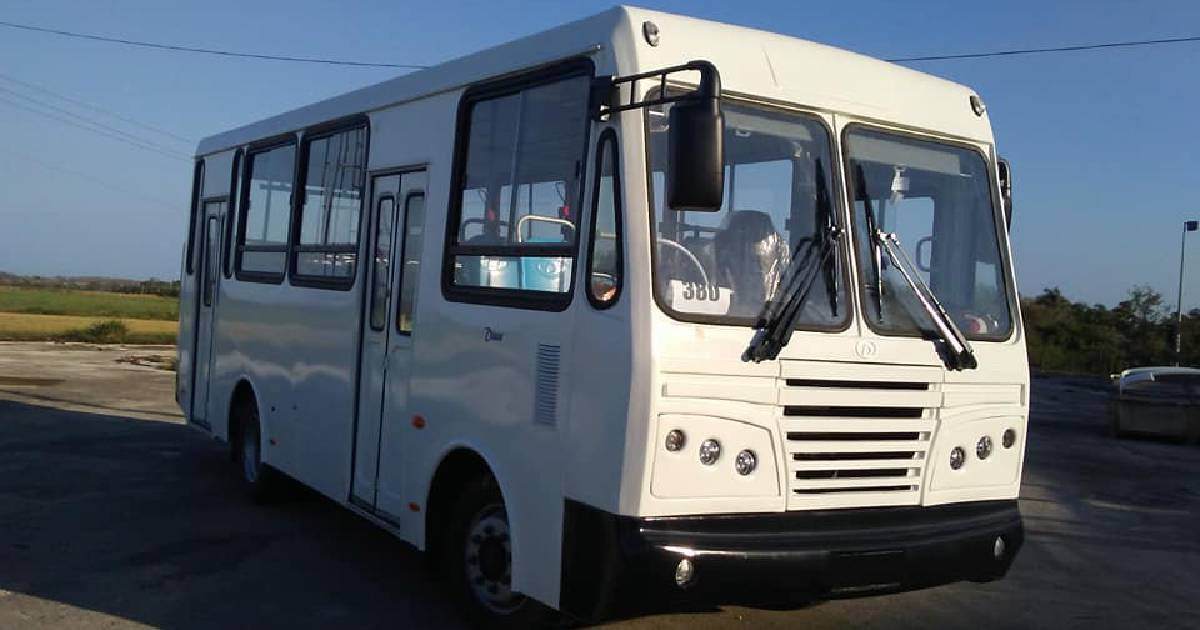
The Provincial Transport Company of Artemisa announced this Saturday the launch of an experimental passenger transport service based on the "productive linkage" between the state entity and a private economic actor, with fares ranging from 250 to 700 Cuban pesos depending on the destination.
The service will cover six high-demand routes from the main municipality. Havana (700 CUP), San Cristóbal (540 CUP), Mariel and San Antonio de los Baños (480 CUP each), Güira de Melena (400 CUP), and Guanajay (250 CUP), with a single price of 250 CUP for trips between neighboring municipalities, reported the state entity's Facebook page.
The company introduced the initiative as an alternative with rates higher than those of the historical state transport but lower than private market prices, under the slogan "state transport with vision and social commitment."
However, the public reaction on social media was predominantly critical and highlighted a central contradiction: prices are incompatible with state salaries.
A citizen illustrated it with concrete numbers. "If I live in Artemisa and work in Marianao, I have a salary of 6,000 pesos and I have to spend 1,400 daily on transportation, how much do I have left for food and to pay for everything else?"
Another commentator estimated that the monthly cost of transportation with the new fares would reach 21,120 CUP, compared to a salary of 6,000 pesos, and argued that journalism "should also question, not just repeat what the management says."
The average salary in Cuba is just 6,930 CUP per month, which is equivalent to about 13 dollars at the informal exchange rate, according to data from the National Office of Statistics and Information published in April.
The most direct criticism of the essence of the announcement was summed up by a citizen in a few words: "The buses are the same, the routes are the same, the drivers are the same. The only new thing in that 'experience' is the prices."
Others pointed out that the measure is "designed for those who can afford it," while "for those who are truly in need, there is nothing."
Several commentators also questioned that the company's executives are unaware of the reality of public transportation because they use official vehicles, and that they "accepted any proposal" when negotiating the fares without consulting the population.
The initiative comes at the worst time for public transportation in Cuba. The state passenger service dropped by 93% between January and September 2025, and the Ministry of Transportation declared a "state of emergency" in February.
The structural trigger is the shortage of fuel. This month, the Minister of Energy admitted that Cuba has "absolutely nothing" of diesel or fuel oil, which will reduce the frequencies of Ómnibus Nacionales to only three trips per week between Havana and the provincial capitals starting June 18.
The model of state-private partnership already has failed precedents on the Island. In July 2025, the government of Cienfuegos withdrew 42 buses rented to private operators and reintegrated them into the state system after nearly a year of irregular operation.
If the Artemisa project achieves the expected results, the company plans to gradually extend it to other municipalities and settlements in the province, according to the official statement.
Filed under: