
Related videos:
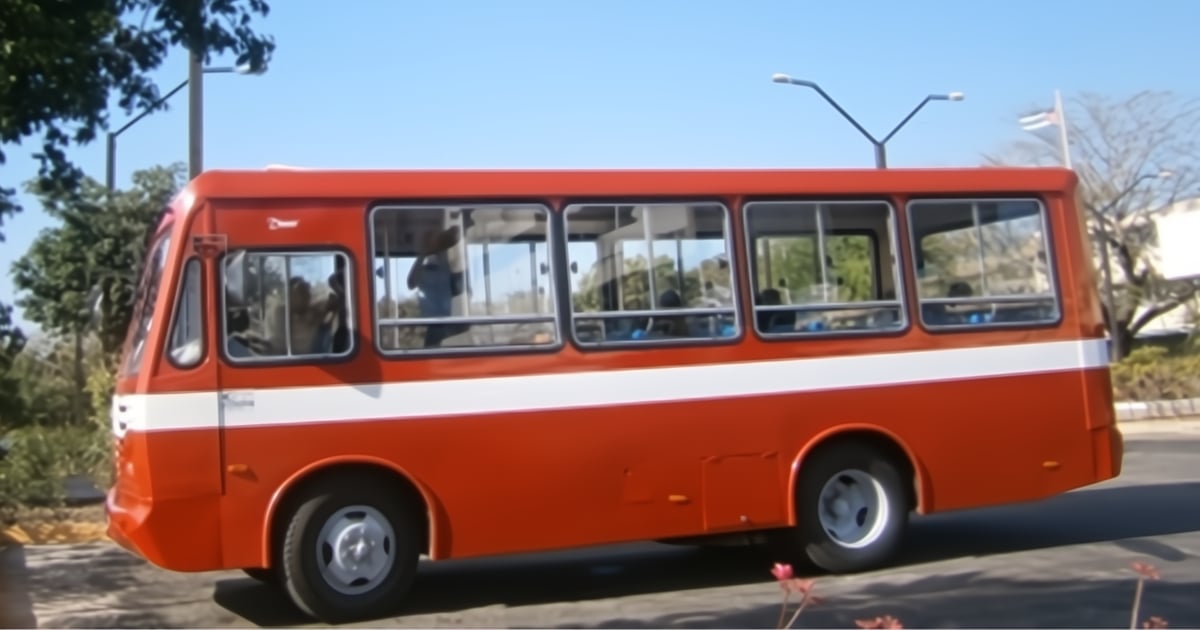
The authorities in Cienfuegos removed 42 buses that had been leased to private operators and reintroduced them into the state transportation system, in an effort to reorganize the chaotic state of urban and rural mobility in the province.
The vehicles, which had been out of regular service for almost a year, were gradually returned during a process that lasted around three weeks, reported the official newspaper 5 de Septiembre.
Local authorities justified the decision by arguing that the units were not providing the usual services, although no details were provided regarding the breach of contracts by the tenants or whether other causes were evaluated, such as fuel shortages or accumulated technical deterioration.
The director of the Basic Passenger Transportation Unit, Orlando Valdés, explained that of the 42 buses taken out of service, at least 21 have been refurbished and added to state routes, primarily in the city and some municipalities.
To achieve this, a new group of drivers was hired and routes were reorganized to cover areas that had been without service for months.
In the capital Cienfuegos, routes such as 1, 3, 5, 200, and 207 have been reactivated, while efforts are being made to recover others like 6.
According to Valdés, in some routes the number of cars will be doubled to meet the demand.
The ticket price remains at one peso per passenger, although there are ongoing complaints from citizens regarding the frequency and availability of the service.
In municipalities such as Palmira, Aguada de Pasajeros, and Abreus, rural routes that had been suspended for months have been reinstated, including those leading to Ciego Montero, Las Cajas, and Juraguá, which will operate on alternate days.
A new route has also been added between Cienfuegos and La Milpa, with a boat connection from the Pasacaballo dock.
The last trip on that route will extend its schedule until 10:30 p.m., in response to requests from the public.
Although the official press portrays the measure as "a joy for the people," it is clear that it highlights a new recentralization of transportation and a shift from the model of state leasing to private operators, which had initially been promoted as an alternative in response to the decline of public transport.
In a desperate attempt to reverse the collapse of public transportation, the regime has recently turned to measures that aim to project short-term solutions, although they reflect more the magnitude of the problem than any real resolution.
One of these initiatives is the reactivation of the train to Expocuba, a route that had been abandoned for years due to lack of maintenance and is now being promoted as an economic alternative.
This measure comes with promises of improvements to the railway infrastructure, although the recreational areas intended to be connected, such as Lenin Park, remain in ruins.
At the same time, Cubans face serious limitations in national air connectivity. The new schedules imposed by Cubana de Aviación on the Havana-Camagüey route have sparked a wave of criticism due to their lack of practical sense, especially in a country where land transport is almost nonexistent during nighttime hours.
The company, with only two operational airplanes, has also restricted baggage and modified flight frequencies, directly impacting those who rely on these flights to travel within the country.
In parallel, the government has announced a donation from China of components to repair 100 buses in Havana. Although it has been promoted as a relief for the sector, the truth is that these repairs require a technical effort similar to manufacturing new vehicles, and only a small portion of them will be ready for circulation before the end of the year.
This is further compounded by the fact that more than 300 buses remain out of service in the capital due to a lack of parts and resources, which demonstrates that the donation is merely a stopgap in the face of a structural crisis.
Frequently Asked Questions about Bus Withdrawals in Cienfuegos and Transportation in Cuba
Why did the Cienfuegos government withdraw 42 buses leased to private owners?
The government of Cienfuegos withdrew 42 buses leased to private operators to reintegrate them into the state transportation system, justifying that the units were not providing the usual services. Although details regarding the lessees' breach of contract were not specified, the measure appears to be an attempt to reorganize the chaotic landscape of urban and rural mobility in the province.
How does the recent measure affect the transportation system in Cienfuegos?
The reintroduction of buses into the state system has allowed for the reactivation of routes in the provincial capital and several municipalities, such as Palmira, Aguada de Pasajeros, and Abreus. Rural routes have been restored, and a new route has been added between Cienfuegos and La Milpa, with a boat connection from Pasacaballo. However, there are still citizen complaints regarding the frequency and availability of the service, indicating that the measure may not be sufficient to resolve transportation issues in the region.
What is the context of public transportation in other provinces of Cuba?
The context of public transportation in Cuba is critical. In Havana, efforts have been made to reactivate stalled buses through donations and the reuse of parts, while in Santiago de Cuba, alternative means are being improvised due to the aging vehicle fleet and lack of spare parts. In Sancti Spíritus, corruption and bribery are common due to the high demand for tickets and the limited supply. The transportation system in Cuba faces significant challenges due to fuel shortages, lack of spare parts, and widespread deterioration of infrastructure.
Filed under: