
Related videos:
The Spanish media outlet El Confidencial published an analysis warning that the Trump administration could fail in a potential intervention plan in Cuba.
The article recalls that Washington has tried this in the past and it did not go well. In the opinion of the authors of the text, G. M. Piantadosi and E. Torrico, replicating the success of the operation in Venezuela to capture Nicolás Maduro on January 3 may not be so straightforward in Cuba.
Piantadosi and Torrico draw a parallel between the current strategy of maximum pressure on Havana and the historical Operation Mongoose, the covert program initiated by the Kennedy administration following the failure of the Bay of Pigs in 1961, which was canceled without achieving the overthrow of Fidel Castro.
The piece analyzes the scenarios currently being studied in Washington and concludes that a direct intervention is still considered unlikely by most experts, despite the sustained escalation of recent months.
In May 2026, the Trump administration has combined several simultaneous fronts: naval deployments in the Caribbean, military exercises in terrains similar to those of Cuba, legal actions against figures of the regime, and an increasingly aggressive rhetoric.
The aircraft carrier USS Nimitz arrived in the Caribbean on May 20 as part of Operation Southern Seas 2026, accompanied by the destroyer USS Gridley, the logistics ship USNS Patuxent, and amphibious units. Southern Command described the deployment as a demonstration of "unmatched readiness, reach, and lethality."
On the same day, the federal indictment of Raúl Castro was made public—approved by a grand jury on April 23—regarding the downing of two planes from Brothers to the Rescue on February 24, 1996, in which four Cuban Americans lost their lives: Armando Alejandre Jr., Carlos Costa, Mario de la Peña, and Pablo Morales.
The Secretary of State Marco Rubio stated in a cabinet meeting that "Cuba is in serious trouble" and labeled the regime as a threat to the national security of the United States.
According to reports from Politico and Axios, the Pentagon has conducted interagency planning exercises that consider everything from targeted airstrikes to a ground invasion, although there is no execution order. Officials cited by Axios stated that "everything is on the table," but clarified that "no invasion is planned or imminent."
The internal strategy has been described as "accelerationism": a staged pressure to force a collapse of the regime without immediate intervention. Trump himself summarized it on May 20: "No. There will be no escalation. I don’t think it’s necessary," arguing that Cuba "is crumbling."
The economic context supports this interpretation. ECLAC estimates a contraction of the Cuban GDP of 6.5% for 2026, while The Economist Intelligence Unit projects a decline of 7.2%, with an accumulated contraction nearing 23% since 2019.
The regime declared 2026 as the "year of preparation for defense" and activated the doctrine of "total people's war." The National Assembly of People's Power issued a statement warning of a "real and dangerous threat of direct military aggression by the Government of the United States," while reiterating its willingness to engage in dialogue "based on respect for our sovereignty."
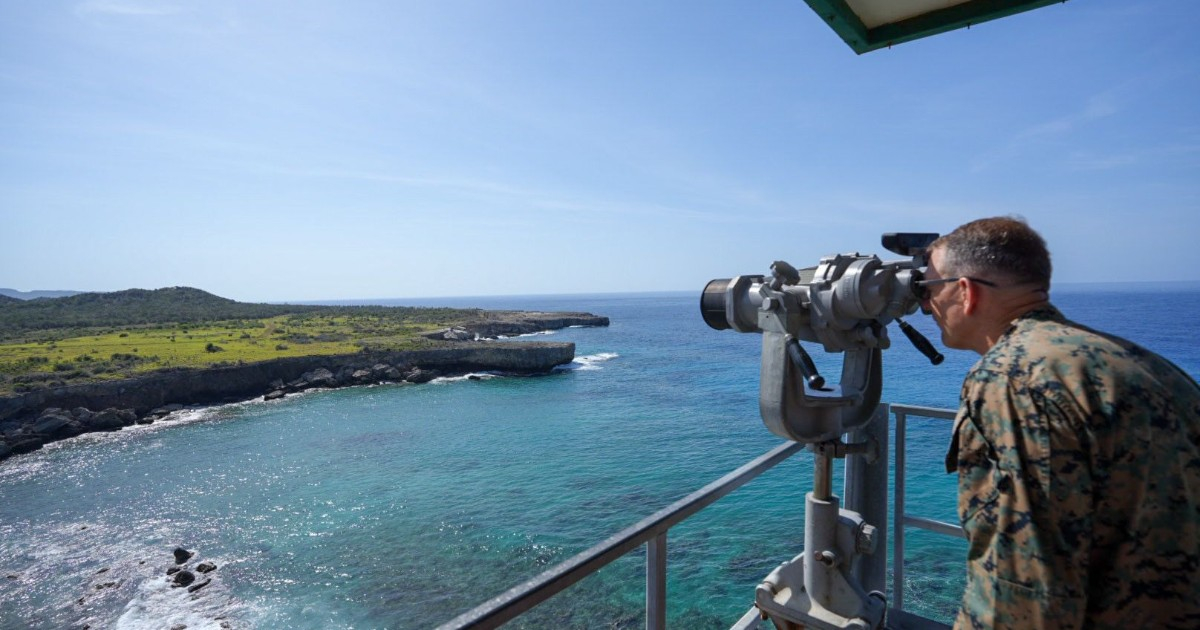
Since early 2026, U.S. forces have been training in tropical jungles, rivers, and swamps under the coordination of Southern Command, in conditions that mimic environments such as the Zapata Swamp and mountainous areas of eastern Cuba, which has intensified speculation about Washington's actual plans.
Operation Mongoose, the historical precedent that El Confidencial highlights, demonstrated over six decades ago the limits of regime change policies through covert means.
Today, with an economically devastated Cuba but a regime that continues to control its structures of power, the question of whether history could repeat itself—with the same outcome—remains unanswered.
Filed under: