
Related videos:
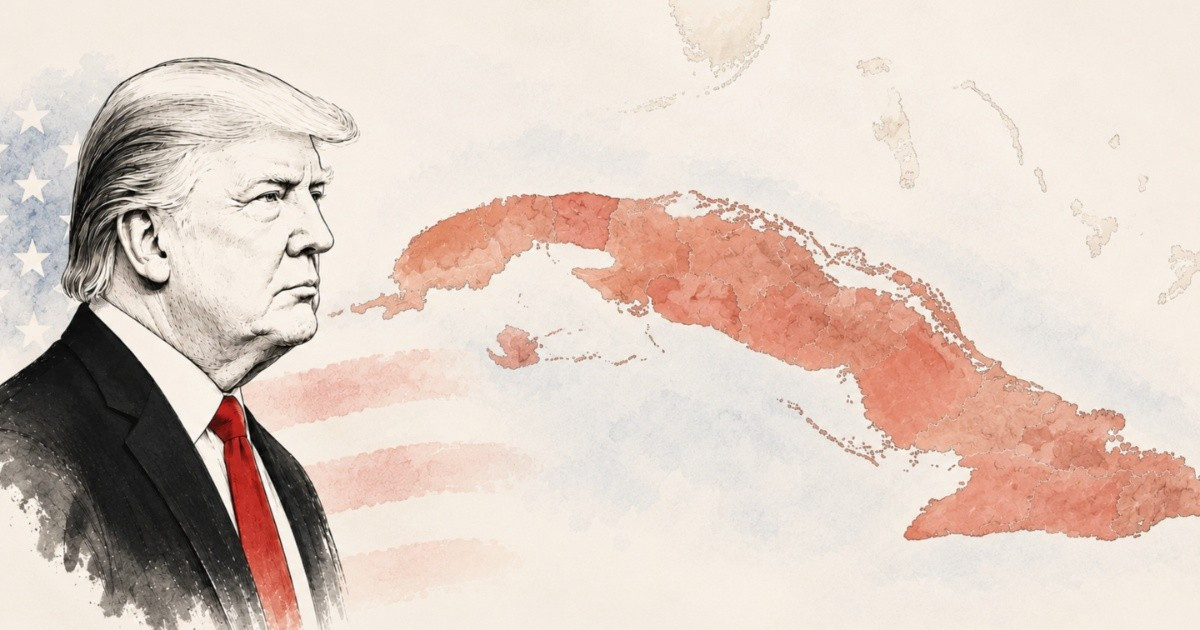
A comprehensive investigative report published today by the newspaper USA Today reveals that the administration of President Donald Trump adopted a "slow collapse" strategy as its primary tactic to dismantle the Cuban communist government, without the need for direct military intervention.
According to , a complete economic strangulation could lead to the regime's collapse within a timeframe of up to a year.
"That does not mean it will be the first recourse," clarified Victoria Coates, former Deputy National Security Advisor and close ally of Trump, while referring to the military option.
The strategy has been implemented in phases. First, the administration explored a broad economic agreement with Cuba in March; then, it prepared covert military options, including a capture operation similar to that used against former president Nicolás Maduro. Finally, it opted for a gradual economic collapse.
Today, an executive order came into effect that freezes the assets in the United States of foreign companies and individuals doing business with the Cuban regime.
This Thursday, the Office of Foreign Assets Control (OFAC) sanctioned President Miguel Díaz-Canel and his immediate family, Alejandro Castro Espín, son of former president Raúl Castro and an official in the Ministry of the Interior, as well as his grandson Raúl Alejandro Castro Calis.
Also yesterday, the deadline set by Washington for foreign companies to sever ties with GAESA, the conglomerate of the military elite that controls a large portion of the island's economy, expired under the threat of secondary sanctions.
The Spanish hotel chains Meliá and Iberostar have already scaled back their operations in Cuba.
The humanitarian backdrop is devastating. Cuba has been unable to import oil since January 2026, when the capture of Maduro interrupted the supply of about 70,000 daily barrels of Venezuelan crude.
Power outages reach up to 20 hours a day, hospitals have suspended non-urgent surgeries, and there is a widespread shortage of food and medications.
Trump denied to USA Today that the goal is to provoke a collapse. "We just want it to be a well-managed country that can feed its people," he said.
However, he also stated that Cuba "has collapsed to some extent" and that Washington will address it after resolving the crisis with Iran, while promising "very good plans for Cuba".
The Cuban ambassador to the United Kingdom, Ismara Vargas Walter, described the strategy as "a systematic strangulation policy" that affects "every aspect of daily Cuban life, from the inability to refrigerate food to education, from the lack of medicine to water rationing."
Experts like former National Security Advisor John Bolton point out direct parallels between the pressure on Venezuela and the current pressure being exerted on Cuba, including economic pressure, diplomatic isolation, and displays of military force.
The Department of Justice formally charged Raúl Castro on May 20 with conspiracy to murder American citizens, following the same pattern used against Maduro prior to his capture.
The United States offered 100 million dollars in humanitarian aid, proposed by Secretary of State Marco Rubio on May 13 at the Vatican, conditional upon being distributed by organizations like Caritas, not by the Cuban government or military. To date, no disbursement has been made.
The attorney Pedro Freyre, specialized in transactions with Cuba, summarized Washington's position: "Cubans are very, very, very good at the game of delaying. They have been doing it for 60 years. The administration is telling them that it no longer works."
Filed under: