
Related videos:
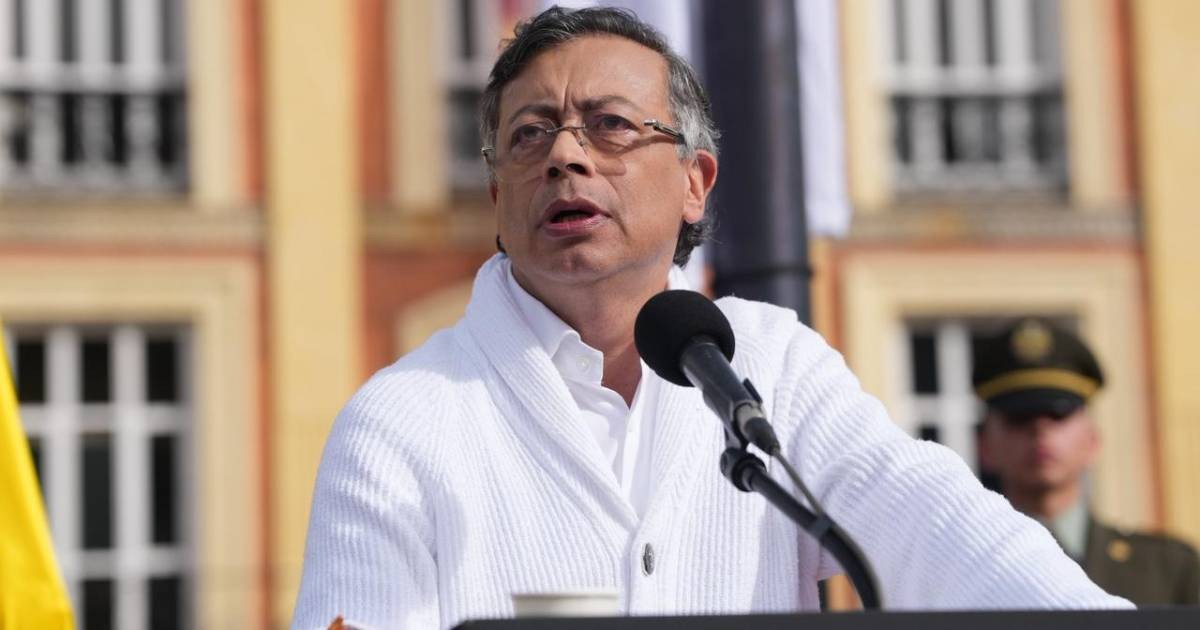
Colombian President Gustavo Petro declared that he does not accept the results of the preliminary count from the presidential elections on May 31, in which the far-right candidate Abelardo de la Espriella came in first and the government-backed Iván Cepeda came in second, both qualifying for a runoff on June 21.
Through his X account, Petro argued that the pre-count software was modified three times during the last week before the elections. "The so-called transmitted count does not have binding power. Its data is not public norm. As president, I do not accept the results of the pre-count from the private firm of the Bautista brothers, because the counting and scrutiny software algorithms should have remained unchanged, but in the last week, they were varied three times and added 800,000 ballots from people not included in the official census submitted," the president wrote.
Petro pointed out that there are currently "two censuses": the official one and that of the software company Thomas Greg & Sons, led by the Bautista brothers, which would include an additional 800,000 people. He also stated that the tables that have already been challenged demonstrate that "hundreds of thousands of votes were added without the existence of voters."
The president announced that he will only recognize the results issued by the counting commissions led by judges of the Republic, which are the legally binding ones in Colombia. "The binding results that the president will consider and accept are those from the counting commissions led by the judges of the Republic," he concluded in his statement.
The official candidate Iván Cepeda joined in the rejection of the preliminary count and stated to his supporters that "today we received 10 million poorly counted votes," highlighting a discrepancy of 855,000 people in the electoral census, though he did not provide evidence. Cepeda said he will only speak out "when the counting commissions have completely clarified, clearly and rigorously, this matter."
With 99.97% of the initial count reported, De la Espriella received 43.74% of the votes, amounting to 10,359,112 ballots, while Cepeda achieved 40.90% with 9,687,021 votes. Paloma Valencia, from the Centro Democrático, came in third with 6.92%, and Sergio Fajardo garnered 4.25%. Voter turnout was 57.87% in a country where voting is not mandatory.
It is important to note that the pre-count in Colombia does not have binding legal value; it serves only as preliminary information, while the official tally—conducted by judges and notaries in the days following the election—is the one that legally determines the results. The preliminary results and the official results rarely differ significantly.
In the political arena, former president Álvaro Uribe acknowledged the defeat of his candidate and urged voters to support De la Espriella: "We keep our word, we will vote for him and we ask that he be voted for, and for Colombia." Paloma Valencia also announced her support for the far-right candidate with the aim of ensuring that "the neo-communism prevailing in this country does not continue."
De la Espriella celebrated the result with a direct message to his followers: "We are moving on to the second round thanks to the more than 10 million Colombians who responded to the roar. In 21 days, we will make history!"
Filed under: