
Related videos:
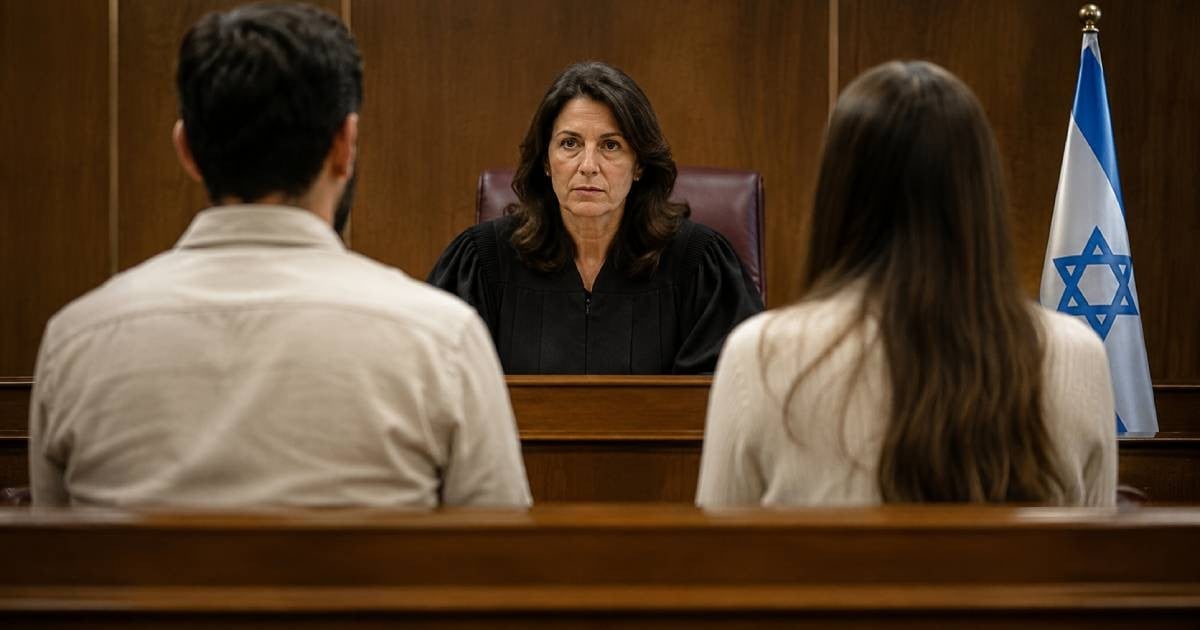
The Administrative Court of Beersheba ordered on Monday the revocation of the Israeli citizenship of Wilfredo Plaites Capota, a Cuban citizen who had obtained that status through a fraudulent marriage with an Israeli citizen, as announced by the Israeli Ministry of Justice.
According to the outlet The Jerusalem Post, Capota emigrated to Israel in 2011 and obtained citizenship under the Law of Return, which extends that right to the spouses of Israeli citizens. The petition for revocation was submitted by the Population and Immigration Authority, represented by attorney Yosefa Atli Sahar from the Civil Division of the Southern District Attorney's Office.
The case began in 2012, when the Ministry of the Interior received an anonymous letter that raised suspicions about the authenticity of the marriage.
The interviews conducted later with the couple revealed that they had separated approximately two months after arriving in Israel.
During the interrogation, Capota himself admitted that "the marriage was intended to help him obtain legal status in Israel and improve his quality of life."
Capota left Israel in 2016 and has not returned since. Authorities attempted to locate him in Cuba and Canada through diplomatic channels, social media, and alternative legal notification methods, but without success.
Judge Yael Raz-Levy, the vice president of the court, accepted the State's position by concluding that "the evidence presented before the court demonstrated that the citizenship had been obtained through deceit and that the marriage did not constitute a genuine marital relationship."
Raz-Levy also noted that Capota's departure from Israel in 2016 and his prolonged absence significantly weakened his connection to the country, emphasizing that "citizenship aims to reflect a meaningful and ongoing bond with the State of Israel."
The judge also emphasized that the revocation "serves the public interest by protecting the sovereignty of the State and preserving the integrity of Israel's immigration and citizenship laws," and that the decision helps to prevent the abuse of marriage as a means to obtain legal status through illicit channels.
Under the Israeli Citizenship Law of 1952, when fraud is discovered three years after citizenship has been granted, the State must submit a petition to an administrative court instead of proceeding through direct administrative action, as occurred in this case.
The phenomenon of fictitious marriages for immigration purposes is not new among Cuban citizens. In 2017, at least 15 individuals of Cuban origin were accused in Miami of immigration fraud involving fake marriages, in a scheme where Cubans received payments in exchange for marrying foreigners to help them obtain permanent residency in the United States.
Israeli legal sources estimate that between 5% and 10% of marriages between Israelis and foreign spouses could be fictitious, although there are no official statistics on annulments for this reason.
The court has left a pathway open for Capota: he can request the annulment of the sentence within 30 days of becoming aware of it, at which point a new hearing would be scheduled.
Filed under: