
Related videos:
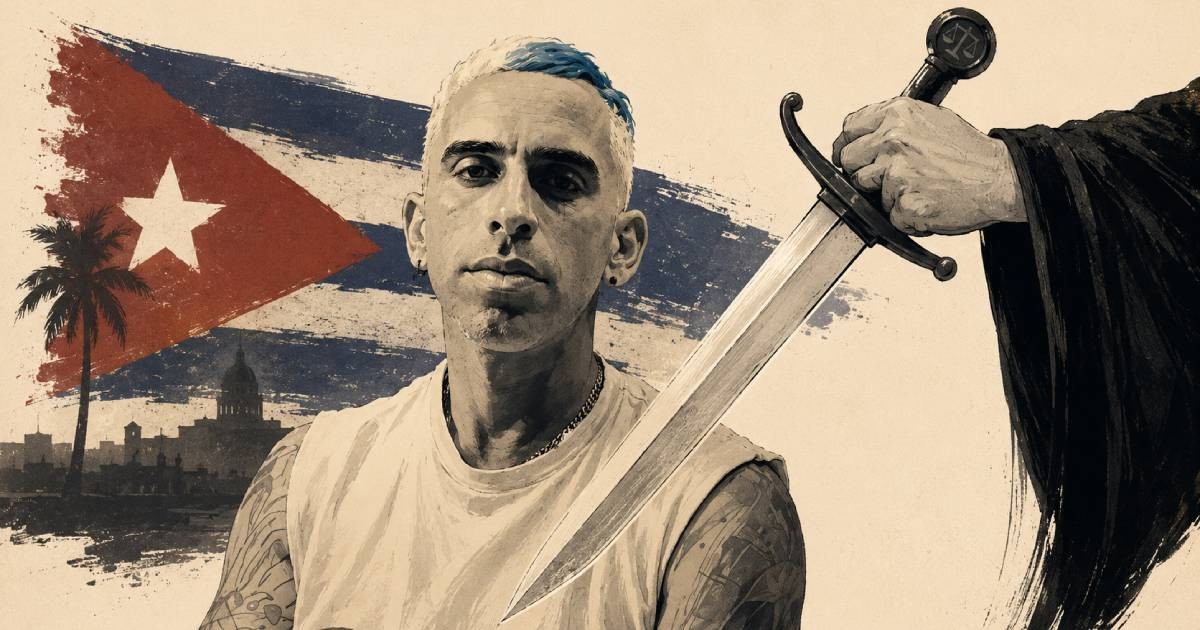
The Cuban comedian Ulises Toirac publicly reacted this Monday to the arrest of the YouTuber Eduardo "Eddy" Ceballos, creator of the satirical channel "Despingovery Channel," and warned that the current social communication laws in Cuba pose a constant threat to those who engage in critical humor on the island.
Toirac posted his reaction on Facebook after learning that Ceballos had been arrested during a police operation near his home in Havana, with no official charges reported.
"My fears, grounded in the laws that have been enacted for social communication in Cuba, foretold since they were promulgated that they would be a sword of Damocles hanging over the heads of humorists in our country," wrote Toirac.
The renowned comedian pointed out that the application of those regulations is "as subjective as it can be," and that "the laws here provide plenty of room for that," which turns that threat into something "ever-present."
Although he acknowledged not knowing the exact circumstances of the arrest, Toirac assumed that the detention is related to the content Ceballos produces for his YouTube channel, where under the character "Eddy Jones," he explores abandoned and dilapidated sites in Havana with a humorous style that critiques urban neglect.
The arrest occurred shortly after Ceballos published a preview of an episode exploring an old military installation with Soviet missiles, radars, and bunkers. Ceballos had previously recorded a video asking for it to be shared in case he was arrested.
Toirac described the detention as particularly concerning, noting that it was referred to as an "operation," and expressed hope that the case "doesn't escalate": "I hope he is released quickly. My support for Eddy Ceballos."
Ceballos, 38 years old and a native of Luyanó, Havana, also works as a comedian in the group Pagola La Paga and performs live comedy shows.
Toirac himself has faced direct pressure from the regime. In September 2023, he reported that the Ministry of Culture was pressuring organizers not to hire him, and in April 2026, he warned about physical surveillance and digital attacks that he attributed to State Security.
The Social Communication Law, approved in 2023 and effective from October 4, 2024, prohibits the use of social media to threaten security, disseminate "fake news," or generate content that affects "public order," provisions that can, in practice, be applied against political satire. The Cuban Institute for Freedom of Expression and Press (ICLEP) warned that the regulation could be used to attack comedians and influencers who ridicule leaders and policies of the Cuban government.
Filed under: