
Related videos:
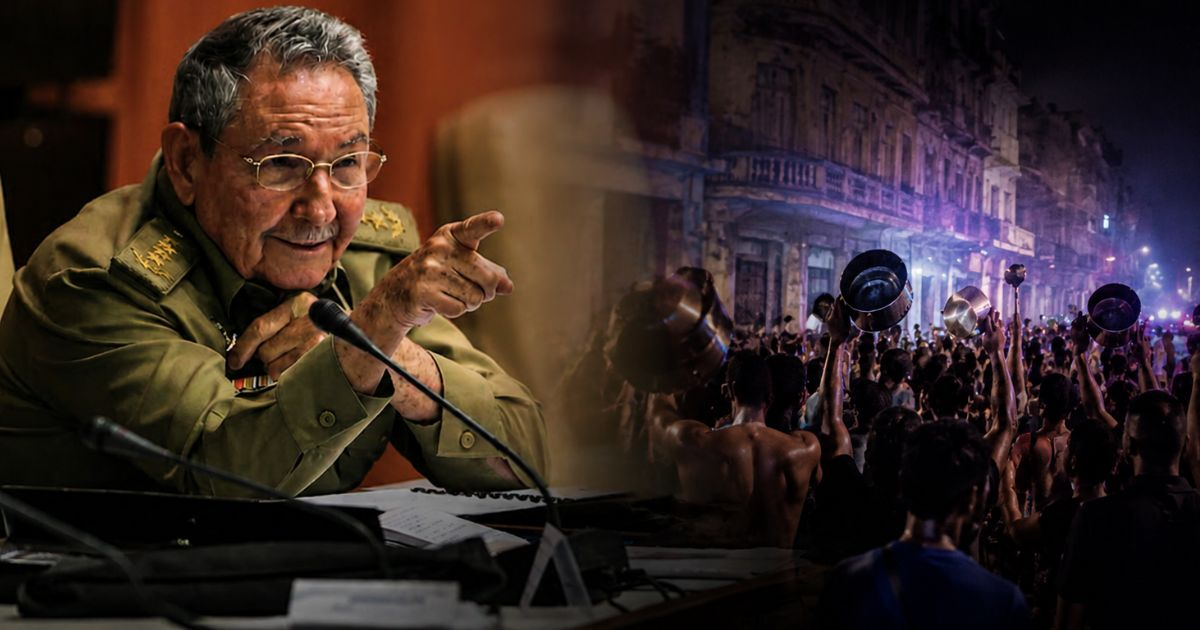
Havana bid farewell this Tuesday with banging pots and pans and street protests in various neighborhoods, on the eve of Raúl Castro's 95th birthday, which will be celebrated this Wednesday with open stands and official marches under the slogan "Raúl is Raúl".
While the government prepared events in various provinces to celebrate Raúl Castro's 95th birthday, Havana residents were banging pots in the darkness after experiencing blackouts of up to 22 hours a day, representing the largest wave of protests since July 11, 2021.
The protests spread across El Vedado, Centro Habana, Playa, Regla, Habana Vieja, Cayo Hueso, and San Miguel del Padrón. In El Vedado, residents took to the streets in broad daylight at the intersection of 13th Street and M after three consecutive days without electricity, since Sunday, May 31.
The independent journalist Camila Acosta documented the scene: "Protest in Vedado, 13 and M, Havana, in broad daylight. Since yesterday they have had only half an hour of electricity. The police surrounded the neighborhood."
Another source in the area, identified as Alma Tapia Ritual, reported that tensions were escalating: "There is international press, and patrols and motorized units continue to arrive to intimidate and attempt to dismantle, but the people are already fed up."
On San Lázaro street, in Central Havana, protesters physically pushed back police officers during a nighttime demonstration after being without electricity for over 20 hours.
The exiled Cuban journalist José L. Tan Estrada described the sequence: "The people, unafraid, pushed back the police on San Lázaro Street, Central Havana, where protests continue." A WhatsApp message shared alongside the video summed up the mood with a straightforward phrase: "They are more afraid than alive."
In Playa, a resident explained the daily trigger of desperation: "45 minutes, one hour, all the moms, everyone, because the food went bad. Here, no one has food."
The political contrast carries significant symbolic weight. The regime organized a mobilization campaign between May 23 and this Wednesday, which included the "Great Bicycle Ride 95-Raúl" in Cienfuegos and open tribunes in various provinces to repudiate the criminal charges brought by the U.S. Department of Justice against Castro for the shooting down of two civilian aircraft from Hermanos al Rescate on February 24, 1996.
Repression has followed a systematic pattern. The organization Cubalex documented at least 14 arrests in Havana linked to protests over blackouts since March 6, and the Cuban Observatory of Conflicts recorded 1,245 protests in March and 1,133 in April, reflecting a year-on-year increase of 29.5%.
El Vedado also holds a particular symbolic weight: the neighborhood is just a few blocks away from the Plaza de la Revolución, the Anti-Imperialist Tribune, and the headquarters of the Central Committee of the Communist Party of Cuba, and has been the recurring epicenter of protests since March 2026, with documented episodes in front of the Palace of the Revolution and the Central Committee of the PCC.
The wave of June 2026 is the most widespread since the events of July 11, with at least two documented episodes in which the police had to withdraw due to popular pressure without making any arrests, while the regime spent resources celebrating the 95th birthday of the person who has been in power for 67 years of dictatorship over the island.
Filed under: